

Can Young Women Get Ovarian Cancer?
A Real Case, and What Every Young Woman Should Know
PATIENT DETAILS
Dr V Sreekanth Reddy
Senior Consultant Surgical Oncologist
I was in my chamber one afternoon when a colleague knocked on my door, visibly anxious. His daughter’s close friend — a 22-year-old working in an IT company — had just been told she had a mass in her pelvis. They were frightened. I asked them to come in.
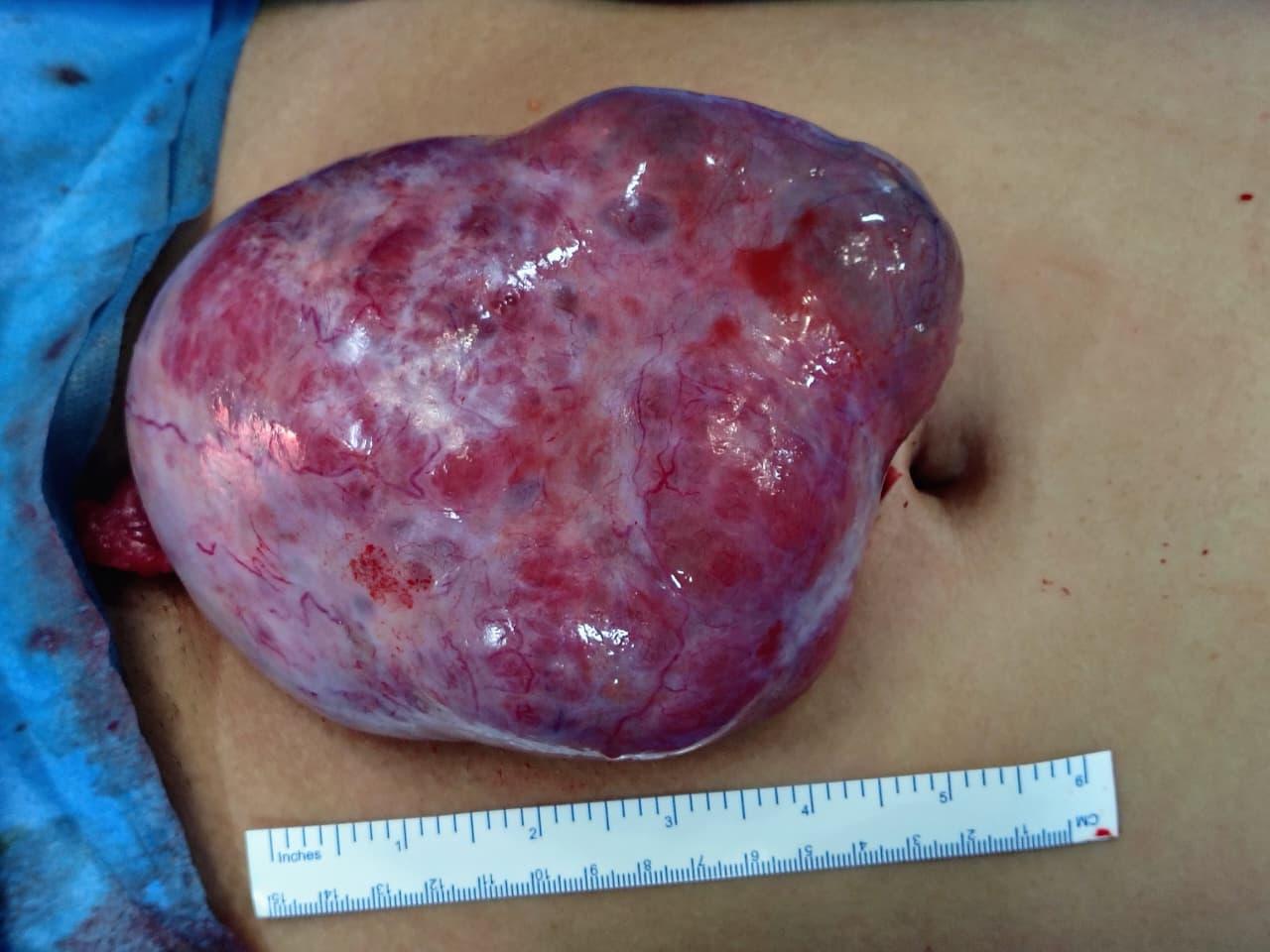
When she walked into my clinic, she didn’t look like someone most people imagine when they hear the word cancer. She was fit, active, and led a healthy lifestyle — no smoking, no alcohol. She had simply developed abdominal pain one day, visited a general physician, and was sent for an ultrasound scan. The scan revealed a 12 x 15 cm mass in the pelvis, most likely arising from the ovary.
Not Every Ovarian Mass Is Cancer — But Every One Deserves Attention
In this patient’s case, I ordered two key investigations:
Tumour markers — Blood tests that can indicate the likelihood of malignancy. Elevated markers raise concern; normal values are reassuring, though not conclusive.
Contrast MRI of the pelvis — A more detailed imaging tool than ultrasound that helps assess the character of the mass, its relationship to surrounding structures, and features that guide surgical planning.
Her tumour markers were normal — a positive sign. However, the MRI revealed certain high-risk features that could not be ignored. After a careful review of the imaging with my radiology colleagues, we decided that surgery was necessary.
The Conversation Before the Operation
Inside the Operating Room
Once the mass was carefully excised and removed intact, we sent it immediately for a frozen section — a rapid pathological examination performed while the patient was still on the operating table. This tells us the nature of the lesion in real time and guides our next surgical step.
The result: Borderline mucinous ovarian cancer.
This is an important diagnosis to understand. Borderline ovarian tumours sit between benign cysts and frankly malignant cancers. They are far less
aggressive, do not invade surrounding tissue in the typical way, and — crucially — do not usually require chemotherapy. They are treated primarily with surgery.
With this information, we proceeded to complete the surgery: we performed an appendicectomy (the appendix is routinely assessed in mucinous ovarian tumours), preserved her uterus and the opposite ovary, and closed.
She woke up. She was whole. Her future — including the possibility of motherhood — remained intact.
What This Case Teaches Us
1. Ovarian Cancer Can and Does Occur in Young Women
2. Proper Investigation Changes Everything
3. Fertility-Preserving Surgery Is Possible
4. Not All Ovarian Cancers Are the Same
5. Small, Non-Suspicious Lesions Can Be Watched
A Final Word
“Yes,” I told her. “That was always part of the plan.”
Ovarian cancer in a young woman is not a death sentence. It is a diagnosis that demands urgency, expertise, and — above all — a surgical plan tailored to the whole person, not just the tumour.
If you or someone you know has been told there is an ovarian mass, seek a consultation with a qualified oncosurgeon. Early evaluation, expert imaging review, and thoughtful surgical planning can make all the difference.