

Cervical Cancer Treatment in Bangalore
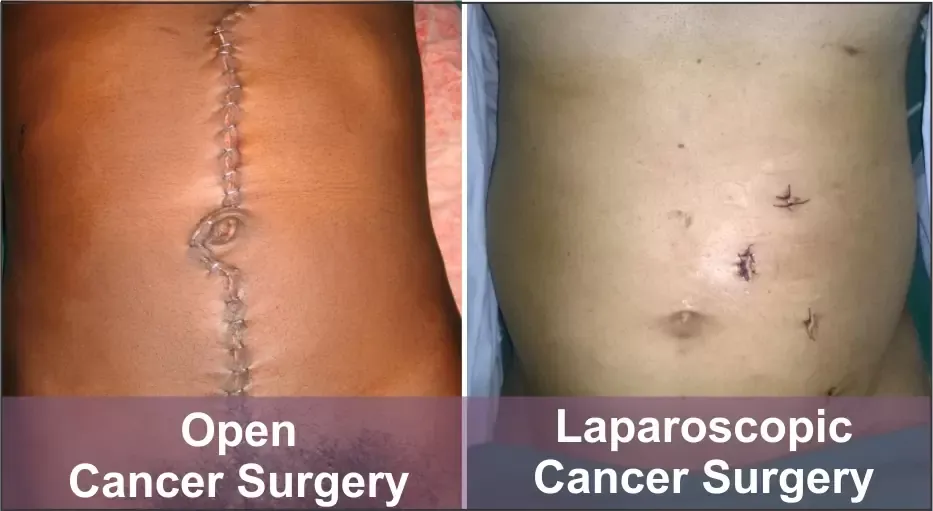
Cervical cancer surgery (Radical Hysterectomy or Wertheim’s Operation) can be performed by conventional open method or by laparoscopy. Laparoscopic or Laproscopic cancer surgery has several advantages over conventional open surgery with same cure rate. Only surgery is curative in most of the cancers. Additional therapies (chemotherapy & radiotherapy) are mostly supportive. But, many patients and their relatives try to avoid surgery for the fear of the immense trauma for their loved ones, resulting in patient getting wrong or less effective treatment. With laparoscopy the trauma is much less and makes the treatment more acceptable. The Team MACS precisely addresses all these issues and works relentlessly for a better life.
Dr. Sandeep Nayak

MBBS, MRCSEd, DNB (Gen Surg),
MNAMS (Gen Surg), DNB (Surgical Oncology),
Fellowship in Laparoscopic and Robotic Onco-Surgery.
Dr. Sandeep Nayak is a highly respected surgical oncologist in Bangalore, India, and currently serves as the Chairman of Oncology Services in Karnataka. He is also the Executive Director of Surgical Oncology & Robotic Surgery at KIMS Hospital, Bangalore, a role he has held since 2025.
The Advantages Of Robotic & Laparoscopic Cancer Surgery Include

Least Pain and Discomfort

Less Blood Loss

Least Pain and Discomfort

Avoid Unnecessary Major Surgery

Quick Return to Normal Life and Work

Get All the Advantages of Robotic Surgery

Better Vision Quality for the Surgeon

Better Preservation of Pelivic Nerves maintaining the Sexual & Urinary Functions

Cosmetically better (Smallest Wound and Scars)

Least Wound Complications, Less Risk of Wound Infections After Colostomy.
What Is Cancer Of Uterine Cervix ?
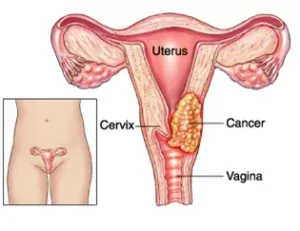
Cervical cancer is the 2nd most common cancer among Indian women.The uterus or womb is a muscular organ located in the lower part of women’s abdomen (tummy). Uterus has three parts; roof (fundus), body and lower part (cervix). Cancer can arise from any part of the uterus.
Cancer of uterine cervix are usually squamous cell carcinomas and rarely adenocarcinomas. These affect most commonly between 30-45 years of age group and are commoner in Asia and Africa. Most of these are related to infection by a virus (Human Papilloma Virus; HPV). The risk of this cancer can be reduced using a vaccine. Cervical cancer can also be detected in the pre-cancer stage by a simple test called PAP smear (refer to cancer prevention).
Symptoms And Diagnosis
Cancer of the cervix of the uterus is one of those cancers that can be easily prevented as well as detected early. The HPV vaccine can reduce the risk by 90%. A regular PAP smear test with HPV test can detect the disease in stage 0 (pre-cancer) when it is curable (refer to cancer prevention). As the disease advances, bleeding and foul smelling discharge from vagina is the most common symptom. If left alone, the disease can progress and cause symptoms like pain, loss of weight, urine related problems, etc. Cervical cancer is diagnosed with a cervical biopsy.
Fill Out the Form Below
Staging & Treatment
Most cancers of the cervix can be staged accurately by clinical examination and scan (MRI or PET CT). The most commonly followed staging system for these tumors is proposed by FIGO (International Federation of Gynecology and Obstetrics).
Management of cervical cancer depends on the stage of the disease. All modalities (surgery, chemotherapy and radiotherapy) of treatment are used to manage the disease effectively.
Stage 0
This is the pre-cancer stage where the cancer cells are limited to the surface layer of the cervix. Treatment depends on the need to preserve fertility. For those who plan future pregnancy, the options include cryosurgery, laser surgery, loop electrosurgical excision procedure (LEEP/LEETZ), and cold knife conization. Each of these procedures (surgeries) have their advantages and disadvantages that will be discussed by your surgeon. Hysterectomy though not routine for this early stage can be offered in a few select cases. This surgery can be performed laparoscopically with several advantages to the patient.
Stage IA
At this stage the cancer has invaded beyond the surface layer of the cervix into its substance, but has not reached outside the cervix, invading no deeper than 5 mm. This stage is further divided into stage IA1 & IA2. The management between the two groups varies slightly and your surgeon will discuss this with you.
Broadly, for this stage you have 4 options:
- Standard of care is Conisation or Simple hysterectomy along with sentinel lymph node assessment in the pelvis . This surgery can be performed laparoscopically with several advantages to the patient. (laparoscopic radical hysterectomy).
- If you still want to be able to have children (early disease only, size < 2cm), first the cancer is removed with a Cone biopsy or Trachelectomy(Simple/Radical) , and then you are watched closely to see if the cancer comes back. If the cone biopsy or Trachelectomy doesn’t remove all of the cancer (or if you are done having children), the uterus will be removed.
Lymph node assessment is now done through sentinel node biopsy . This avoids the complications associated with more radical lymph node dissection surgery, while maintaining equal outcomes in terms of cure. All tissue removed at surgery will be examined microscopically. Further treatment is based on the results of the microscopy findings.
Stage IB
The disease is larger than stage IA, however, has not spread outside the cervix into vagina or pelvis. This stage is further divided into B1 ,B2& B3 based on the size of the disease. Stage IB1 & IB2 includes all cases that are less than 4cm in diameter and larger ones are categorized as stage IB3.
Stage IB1&IB2: There are 3 options available:
- The standard treatment is a Radical hysterectomy with assessment of lymph nodes in the pelvis (Hysterectomy type B / type C1 or Wertheim’s Operation). ● The second treatment option is Radiation therapy.
- Simple hysterectomy with lymph node assessment for specific tumor characteristics.
- Radical trachelectomy with assessment of pelvic lymph nodes is an option if the patient still wants to be able to have children.
Stage IB2
The disease is larger than stage IA, however, has not spread outside the cervix into vagina or pelvis. This stage is further divided into B1 ,B2& B3 based on the size of the disease. Stage IB1 & IB2 includes all cases that are less than 4cm in diameter and larger ones are categorized as stage IB3.
Stage IB1&IB2: There are 3 options available:
- The standard treatment is a Radical hysterectomy with assessment of lymph nodes in the pelvis (Hysterectomy type B / type C1 or Wertheim’s Operation). ● The second treatment option is Radiation therapy.
- Simple hysterectomy with lymph node assessment for specific tumor characteristics.
- Radical trachelectomy with assessment of pelvic lymph nodes is an option if the patient still wants to be able to have children.
Stage IB3
There are 2 options available
The Standard treatment is the combination of Chemotherapy and Radiation therapy.
- Another choice is radical hysterectomy (Type C1 Radical Hysterectomy or Wertheim’s Operation) with removal of pelvic lymph nodes. If cancer cells are
found in the lymph nodes removed, or in the margins, radiation therapy may be given, possibly with chemotherapy, after surgery. This will lead to utilization of all 3 modality of treatment hence increasing the complication. So surgery is offered in a few highly selected cases.
Stage II
It is divided into stage IIA and stage IIB
Stage IIA: The cancer is extended into the upper 2/3 of vagina.its further divided based on size to IIA1– less than 4 cm and IIA2 more than 4 cm. Treatment for this stage depends on the size of the tumor.
- If size is more than 4 cm standard treatment is internal (brachytherapy) and external radiation therapy combined with chemotherapy. Some experts recommend removing the uterus after the radiation therapy is done.
- If the cancer is less than 4 cm, it may be treated with Chemoradiation or a Radical Type C1 hysterectomy and removal of lymph nodes in the pelvis. If the tissue removed at surgery shows cancer cells in the margins or cancer in the lymph nodes, radiation treatments to the pelvis will be given with chemotherapy.
Stage IIB III and IVA : Combined internal and external radiation therapy along with chemotherapy is the usual treatment. Neoadjuvant Chemotherapy may be used in some cases.
Immunotherapy- a new development is also increasingly being offered in this stage with good results.
Stage IVB: At this stage, the cancer has spread out of the pelvis to other areas of the body. Stage IVB cervical cancer is not usually considered curable. Treatment options include radiation therapy to relieve the symptoms of cancer that has spread to the areas near the cervix or to distant sites (such as the lungs or bone). Chemotherapy is often recommended.
Recurrent Cervical Cancer
Cancer that comes back after treatment is called recurrent cancer. Cancer can come back locally (in the pelvic organs near the cervix) or come back in distant areas. If the cancer has recurred in the pelvis only, extensive surgery (pelvic exenteration) may be an option for some patients. This surgery can be performed laparoscopically with several advantages to the patient. This operation may successfully treat 40% to 50% of patients. If surgery is not feasible, radiation or chemotherapy may be used for palliative treatment (treatment to relieve symptoms but not expected to cure). If your cancer has recurred in a distant area, chemo or radiation therapy may be used to treat and relieve specific symptoms.
Fill Out the Form Below
Cervical Cancer In Pregnancy
If the cancer is stage IB or higher, it is preferable to terminate pregnancy and treat cancer according to stage. The continuation of pregnancy can only be done after discussing the risks involved.
Further Reading

Frequently Asked Questions
When is surgery chosen over radiation?
In early stages of cancer (< 4 cm), young fit individuals prefer to go for surgery as a single modality can cure cancer. It also has the added benefit of avoiding radiation side effects like Frequent Diarrhea,abdomen pain,painful urination, increased frequency of urination, vaginal stenosis leading to painful sexual intercouse.
When is radiation chosen over surgery?
In advanced cases radiation with chemotherapy is preferred. Reason being it can be curative , avoiding surgery. Also in advanced cases the more radical surgery will fail to cure cancer by itself as a single modality or side effects will be debilitating to the patient.
What type of surgery?
Less than 2 cm tumors are treated with Simple hysterectomy( tumor with favourable features ) or Modified Radical Hysterectomy (TYPE B)
And 2- 4cm tumors are treated with Radical hysterectomy- Wertheim (TYPE C)
How to manage lymph nodes?
In the early stage of cervical cancer up to 15- 20 % of patients with normal appearing lymph nodes on Imaging like Ct scan and PET scan can harbor disease.
Traditionally all patients undergoing surgery also underwent complete pelvic lymphadenectomy. But this procedure is not without side effects with some patients developing leg swelling over a long period of time.
Hence a new alternative – sentinel node biopsy has now become the standard of care.
In this procedure we inject a dye to identify the lymph nodes which are most likely to be Involved and only those few nodes are removed thereby reducing complications.
Which type of surgery- Open or Minimally invasive with robot or laparoscopy?
The current standard is open surgery because few studies showed that minimally invasive surgery is associated with poor outcomes. However the surgeons in these studies used a uterine manipulator and the vaginal cuff was not closed leading to spread in cancer during minimally invasive surgery.
Recent evidence is emerging to indicate that if these precautions are taken( not using vaginal manipulator, vaginal cuff closure ) then minimally invasive surgery has similar outcomes to open surgery.