
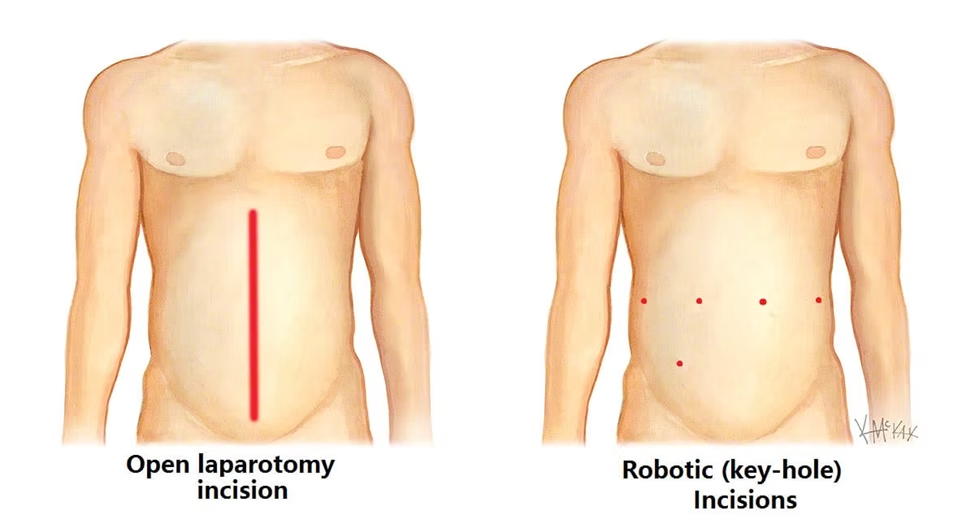
Robotic surgery heals significantly faster because 3-5 small incisions of 5-12 mm cause far less tissue damage than a 15-30 cm open wound cutting through muscle. Hospital stay drops from 7-10 days to 2-4 days, return to normal activity shortens from 4-6 weeks to 1-2 weeks, and blood loss reduces by 50-70%. Cancer clearance and survival remain equivalent between both approaches in published trials.
According to Dr. Sandeep Nayak, Best cancer treatment in Bangalore, “Same cancer gets removed through both. One patient walks out in three days with small plasters on the belly. Another walks out in ten days with a wound that hurts every time he coughs or turns in bed. Cancer outcomes are identical. Recovery experience is not.”
Same cancer removal. Fraction of the wound. Half the recovery.
Where Is the Recovery Difference Biggest?
Numbers aren’t theoretical. Published data across specific cancer surgeries shows consistent gaps patients feel from day one.
- Hospital stay: Open averages 7-10 days for abdominal cancer surgery. Robotic brings it to 2-4 days. Bowel recovers faster because it wasn’t handled as much and the abdominal wall wasn’t sliced through a foot-long cut.
- Pain: Open surgery cuts through rectus muscle creating wound pain lasting 4-6 weeks. Robotic ports go between muscle fibres without cutting them. Most robotic patients stop painkillers in 3-5 days. Difference between paracetamol and tramadol is a quality of life gap nobody talks about enough.
- Back to work: Office workers resume in 1-2 weeks after robotic. Same procedure done open and they’re home 4-6 weeks. For daily wage earners in India that’s one week’s lost income versus six weeks of the family running on savings.
- Blood loss: Robotic magnification reduces bleeding by 50-70%. Fewer transfusions needed. In a country where blood bank availability varies by city this matters more than people realize until they’re the one needing two units at 2 AM.
Your oncologist discusses approach selection during MACS advantages consultation based on tumor type and location.
When Does Open Surgery Still Make Sense?
Robotic isn’t always the answer. Specific situations make open surgery safer or the only feasible choice.
- Very large tumours: Mass above 10-12 cm needs a large extraction incision regardless of how it was dissected inside. Robot cutting around something massive then opening the belly to pull it out doesn’t save meaningful recovery time over going open from the start.
- Organ invasion: Tumour stuck to major vessels or adjacent organs sometimes needs the surgeon’s hand directly on tissue for safe separation. Fingertip feedback when peeling cancer off the aorta is something no robotic instrument replicates yet.
- Dense adhesions: Three prior abdominal surgeries creating scar tissue everywhere makes robotic ports dangerous and working space nonexistent. Honest surgeon tells you the conversion probability beforehand rather than discovering it mid-operation.
- Surgeon volume: Centre doing 10 robotic cases a year shouldn’t attempt complex procedures high-volume centres do 10 times monthly. Patient deserves to know if the open recommendation reflects the cancer’s need or the surgeon’s limitation.
Knowing how benign vs malignant diagnosis follows step-by-step clinical logic explains why surgical approach selection follows the same principle of matching the right method to the specific situation.
Why Choose MACS Clinic ?
Dr. Sandeep Nayak pioneered minimally invasive cancer surgery in India with techniques like MIND, RABIT, and L-VEIL now practiced globally. MACS Clinic has both Da Vinci robotic and advanced laparoscopic platforms so the approach matches the cancer not the equipment available.
The patient gets told honestly whether their tumour qualifies for robotic or needs open. Recommending open when robotic works is one problem. Recommending robotic when the tumour needs to open is a bigger one.
Call +91 8035740000 to book your consultation.
FAQs
How much faster is robotic surgery recovery?
Hospital stay 2-4 days vs 7-10 days. Return to activity 1-2 weeks vs 4-6 weeks.
Is robotic surgery as effective as open for cancer?
Yes, trials confirm equivalent cancer clearance and long-term survival rates.
Does robotic surgery cost more than open?
Generally yes, but shorter stay and faster recovery offset part of the difference.
Can all cancers be done robotically?
Most solid organ cancers yes. Very large tumours or vessel invasion may need open.
References
- Robotic vs open surgery outcomes — National Cancer Institute
- Minimally invasive cancer surgery — World Health Organization