

Additional Director, Department of Radiation Oncology, KIMS Hospital, Mahadevapura
When someone is diagnosed with cancer, one of the most important forms of treatment we offer is radiotherapy — the use of carefully directed high-energy X-rays to destroy cancer cells. The medical field that specialize in planning and delivering these treatments is called Radiation Oncology.
It may sound simple: aim powerful radiation at the tumour and kill it. But in reality, the challenge is far greater. Cancers are a part of our own body. They arise out of and lies in close proximity to our normal organs. Also the inside of our bodies are a living, moving system — organs shift when we breathe, swallow, or even digest. And the same rays that can kill a cancer cell can also hurt the healthy tissues nearby.
So, the constant goal for every radiation oncologist is this: destroy the cancer while protecting the normal. That goal is what drives the incredible technological progress we’ve made in recent years — progress you can now experience at KIMS MACS Clinic.
The Early Days: From 2D to 3D Treatment
Years ago, radiation treatment was almost like shining a torch through the body from two sides, hoping to hit the tumour inside. There was limited visibility, which meant normal tissues were often exposed to unnecessary radiation.
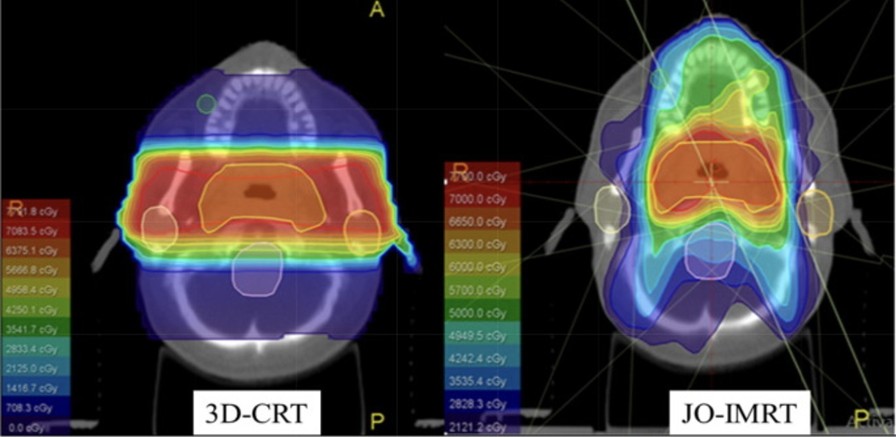
Then came the CT scan revolution, allowing doctors to see the tumour and nearby organs in 3D. This led to 3D Conformal Radiotherapy (3DCRT)— a major step forward that allowed us to shape radiation fields to fit the tumour’s exact form. It made treatment safer and more effective.
IMRT: Painting Instead of Blasting
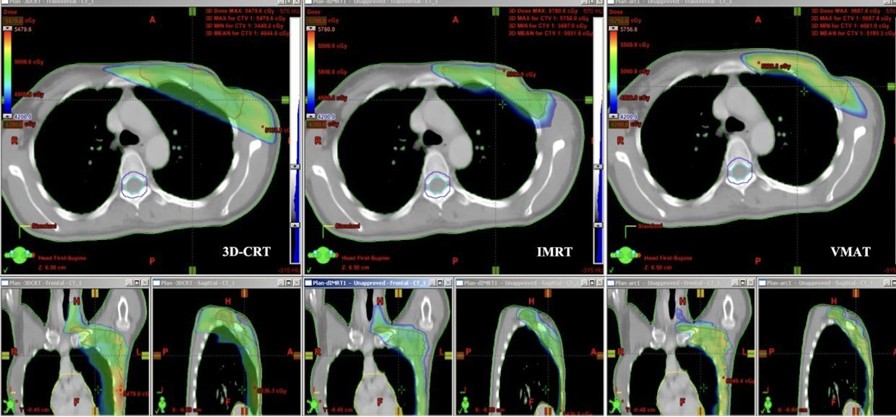
With IMRT (Intensity Modulated Radiotherapy), we went one step further. Instead of shooting straight beams, we now use many small, computer-controlled beam-lets that can vary in strength. Imagine replacing a thick paint roller with a fine-tipped brush — we can now “paint” the dose on the tumour surface while avoiding healthy structures.
This means fewer side effects, faster recovery, and better control of difficult-to-reach cancers like those in the head and neck.
IGRT: Guiding Each Session with Imaging
Even with such precision, small shifts can happen between daily treatments. IGRT (Image-Guided Radiotherapy) adds an extra layer of safety — we take daily images just before each session to make sure the tumour is still exactly where we expect it. The system then makes tiny corrections, so every dose lands perfectly where intended.
VMAT: Faster, Smoother, Smarter
VMAT (Volumetric Modulated Arc Therapy) is an advanced version of IMRT. Instead of treating from fixed angles, the treatment machine moves in an arc around the patient, continuously shaping and adjusting the dose. The benefit? Shorter treatment time and a more even, precise delivery — all while keeping side effects minimal.
SRS and SBRT: Pinpoint Power
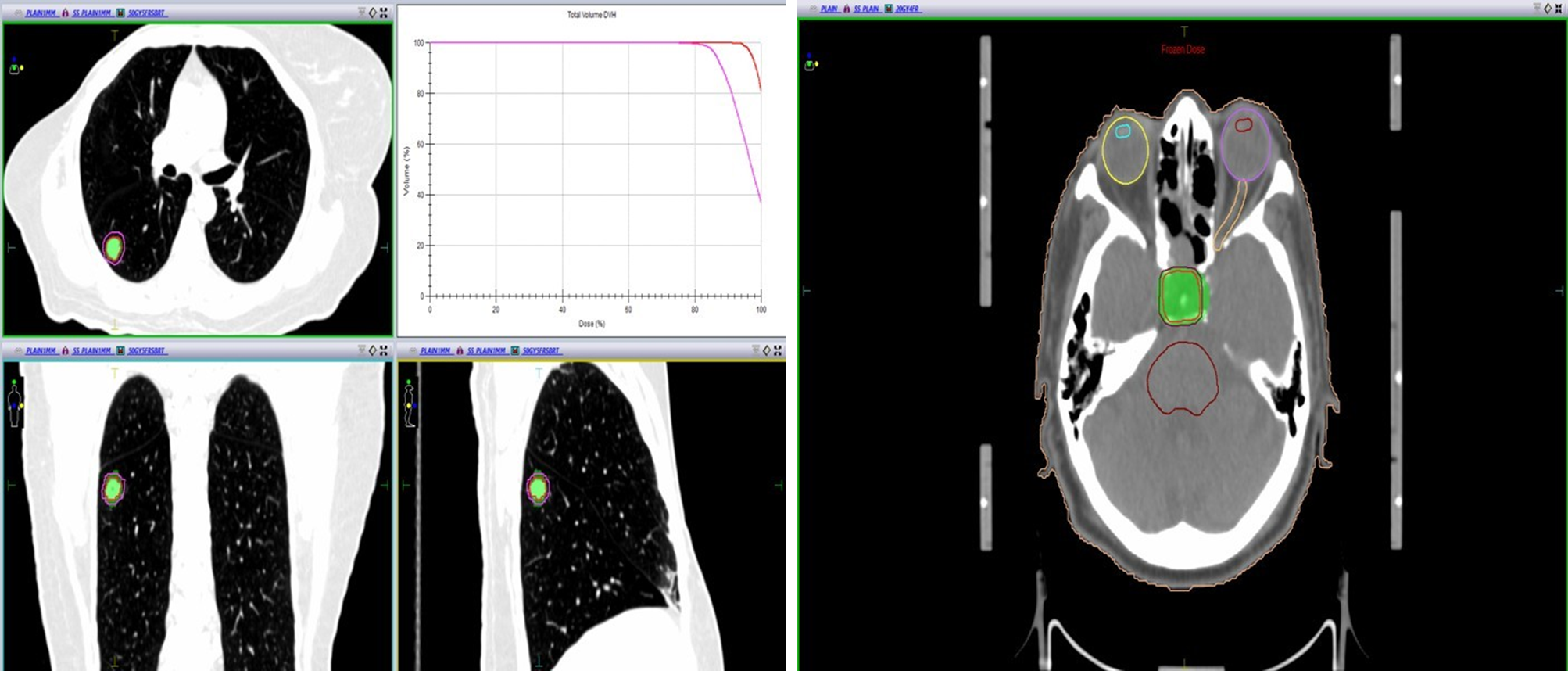
Some cancers are so small and well-defined that we can hit them with extreme accuracy. SRS (Stereotactic Radiosurgery) treats brain tumours, and SBRT (Stereotactic Body Radiotherapy) treats tumours in other parts of the body.
These treatments deliver very high doses in one or a few sittings, targeting the tumour with precision of less than a millimetre — like using a sniper’s aim instead of a floodlight. Patients often experience quick results, minimal discomfort, and in certain cases, complete tumour control even in delicate areas like the brain or lung.
Lattice Radiotherapy: A Helping Hand for Large Tumours
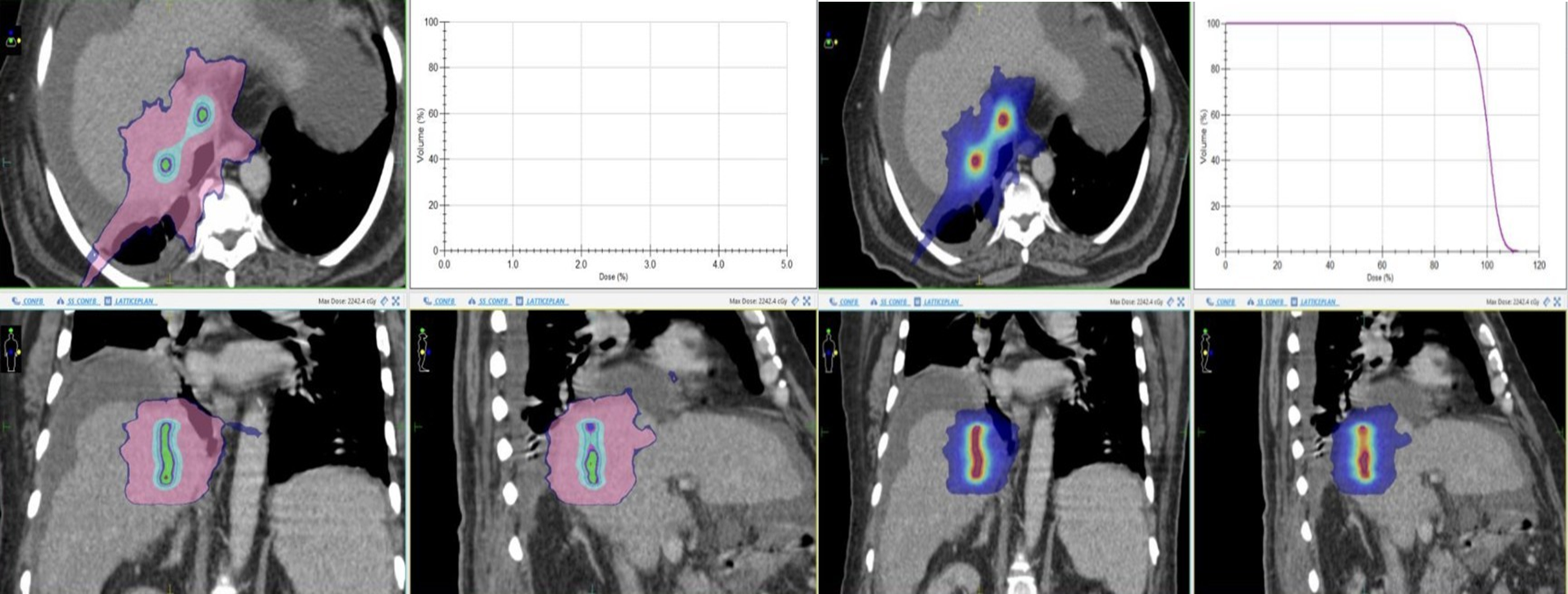
Even for big, bulky cancers that can’t be removed surgically, new hope is emerging with Lattice Radiotherapy (LRT). This method delivers high doses in a grid-like pattern inside the tumour, creating areas of intense energy (called “peaks”) and lower energy (“valleys”).
This unique pattern can shrink large tumours, relieve symptoms, and even boost the body’s immune response when used with immunotherapy. At KIMS MACS, we’ve seen promising improvements in patients with liver and other advanced cancers using this approach.
Brachytherapy: Treating from Within
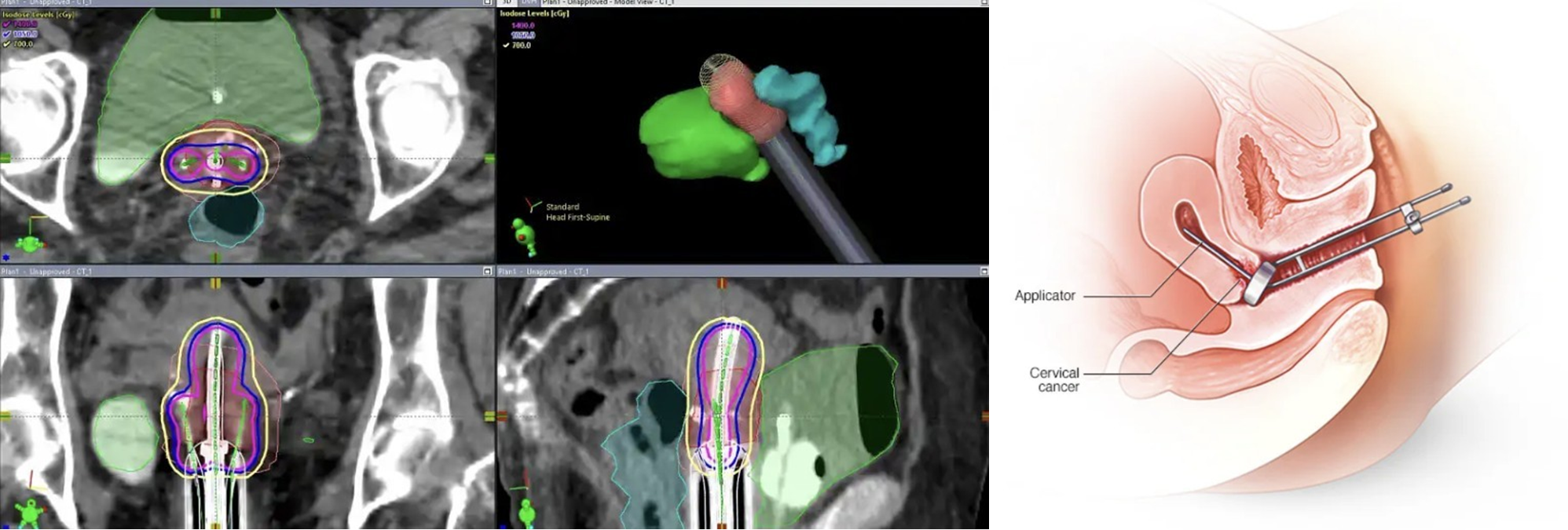
Brachytherapy takes precision a step further. Instead of sending radiation from outside, we place a small radioactive source directly inside or next to the tumour. This allows a high dose to the cancer while sparing nearby healthy tissue.
It’s most commonly used for cancers of the cervix, Uterus, prostate, breast, and oesophagus — often completed in just a few short sessions, many times as day procedures.
The Future is Bright
Radiation Oncology is evolving faster than ever — with the help of artificial intelligence, real-time imaging, and biological insight into how each tumour behaves. At KIMS MACS Clinic, these advanced technologies come together with expert care to offer every patient the most effective, personalised, and comfortable treatment possible.
Our mission remains simple yet profound: to cure precisely, and to heal gently— using science, compassion, and innovation, all focused on you.