

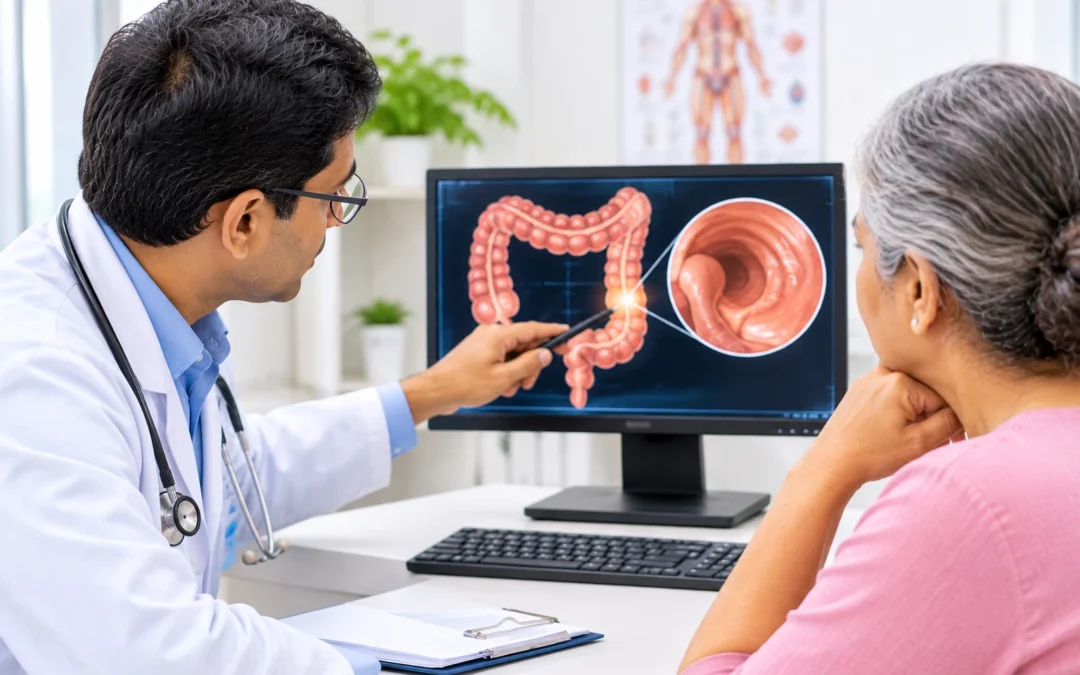
Doctors check whether the bowel has healed by putting several things together: how you feel and what your body is doing, blood tests, scans and, in some cases, a direct look inside with a camera. After surgery, the main question is whether the join in the bowel, called the anastomosis, is holding. When the cause is inflammation, as in inflammatory bowel disease, the question is whether the lining has healed, and the tests are different.
Dr. Sandeep Nayak, Surgical Oncologist at MACS Clinic, which provides the Best Cancer Treatment in Bangalore, says that after a bowel operation, everyone is watching for the same thing. “Has the join taken? In the first few days we’re listening to the gut. Are you passing gas, are you eating, is the pain settling, is the temperature normal. We back that up with blood tests, mainly CRP, and we scan only if something doesn’t add up. Most joins heal without any drama. The point of checking is that when one doesn’t, we want to know early, because a leak caught on day four is a very different problem from one found on day ten.”
How do doctors check whether the bowel has healed properly? Learn about the signs, tests and medical assessments used to confirm healing and identify any complications after bowel surgery.
Bowel Recovery After Surgery: What Doctors Watch in the First Days
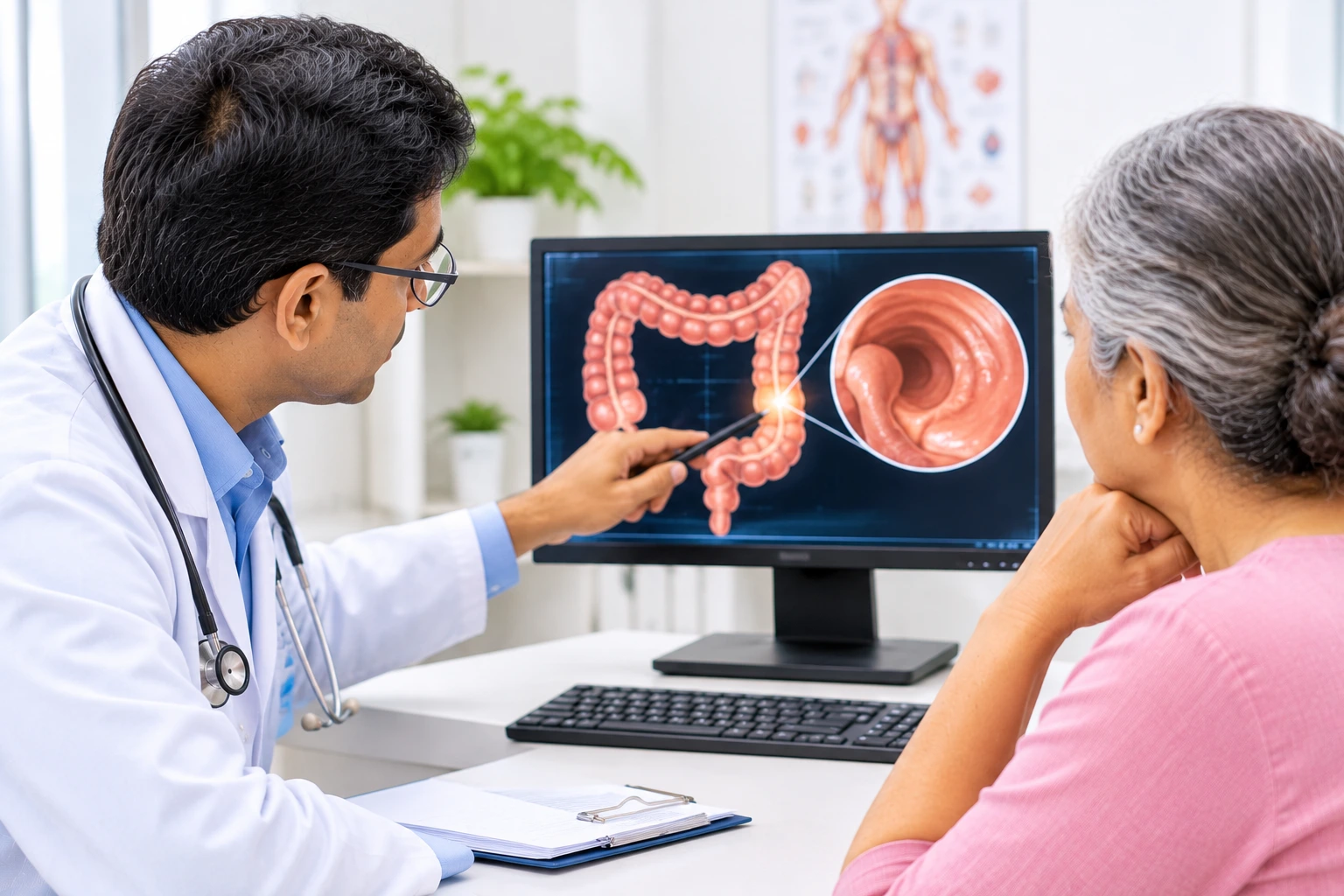
Most of the checking happens at the bedside, without any scan at all:
- Is the gut waking up? Passing gas, then stool, and eating and drinking without vomiting or a swollen belly, are the first reassuring signs. They usually begin within the first few days, helped by walking early and eating as soon as it’s safe. Our diet counselling team can help with eating after bowel surgery.
- How you look and feel. Your temperature, heart rate, pain, how soft your belly is, and what drains out of any tube are all checked, often several times a day. The early signs of a leak, such as vague pain, a sluggish gut or a low fever, are hard to tell apart from the normal response to surgery, which is why they’re read together.
- Blood tests, mainly CRP. CRP is a marker of inflammation, and it’s usually checked daily. A level above about 150 mg/L on day three or four is a flag for a possible problem. The direction matters too, since a falling CRP is reassuring and a rising one is worrying.
- Timing matters. Leaks usually show themselves around five to seven days after surgery. They happen in about 3 to 4 in 100 operations on the colon, and more often after rectal surgery, around 11 to 12 in 100. Our rectal cancer treatment in Bangalore page explains why the lower join is the more delicate one.
How Doctors Check Bowel Healing: Scans, Scopes and Tests
When the bedside signs don’t settle the question, there are other ways to look:
- A CT scan with contrast. It’s done if the signs or the CRP point to a problem, and it looks for air, fluid collections or contrast leaking from the join. Sometimes contrast is also given through the back passage. It’s useful but not perfect, and early in the recovery it can miss a leak.
- A check before a temporary stoma is closed. After low rectal surgery, many people have a temporary ileostomy to protect the join. Before it’s reversed, the surgeon checks the join, usually with a camera test (flexible endoscopy), an examination, and sometimes a contrast study. In studies, endoscopy was more accurate than a contrast enema. Reversal is usually planned about three to four months after surgery if all has gone well.
- If a leak is found. What happens depends on how unwell you are. Options range from antibiotics and drainage to another operation, and sometimes a temporary stoma.
- When it’s inflammation, not surgery. In inflammatory bowel disease, healing is judged by symptoms, blood tests, a stool test called faecal calprotectin, and a colonoscopy to see whether the lining has healed.
What Determines the Right Treatment Approach?
Two people can have bowel surgery and be monitored differently. A few things decide it:
- The type and site of the operation. A join in the colon is checked differently from a low one in the rectum, which carries a higher risk of leaking.
- Whether a temporary stoma was made. If it was, there’s a planned check before it’s closed, and the timing depends on how healing goes.
- Your general health. Diabetes, poor nutrition, anaemia, smoking and steroid medicines can all slow healing, and some of them can be improved before surgery.
- How you’re recovering day to day. The pattern of your symptoms, your blood tests and your wound decides whether you simply carry on or need a scan.
- The recovery programme around the surgery. Early walking, early eating, good pain control and clear instructions about warning signs all help the bowel recover.
Key Takeaways
- Doctors judge bowel healing by combining symptoms, blood tests such as CRP, scans and, in some cases, a camera test.
- After surgery, the first signs are the gut working again: passing gas, then stool, and eating without vomiting.
- A CRP above about 150 mg/L on day three or four, or a rising trend, can signal a possible leak, and leaks usually show around days five to seven.
- Before a temporary stoma is closed, the join is checked, most often with an endoscopy, usually about three to four months after surgery.
- For questions about your own situation, you can contact the clinic at +91 9482202240.
Frequently Asked Questions
1.How long does bowel healing take after surgery?
The join is most fragile in the first week or so, and it gains strength over the following weeks. The gut usually starts working again within days. Your bowel habits can take weeks or months to settle, especially after rectal surgery, so don’t be alarmed if they’re unpredictable at first.
2.What are the warning signs that the bowel isn’t healing?
A fever, worsening belly pain, repeated vomiting, a swollen, hard belly, a racing heartbeat, being unable to pass gas, or cloudy or foul-smelling fluid from a drain or the wound. Tell your team straight away, or go to hospital if you’re at home. Don’t wait for your next appointment.
3.How do doctors check the bowel before closing a stoma?
Usually with a camera test, an examination and sometimes a contrast scan, to make sure the join has healed and isn’t leaking. The check is typically done a few months after surgery, once you’ve recovered well. If there’s any doubt, the reversal is delayed until it’s safe.
4.Can a leak from the bowel join be prevented?
Not completely, but the risk can be lowered. Careful surgical technique, stopping smoking, good nutrition, controlling diabetes, and avoiding steroids where possible all help. Early walking and a recovery programme after surgery also make a difference.
Disclaimer
This content is published for educational and informational purposes only and is not a substitute for medical advice. If you have had bowel surgery and develop a fever, worsening belly pain or repeated vomiting, contact your surgical team or go to hospital straight away.
References:
- Is Early CT in Cases of Elevated Postoperative CRP the Best Option for the Diagnosis of Colorectal Anastomotic Leakage?, International Journal of Colorectal Disease
- The Value of C-Reactive Protein and Peritoneal Cytokines as Early Predictors of Anastomotic Leak After Colorectal Surgery, Diagnostics, PubMed Central
- C-Reactive Protein as a Trigger for CT After Colorectal Surgery, PubMed Central
- Flexible Endoscopy Is Enough Diagnostic Prior to Loop Ileostomy Reversal, PubMed Central
- Is the Routine Use of a Water-Soluble Contrast Enema Prior to Closure of a Loop Ileostomy Necessary?, World Journal of Surgical Oncology, PubMed Central
- Rectal Cancer Treatment in Bangalore, MACS Clinic