

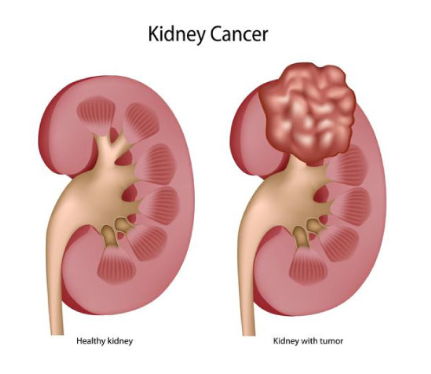
Blood in urine without pain, persistent one-sided flank pain, unexplained weight loss, and a palpable mass in the abdomen are the early kidney cancer signs most patients dismiss for months. Over 50% of kidney cancers are found incidentally on scans ordered for unrelated reasons because early-stage disease produces no obvious symptoms. The classic triad of hematuria, flank pain, and abdominal mass appears together in less than 10% of patients.
According to Dr. Sandeep Nayak, Kidney Cancer Treatment in Bangalore, “A patient comes in for a routine ultrasound and we find a kidney mass nobody was looking for. That’s how most kidney cancers get caught. The ones who come with symptoms usually wait months assuming it was a UTI or backache from sitting too long at work.“
Kidney cancer doesn’t announce itself. It gets found when someone looks for something else.
What Signs Do People Typically Ignore?
Kidney cancer grows quietly inside a space with room to hide a mass before causing obvious trouble.
- Blood in urine: Pink or cola-coloured urine appearing once then vanishing for weeks before returning. Most people assume UTI, take antibiotics from the medical store, and forget about it. Painless intermittent hematuria is kidney cancer until ultrasound says otherwise.
- Flank pain: Dull constant ache on one side between ribs and hip that doesn’t shift with position. Gets blamed on the mattress or sitting posture for months. A backache parking itself on one side for weeks needs ultrasound not Moov spray.
- Weight loss: Dropping 4-5 kg over months without trying. Kidney cancer releases cytokines that increase metabolism and suppress appetite simultaneously. Family notices before the patient does and by then the tumor has been growing for months already.
- Palpable mass: Hard lump felt in the abdomen or side when tumor grows large enough to push through tissue. Thin patients notice earlier. Most people don’t examine their own abdomen regularly so this gets missed until the mass becomes impossible to ignore.
Your oncologist evaluates these through kidney cancer screening including ultrasound, CT, and urinalysis.
What Should You Do If You Notice These?
Stage I kidney cancer inside the kidney carries 93% five-year survival. Stage IV drops below 15%. Gap between those numbers is often just months of ignoring a sign already present.
- Ultrasound first: Cheapest, fastest, no radiation. Picks up kidney masses above 2 cm reliably. Costs 800 rupees at any diagnostic centre. If recurrent UTI symptoms aren’t getting an ultrasound after the second episode, ask for one yourself.
- Urine test: Simple urinalysis detecting microscopic blood invisible to the naked eye. Most corporate health checkup packages include this. Patients skip reading the report and one line about RBCs in urine doesn’t seem important until it is.
- CT scan follows: Ultrasound finds a mass, contrast CT defines it. Size, vascularity, local extension, opposite kidney function all visible on one scan. This is where the surgical plan starts because CT tells the surgeon whether partial nephrectomy saves tissue or total removal is safer.
- Don’t wait for triad: All three symptoms appearing together means the cancer already grew large. Any single one lasting beyond two weeks warrants imaging. Waiting for the complete set is waiting for advanced disease.
Understanding how FNAC accuracy determines diagnostic confidence helps appreciate why kidney cancer also needs the right imaging at the right time to catch what symptoms alone keep missing.
Why Choose MACS Clinic?
Dr. Sandeep Nayak’s team at MACS Clinic runs PD-L1 testing, MSI analysis, and TMB profiling on tumor tissue before recommending immunotherapy to anyone. Medical oncologists do not prescribe checkpoint inhibitors because the patient asked for them. Prescribes them because the tumor’s molecular report said they’d work.
Patients whose cancer qualifies get immunotherapy with clear reasoning. Patients whose cancer doesn’t qualify gets told why without being made to feel like they’re getting the cheaper option. Because matching drugs to biology isn’t about cost. It’s about not wasting months on something that was never going to help.
Call +91 8035740000 to book your consultation.
FAQs
Is immunotherapy better than chemotherapy?
Depends on cancer type. For melanoma and PD-L1 high lung cancer yes. For most others no.
Does immunotherapy have fewer side effects than chemo?
Different, not fewer. Immune-related organ inflammation replaces hair loss and nausea.
How much does immunotherapy cost in India?
Roughly 3-4 lakhs per cycle depending on the drug and duration of treatment.
Can immunotherapy and chemotherapy be given together?
Yes, combination protocols for lung, bladder, and head and neck cancers show improved results.
References
- Immunotherapy in cancer treatment — National Cancer Institute
- Checkpoint inhibitor therapy — World Health Organization