

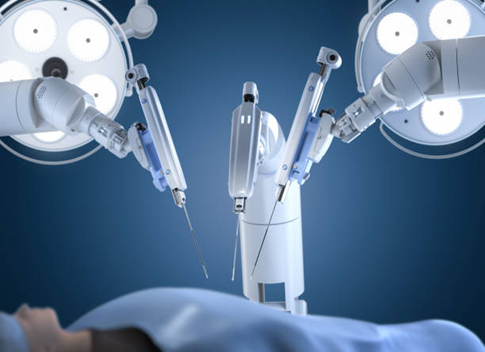
Cancer treatment has advanced significantly, with technology improving both effectiveness and efficiency. While surgery has long been a cornerstone of care, innovations like robotic surgery are transforming the field. Robotic surgery offers greater precision, minimal invasiveness, and faster recovery, enabling surgeons to perform complex procedures more accurately and with reduced risk.
Dr. Sandeep Nayak, a globally acclaimed surgical oncologist in India, explains, “Robotic surgery provides a level of precision that traditional methods can’t match. It allows us to remove tumors with greater accuracy, leading to faster recovery and fewer complications for patients.”
At MACS Clinic, Dr. Sandeep Nayak aims to provide the best cancer treatment in Bangalore, including cutting-edge robotic surgery for various cancers. With years of expertise in surgical oncology, Dr. Nayak leads a team committed to offering the most advanced and effective treatment options for cancer patients.
In this blog, we’ll explore how robotic surgery for cancer is shaping the future of cancer care and its many advantages over traditional techniques.
What Is Robotic Surgery?
Robotic surgery is a minimally invasive technique that uses robotic systems to enable surgeons to perform precise, complex procedures. The surgeon operates the robot from a console with 3D visualization, while robotic arms make smaller, more accurate movements than the human hand, reducing damage to surrounding healthy tissue.

Advantages of Robotic Surgery in Cancer Care
* Minimally Invasive
Robotic surgery involves smaller incisions compared to traditional surgery, which leads to less trauma to the body and a lower risk of infection.
* Greater Precision
The robotic system allows extremely precise movements. This makes it easier for surgeons to remove the tumors without damaging the surrounding tissue.
* Reduced Blood Loss
The precision of robotic surgery typically results in less blood loss during the procedure, which reduces the need for blood transfusions.
* Faster Recovery
With smaller incisions, patients experience less pain and faster recovery times. Many patients can return to normal activities more quickly than with traditional surgery.
* Shorter Hospital Stay
Due to the minimally invasive nature of robotic surgery, patients often have shorter hospital stays, leading to quicker discharge and reduced healthcare costs.
* Better Visuals
Robotic systems provide enhanced 3D and high-definition imaging, which improves the surgeon’s ability to see the tumor and surrounding tissues clearly.
Robotic Surgery in Different Types of Cancer

Robotic surgery is commonly used to perform robotic prostatectomy for prostate cancer. It allows for precise removal of the prostate gland with minimal damage to surrounding nerves, which helps preserve erectile function and urinary control.
- Colorectal Cancer


Robotic surgery is also used in lung cancer procedures such as robotic-assisted thoracic surgery (RATS). This technique enables surgeons to remove lung tumors with high precision, minimizing damage to the lungs and surrounding organs.

In head and neck cancers, robotic surgery can be used for procedures like removing tumors from the throat, mouth and other areas of the head and neck, ensuring better cosmetic and functional outcomes.
Robotic Surgery: A Game Changer in Complex Cancer Surgeries
Complex cancer surgeries require high precision in delicate areas like the brain, lungs, or abdomen. Robotic surgery allows surgeons to perform these intricate procedures with greater accuracy and control, especially when tumors are close to vital structures such as blood vessels, nerves, or organs.
With enhanced 3D imaging, robotic systems help surgeons navigate delicate tissues precisely. Smaller incisions cause less trauma, leading to faster recovery and fewer complications, while improved dexterity enables more effective execution of complex movements than traditional techniques.
The Role of the Surgeon in Robotic Surgery

In robotic surgery, the surgeon fully controls the robotic system through a console that provides a detailed 3D view of the surgical area. The robot does not act independently—the surgeon guides every movement with precision.
Robotic surgery is not automated; the surgeon’s skill, experience, and judgment are crucial for success. The system enhances their abilities with superior imaging and dexterity, enabling complex procedures that may be challenging with traditional methods.
The Future of Robotic Surgery in Cancer Care
The future of robotic surgery in cancer care is highly promising. As technology advances, more sophisticated robotic systems will handle complex surgeries with greater precision and efficiency. The integration of artificial intelligence (AI) may further enhance surgical decision-making and outcomes.
With ongoing improvements in imaging and robotic dexterity, complication risks are expected to decrease and recovery times to shorten. Robotic surgery is also likely to expand to more types of cancers and conditions, making it accessible to a larger number of patients.
Conclusion
Robotic surgery for cancer is transforming treatment by offering precise, minimally invasive solutions for complex procedures. With benefits such as faster recovery, fewer complications, and greater accuracy, it has become a vital tool in modern cancer care. As technology advances, its role in cancer treatment will continue to grow, expanding options for patients and surgeons.
At MACS Clinic, Dr. Sandeep Nayak offers advanced cancer treatment in Bangalore, including state-of-the-art robotic surgery for multiple cancer types. With his extensive experience as a surgical oncologist in India, he focuses on personalized treatment plans to ensure optimal outcomes for every patient.
FAQs
1. How does robotic surgery work for cancer?
2. Is robotic surgery effective for all types of cancer?
3. What are the advantages of robotic surgery over traditional surgery?
4. How long does recovery take after robotic cancer surgery?
5. Does robotic surgery require general anesthesia?
Reference links:
https://pmc.ncbi.nlm.nih.gov/articles/PMC8508149/
Disclaimer: The information shared in this content is for educational purposes and not for promotional use.