
No.96/A /9/1, 42nd cross, 3rd Main, 8th BIock, Jayanagar Bengaluru

Many breast cancers begin as a spot too small for any hand to feel, and that is when they are easiest to cure. By the time a lump can be felt, the cancer has often been growing silently for years.

What is a non-palpable breast cancer?
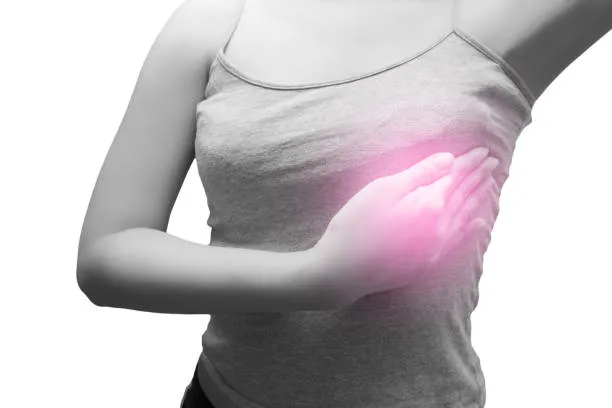
A non-palpable breast cancer is one that neither you nor your doctor can feel. It is too small, or sits too deep in the breast, to form a lump under the fingers.

These cancers are found only on a scan. On a mammogram they may show as a tiny cluster of calcium specks, a small shadow, or a subtle pull in the tissue. Most are only a few millimetres across, often smaller than a pea.

A woman with such a cancer feels completely well. She has no lump, no pain and no change she can see in the mirror.

Why this matters in India

India finds most of its breast cancers late. More than 60% of Indian women are diagnosed at stage 3 or 4, while about 60% of women in the United States are diagnosed at stage 0 or 1.

The cost of that delay is heavy. In 2022 India had 192,020 new breast cancers and 98,337 deaths, the highest number of breast cancer deaths of any country .

Stage at diagnosis decides the outcome more than anything else.

Stage when found

Women alive 5 years later

Stage 1

95%

Stage 2

92%

Stage 3

70%

Stage 4

21%

Figures from the NAMS task force report, 2025.

A cancer that cannot yet be felt is usually at stage 0 or stage 1. Finding it there puts a woman in the top row of this table.

How is it found if it cannot be felt?


A screening mammogram is the main tool. It is a low-dose X-ray of both breasts, taken when you have no symptoms at all. Its purpose is to find cancer while it is still too small to feel.

The test takes about 15 to 20 minutes. Each breast is pressed between two plates for a few seconds, which is uncomfortable but brief.

Two other scans help in specific situations:

  • Ultrasound adds detail in dense breasts and in younger women. It supports the mammogram and does not replace it for screening.
  • MRI is the most sensitive scan. It is used alongside the mammogram for women at high risk.

No test is perfect. A mammogram can miss some cancers, especially in dense breasts, and can raise alarms that turn out to be harmless. A new symptom needs a check-up even if your last scan was normal.

Who should be screened, and when?

The Breast Imaging Society, India advises a mammogram every year from the age of 40. India has no national mammography programme, so the first step has to be yours.

Your situation

What is advised

Age 40 to 70, no special risk

Mammogram once a year

Above 70

Decide with your doctor, based on your general health

Under 40, no special risk

Routine mammograms are not advised. Know your breasts and report any change

Higher risk: a BRCA gene change, a mother, sister or daughter who had breast cancer before menopause, or chest radiation when young

Yearly mammogram with MRI, starting as early as 30. A breast specialist should plan this with you

Based on the Breast Imaging Society, India guidelines.

Indian women tend to develop breast cancer younger. In some Indian studies the median age at diagnosis is 45 years, against 61 in the United States. That is why 40 is a sensible age to begin.

Screening is your choice. Ask your doctor to explain its benefits and its limits before you decide.

What if the scan shows something?

Most findings on a screening mammogram turn out not to be cancer. Being called back means the radiologist wants a closer look.

  1. More pictures. Magnified mammogram views or an ultrasound of the area.
  2. A needle biopsy. Under local anaesthesia, a thin needle guided by the scan takes small samples. You go home the same day.
  3. A marker clip. A tiny clip is often left at the spot so that it can be found again.
  4. The report. A pathologist confirms whether it is cancer and which type, usually within a week.

A biopsy is the only way to be certain. No treatment should be planned without it.

How is cancer you cannot feel treated?

The surgeon cannot feel the tumour either, so it is marked before the operation. A radiologist places a fine wire or a tiny seed at the spot under scan guidance. The surgeon follows that marker and removes the cancer with a rim of healthy tissue.

The removed tissue is X-rayed during the operation to confirm that the marked area is out.

Because these cancers are small, treatment is usually lighter:

  • The breast can usually be saved. Most women need only the affected area removed, followed by radiotherapy.
  • Armpit surgery is limited. A sentinel node biopsy checks the first few glands instead of removing them all.
  • Chemotherapy is needed less often. The decision depends on the type of cancer as well as its size.

Myths and facts

Myth

Fact

“I have no lump, so I have no cancer.”

Early cancers are often too small to feel. A scan can find them well before a lump appears.

“It does not hurt, so it is not serious.”

Most early breast cancers are painless. Pain is a poor guide.

“Nobody in my family had it.”

Most women with breast cancer have no family history of it.

“I am too young.”

Women in India are diagnosed about ten years younger than women in Western countries.

“Mammograms cause cancer.”

The X-ray dose is very low. From the age of 40, the benefit of early detection far outweighs this small risk.

“A biopsy will spread the cancer.”

A needle biopsy does not make cancer spread. It confirms the diagnosis and guides the right treatment.

“Cancer means losing the breast.”

When cancer is found early, most women can keep the breast.

What you can do this month

October is Breast Cancer Awareness Month, and one appointment is enough to start.

  • If you are 40 or older, book a mammogram, then repeat it every year.
  • Get to know how your breasts normally look and feel, so that you notice a change.
  • Find out whether breast or ovarian cancer runs in your family, on your mother’s side and your father’s.
  • Remind one woman you care about to do the same.

A cancer found before it can be felt is a cancer that can usually be cured. Do not wait for a lump.

This article is for general awareness and does not replace a consultation with your doctor.