

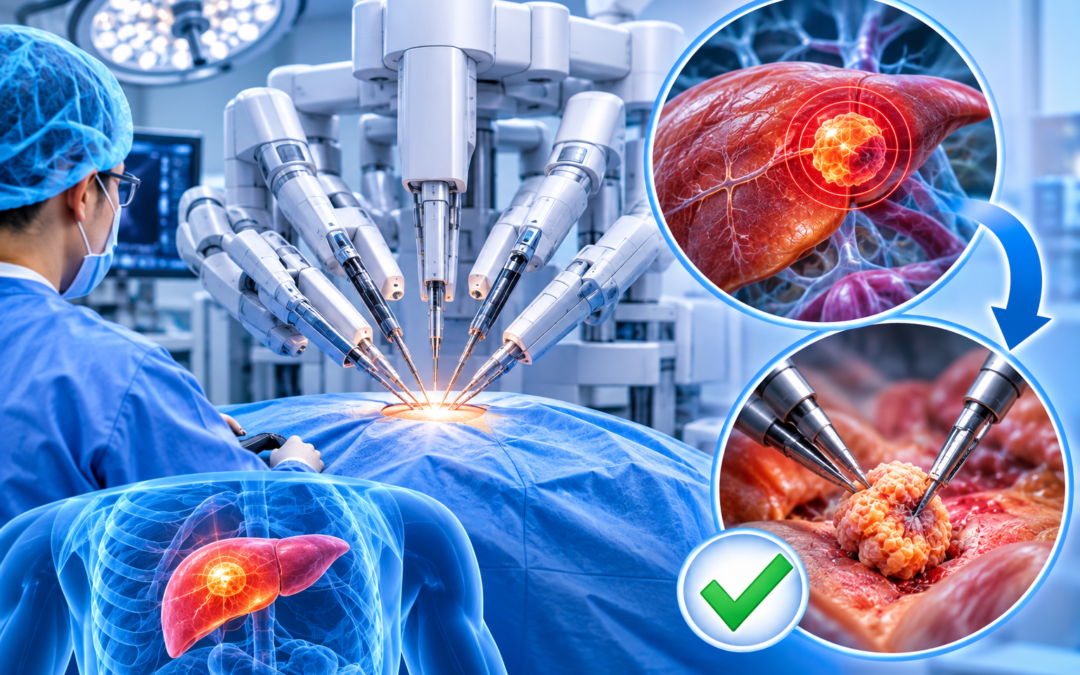
Yes, in carefully selected cases. Robotic surgery can be repeated when cancer returns, depending on where and how much it has come back, what treatment has been given before and the patient’s overall health. Scar tissue from earlier surgery or radiation can make a second robotic operation harder, so some patients still need a larger open operation, and a few are better served by a different treatment altogether.
Dr. Sandeep Nayak, who provides cancer treatment in Bangalore, at MACS Clinic, says, “The robot doesn’t decide whether a second operation makes sense, the cancer and the scans do. We look at whether the recurrence can be removed completely, how much scar tissue the earlier treatment has left, and whether a keyhole route is safe. If it isn’t, switching to open surgery is a safety decision, not a failure.”
Has cancer returned after surgery? Consult an experienced surgical oncologist to understand whether repeat robotic surgery may be a suitable treatment option.
For the wider question of repeat surgery, see Can You Have Cancer Surgery More Than Once?
Can Robotic Surgery Be Repeated for Cancer?
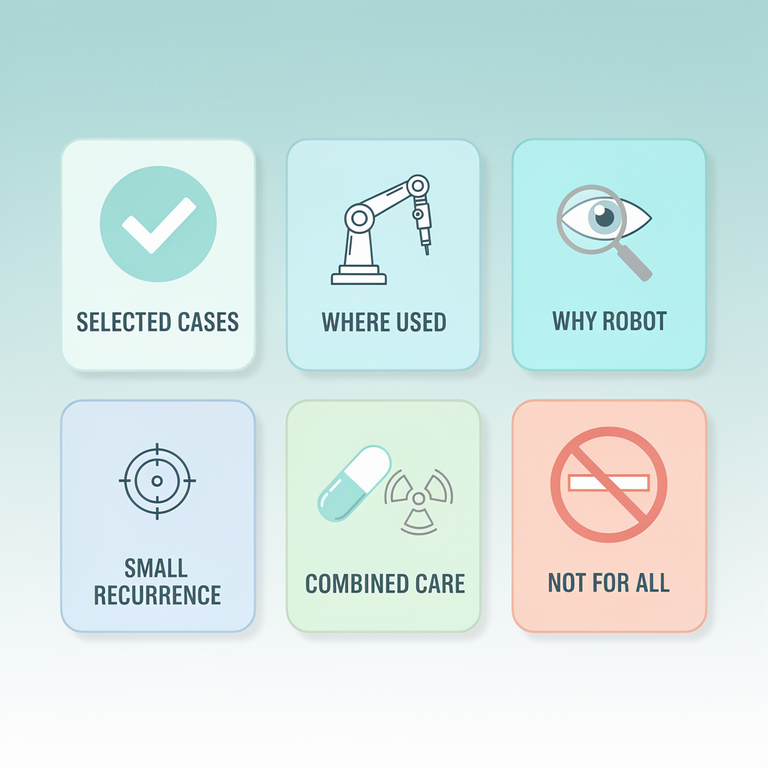
Yes, in carefully selected cases
There’s no rule against it. Whether repeat robotic cancer surgery is right depends on the recurrence and on how the body has been affected by earlier treatment.
Where it has been used
Reports describe robotic operations for prostate cancer that returned after radiation, for cervical cancer that came back in the pelvis, for new spots in the liver after a first liver operation, and for throat cancers that recurred after radiotherapy. These come from experienced centres and selected patients.
Why surgeons choose the robot
It gives a magnified 3D view and fine instruments for tight spaces, which can help in an area that has already been operated on. It often means less blood loss than open surgery, though that varies.
It works best for small, local recurrences
If the cancer has returned in one place and can be removed completely, robotic surgery for recurrent cancer is more likely to be an option.
Often combined with other treatment
Drugs, radiation or targeted therapy may come before or after the operation. The page on robotic surgery for cancer explains how the technique is used more generally.
It doesn’t suit everyone
Scar tissue, earlier radiation and where the recurrence sits can all rule it out, as the next section explains.
What Makes Repeat Robotic Surgery Harder, and When Is Open Surgery Safer?

Scar tissue and adhesions
After an earlier operation, organs can stick together, so the surgeon may spend a long time freeing up space just to reach the tumour. The post on being a good candidate for robotic cancer surgery covers how adhesions affect the choice.
Previous radiation
Radiation can leave tissue stiff and slow to heal, which makes the dissection harder and raises the risk of complications.
Recurrence close to vital structures
Next to major vessels, nerves, the bladder or the bowel, a larger open operation can sometimes be safer.
Large or widespread recurrence
A big recurrence may need open surgery, and cancer in many places is usually treated with drugs first.
Switching to open during the operation
Surgeons sometimes convert for safety, and a good surgeon tells you the likelihood beforehand. The comparison of open surgery vs robotic surgery healing explains the trade-offs.
Other options may do the job
Focused radiation, ablation or drug treatment can sometimes handle a recurrence without another operation.
For why cancer returns in the first place, the previous blog on whether cancer can come back after surgery explains it.
What Determines Whether Repeat Robotic Cancer Surgery Is Possible?
Where and how much has come back
Scans such as PET-CT and MRI show whether the whole recurrence can be reached and removed.
What treatment was given before
The type of earlier surgery, and whether radiation was used, shapes how difficult a second operation will be.
How long since the first treatment
A longer gap often points to slower-growing disease, though it isn’t a rule.
The tumour’s profile
Precision oncology testing can show which drugs may help control the cancer around the operation.
Fitness
Heart and lung checks and blood tests help judge how well the body will cope.
Surgeon experience with repeat and robotic operations
It’s reasonable to ask how often the surgeon performs this type of surgery.
Review by the whole team
Surgery, medical oncology, radiation oncology and radiology looking at the same case before a plan is fixed.
Risks and limits
A second operation carries a higher chance of bleeding, injury to nearby organs, infection and a slower recovery. It can need converting to open surgery, and no operation can promise a cure.
Key Takeaway
Repeat robotic cancer surgery can be possible when cancer comes back, especially if the recurrence is small, local and completely removable. Scar tissue, earlier radiation and the position of the recurrence decide whether keyhole surgery is safe or open surgery or another treatment is better. Questions about your own situation are best discussed with your treating oncologist.
Frequently Asked Questions
1.Can robotic surgery be repeated for cancer?
Yes, in carefully selected cases, depending on where the cancer has returned and what treatment came before.
2.Is a repeat robotic operation riskier?
Often it’s more complex because of scar tissue and earlier radiation, so the risk can be higher.
3.Will I need open surgery instead?
Sometimes. It depends on the scar tissue and where the recurrence is.
4.Does recurrence always need surgery?
No. Radiation, ablation or drug treatment may suit some recurrences better.
Disclaimer
This article is for patient education only. It is not medical advice and does not replace consultation with a qualified doctor. Suitability, risks and outcomes differ for each person.
References:
- Salvage Radical Hysterectomy for Recurrent Cervical Cancer in a Previously Irradiated Field Using the hinotori Surgical Robot System: A Case Report. Cureus. https://www.ncbi.nlm.nih.gov/pmc/articles/PMC12686199/
- Spray-Type Adhesion Barrier Enhances Safety and Feasibility of Robotic Repeat Liver Resection: Initial Experience and Outcomes. Cureus, 2024. https://www.ncbi.nlm.nih.gov/pmc/articles/PMC11164241/
- National Cancer Institute. Recurrent Cancer: When Cancer Comes Back. https://www.cancer.gov/types/recurrent-cancer