

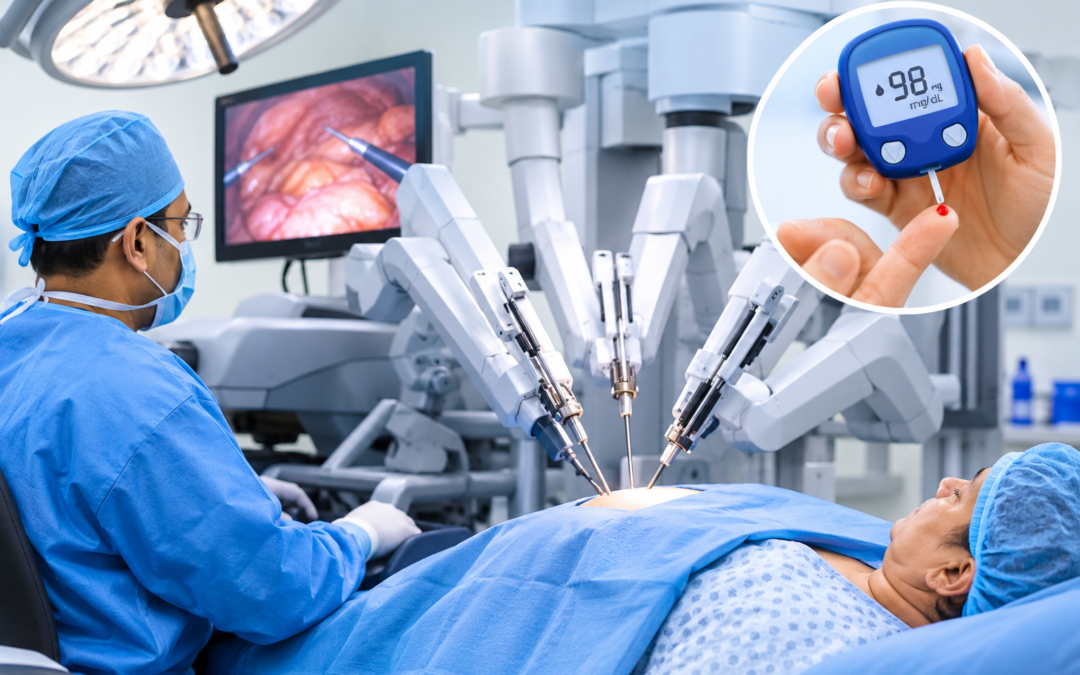
Yes, it can be, and having diabetes doesn’t rule it out. What matters is how well your blood sugar is controlled going in, and how carefully it’s managed around the operation. Diabetes raises the risk of wound infection, slow healing and some other complications after any surgery. Robotic surgery uses small cuts instead of one large one, and minimally invasive surgery generally brings fewer wound infections than open surgery, which is useful if you have diabetes. But the robot doesn’t remove the diabetes risks. Operations can run long, and a high sugar level on the day can cancel out the benefit. So the safest route is the same for robotic and other surgery: check your sugar control early, adjust your diabetes medicines, and keep levels steady through the operation and recovery.
Dr. Sandeep Nayak, who provides cancer treatment in Bangalore, says diabetes is a planning issue more than a barrier. “We check a recent HbA1c, which shows your average blood sugar over the past three months, and we ask your diabetes doctor to help bring the numbers into a safe range before elective surgery. We also decide with the anaesthetist which diabetes medicines to stop and when, because some need to be held before the operation. During and after, we monitor sugars closely and use insulin if needed. The robot helps with small cuts and often fewer wound problems, but good sugar control is what protects you.”
If you have diabetes and cancer surgery has been advised, it’s worth planning your sugar control early. Share your reports, medicine list and recent HbA1c with our team, and they’ll explain how the operation and your diabetes care would fit together.
Robotic Surgery in Diabetic Patients: What the Evidence Shows

- Diabetes raises surgical risk. People with diabetes face more wound infections, slower healing, longer hospital stays, and more kidney and heart complications after major surgery, and high sugar levels around the operation add to it.
- Smaller cuts help. Minimally invasive surgery, which includes robotic surgery, has been shown to lower the risk of wound infection compared with open surgery. You can read about the approach on our MACS advantages page.
- The evidence is indirect. Few large studies look only at robotic cancer surgery in people with diabetes, so most of what we know comes from surgery in general and from minimally invasive surgery. That’s why teams are cautious and plan carefully.
- Time under anaesthesia matters. In a study of major surgery in patients with diabetes, complications were linked to how long the operation lasted. Robotic operations such as those for rectal cancer can be long, which is one more reason to have sugars well controlled.
Cancer Surgery for Patients With Diabetes: Getting Ready

- Get a recent HbA1c, ideally within three months. Many centres aim for under 8% before elective surgery. Cancer surgery is often time-sensitive, so the team balances this against the need to operate soon, and urgent surgery isn’t delayed only because of a sugar number.
- Your diabetes medicines need a plan. Metformin and most other tablets are usually held on the day of surgery. SGLT2 inhibitors are generally stopped three to four days before, and GLP-1 drugs slow stomach emptying, so your anaesthetist needs to know. Insulin doses are adjusted. Never change anything yourself, because your team will give you exact instructions.
- Tell your team about everything you take, including herbal products sold for blood sugar. Our blog on supplements during cancer treatment explains why this matters.
- Mention any history of low blood sugar, kidney or heart problems, or nerve damage in the feet. If you’d like to understand how keyhole and robotic operations work, read our post on minimally invasive surgery.
What Decides How Safe Surgery Is With Diabetes?
It isn’t a single number, and several things count together.
- How well controlled your sugar is. A higher HbA1c before surgery is linked to more infections afterwards.
- Other effects of diabetes, such as kidney, heart or nerve problems, and how well they’re managed.
- How urgent the cancer is. Fast-growing or symptomatic cancers can’t always wait for perfect sugar control.
- The length and complexity of the operation. Longer operations carry more risk.
- Your weight, nutrition and general fitness, which affect healing.
- How closely sugar is watched around the operation. A common target is to keep blood glucose between about 100 and 180 mg/dL, with insulin used if it goes above 180.
Key Takeaways
- Robotic cancer surgery can be safe for people with diabetes, but diabetes still needs planning before, during and after.
- Small cuts generally mean fewer wound infections, which is a real advantage. It doesn’t replace good sugar control.
- A recent HbA1c, a medicine plan agreed with your anaesthetist, and careful sugar monitoring are the three basics.
- Never stop or change diabetes medicines on your own. Your team will tell you exactly what to do.
- Questions about your own surgery? You can call the clinic on +91 9482202240.
Frequently Asked Questions
1.Is robotic cancer surgery safe for diabetic patients?
It can be, especially when blood sugar is well controlled and you’re carefully assessed beforehand. Diabetes still raises the risk of infection and slow healing, so the team plans your sugar control and medicines around the operation.
2.Does diabetes increase the risks of cancer surgery?
Yes. People with diabetes are more likely to have wound infections, slow healing, and kidney or heart complications after major surgery. Good sugar control before and after surgery lowers these risks.
3.Should I stop my diabetes medicines before cancer surgery?
Don’t decide on your own. Usually metformin and most tablets are held on the day of surgery, SGLT2 inhibitors are stopped three to four days before, and GLP-1 drugs need your anaesthetist’s input. Your team will give you exact instructions.
4.Can cancer surgery be delayed if my blood sugar is high?
For planned surgery, teams may aim to improve control first, for example an HbA1c under 8%. Cancer surgery is often time-sensitive, though, so they weigh the delay against the risk of waiting, and urgent surgery isn’t postponed just for a sugar number.
Disclaimer
This content is published for educational and informational purposes only and is not a substitute for medical advice. Diabetes care around surgery must be tailored to you, so please follow the instructions of your surgeon, anaesthetist and diabetes doctor.
References:
- Surgical Site Infection Following Minimally Invasive Lobectomy: Is Robotic Surgery Superior?, PubMed Central
- The Role of HbA1c as a Positive Perioperative Predictor of Surgical Site and Other Postoperative Infections, PubMed Central
- Perioperative Management of Diabetes, Journal of Xiangya Medicine
- Strategies for Surgical Success in Patients With Diabetes, U.S. Pharmacist
- Perioperative Diabetes Care in 2026, NYSORA
- MACS Advantages, MACS Clinic
- Rectal Cancer Treatment in Bangalore, MACS Clinic