

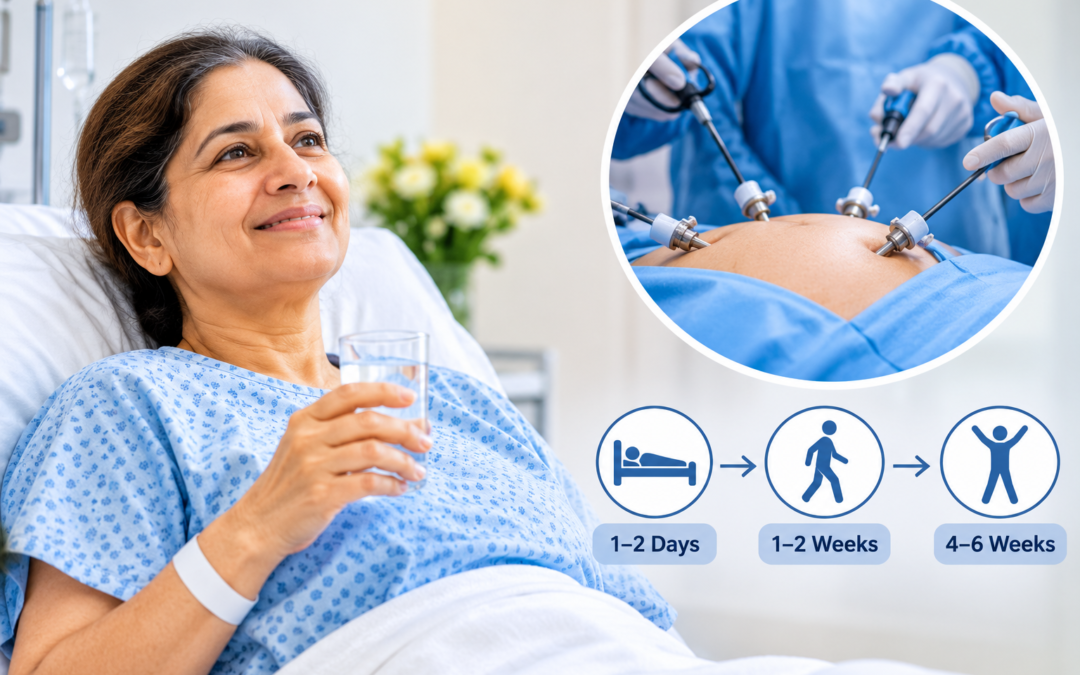
Most people need about 2 to 6 weeks to get back to their usual routine, and full recovery can stretch to 6 to 8 weeks, depending on the organ treated and the person’s general health. Smaller cuts mean less pain and a quicker start than open surgery, but they do not change the fact that the body has been through a major operation. So what is a realistic timeline, and what decides whether you land at the short end or the long end of that range? The organ operated on, how much was done, and how fit you were going in carry most of the weight.
Dr. Sandeep Nayak, who provides the Best Cancer Treatment in Bangalore, notices how often the scars mislead people. “They see a few small marks and assume the recovery will be trivial. It is easier, no question, but internally the work may be the same as in an open operation, a section of bowel removed or a set of lymph nodes cleared. So I ask people to judge their recovery by energy and function, not by how the scars look. Walk early, eat properly, and expect good days and tired days mixed together.”
Planning a laparoscopic operation and want to know what the weeks afterwards will look like?
What Does Laparoscopic Cancer Surgery Recovery Time Look Like Week by Week?

How long does it take to recover from laparoscopic cancer surgery in practice? The pattern below is typical, though each person moves at their own pace.
- In hospital. Many patients stay 2 to 5 days, and longer after complex operations on the stomach, food pipe or liver. Walking usually begins the same day or the next, which is part of the approach described in our post on enhanced recovery after cancer surgery.
- Weeks 1 and 2. Tiredness is the main complaint, along with soreness at the small incisions, bloating, and pain at the tip of the shoulder for a day or two caused by the gas used during surgery. Short walks that get a little longer each day help, and light household tasks are fine.
- Weeks 2 to 4. Many people return to desk work, appetite improves, and energy comes back in a patchy way, with a good morning followed by a flat afternoon.
- Weeks 4 to 6. Heavy lifting is usually avoided until about now, to protect the healing around the incision sites, and exercise is rebuilt gradually.
- Weeks 6 to 8 and beyond. Most people feel close to normal by this point, though more complex operations can take longer. Our post on recovery time after cancer surgery compares timelines across different operations.
What Speeds Up or Slows Down Recovery?

Laparoscopic cancer surgery recovery time varies more than the headline numbers suggest, and a few things explain why.
- The organ and the extent of surgery. Removing a kidney or the womb is generally quicker to recover from than removing part of the stomach or bowel with a join, or a section of the liver.
- Fitness and age before surgery. Fitter patients bounce back faster, and our post on elderly patients and minimally invasive cancer surgery shows that age alone matters less than overall condition.
- Nutrition. Protein and enough calories help wounds heal and rebuild strength, and diet counselling before and after the operation makes a difference.
- Early movement and good pain control. Walking and breathing exercises lower the risk of chest infection and clots, and using less opioid medicine helps the bowel restart sooner.
- Other treatment. Chemotherapy or radiation planned after surgery can add fatigue to the picture.
- Complications. A wound infection, a slow bowel or a leak at a join can lengthen recovery, and are the reason the warning signs below matter.
When Should You Call the Team During Recovery?
A few signs mean the recovery has stopped following the usual pattern.
- Fever of 38°C (100.4°F) or higher, or chills.
- Pain that is getting worse instead of gradually easing.
- Repeated vomiting, or a swollen, tight abdomen that is not passing gas or stool.
- Redness, swelling or discharge at an incision.
- Swelling or pain in one calf, or sudden breathlessness or chest pain, which need emergency care.
What Determines the Right Treatment Approach?
Laparoscopic surgery is not the answer for every patient, and these are the reasons the team decides case by case.
- The tumour. Its size, position and stage decide whether it can be removed safely and completely through keyhole access, as explained in our overview of laparoscopy for cancer.
- Earlier operations. Scarring from previous surgery can make a keyhole approach harder.
- The patient’s fitness. Heart, lung and kidney function and nutrition shape the plan and the recovery.
- The goal of the operation. A complete cancer removal always comes first, and an open operation is chosen when it is the safer way to achieve it.
- The team. At MACS Clinic the surgical team discusses the approach and the expected recovery before the operation, and the clinic’s own experience of reduced pain medicine use and faster return to activity is described on its advantages page.
Key Takeaway
- Most people recover from laparoscopic cancer surgery in about 2 to 6 weeks, with full recovery by 6 to 8 weeks, though complex operations can take longer.
- Fatigue, bloating and mild soreness are normal, and walking early and eating well help.
- Heavy lifting is usually restricted for around 4 to 6 weeks.
- Fever, worsening pain, repeated vomiting or wound changes should be reported the same day.
- For questions about your own recovery, you can contact the clinic at +91 9482202240.
Frequently Asked Questions
1.When can I go back to work after laparoscopic cancer surgery?
Many people return to desk work after 2 to 4 weeks, though physically demanding jobs usually need longer. The timing depends on the operation and on how tired you still are.
2.When can I drive?
Usually after one to two weeks, once you are off strong painkillers and can brake and turn comfortably without pain. Check with your surgeon, since it depends on the operation.
3.Why am I so tired when the cuts are so small?
Because the body has still had anaesthesia, a major internal operation and a change in eating and sleeping. Fatigue is the most common feature of recovery and improves gradually over weeks.
4.When can I lift or exercise normally?
Walking is encouraged from the start. Lifting anything heavy is usually avoided for about 4 to 6 weeks, and vigorous exercise is built back up step by step with your surgeon’s agreement.
Disclaimer
This content is published for educational and informational purposes only.