
Thyroid cancer is the most common endocrine malignancy, and its diagnosis has risen steadily over recent decades. GLOBOCAN 2022 recorded about 821,214 new cases globally, with India reporting over 34,000 new cases annually, most often among women and younger adults.
Dr. Sandeep Nayak, a highly regarded surgical oncologist and a pioneer of robotic cancer surgery in India, notes that for most of these patients, surgery remains the primary treatment, and the goal has moved beyond simply removing the tumor.
He explains that modern thyroid surgery is judged equally on cancer clearance, protection of the vocal nerve and parathyroid glands, and the cosmetic result, and that a robotic approach proves its value in all of these.
That principle shapes care at MACS Clinic, Bangalore, where Dr. Sandeep Nayak performs Robotic Surgery for Thyroid Cancer. Instead of a visible cut across the neck, the tumor is removed through tiny, discreet incisions, guided by a robotic system that offers magnified vision and tremor-free precision. The result is accurate cancer control, protection of critical neck structures, and a scar-free outcome that patients value.
Want to know if this option fits your case? Read on.
What Does Each Stage Mean?
First, let’s clear up what actually happens during the procedure.
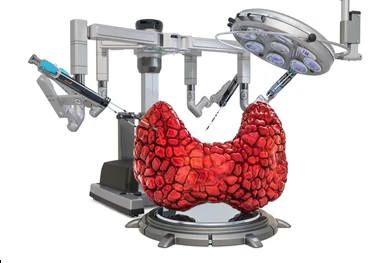
Robotic thyroid surgery uses the da Vinci robotic system. The surgeon sits at a console and controls tiny instruments through a remote, scar-free entry point. A high-definition 3D camera gives a magnified view of the thyroid gland, nearby nerves, and parathyroid glands.
Common approaches include:
- Transaxillary approach: Instruments enter through a small incision in the armpit. No neck scar at all.
- Retroauricular approach: Access is made through a hidden incision behind the ear.
- BABA (Bilateral Axillo-Breast Approach): Used for tumors needing access to both sides of the thyroid.
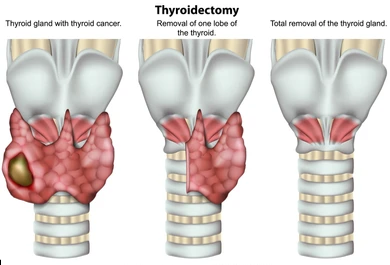
The surgeon may remove half the gland (hemithyroidectomy) or the whole gland (total thyroidectomy), depending on the size, type, and spread of the tumor. Lymph nodes can also be cleared when needed. Robotic surgery is usually best suited for early-stage, well-defined thyroid cancers rather than large or widely spread tumors.
Safety Considerations for Robotic Surgery in Thyroid Cancer
Now, the question most patients ask: Is it safe?
Robotic thyroid surgery is considered safe when done by an experienced robotic oncosurgeon and offered to the right patient. Safety depends heavily on careful case selection.

Key factors that the surgical team checks:
- Tumor size and stage
Smaller, early-stage cancers are the best candidates.
- No major spread
Cancer that has invaded the windpipe, voice box, or distant organs may need open surgery instead.
- Patient health
General fitness for anesthesia and surgery is assessed beforehand.
- Surgeon experience
Outcomes are strongly linked to the number of robotic thyroid cases a surgeon has handled.
A thorough pre-surgery evaluation, including ultrasound, biopsy, and CT imaging, helps confirm whether robotic surgery is the safest route. If it is not, an honest recommendation for an alternative is given.
Have safety concerns? Connect with a specialist who can talk you through your case and ease your mind.
Benefits of Robotic Surgery for Thyroid Cancer

Here’s why so many patients choose this route.
Robotic surgery brings together cancer control and a better recovery experience:
- No neck scar.
The incision stays hidden in the armpit or behind the ear.
- Greater precision.
Magnified 3D vision and tremor-free instruments help protect the voice nerve and parathyroid glands.
- Less blood loss.
Fine instrument control reduces bleeding during surgery.
- Lower nerve injury risk in skilled hands.
Better visualization supports careful dissection around critical structures.
- Faster return to daily life.
Many patients resume routine activity sooner after open surgery.
- Better cosmetic satisfaction.
This matters especially for younger patients and those who do not want a visible reminder of cancer treatment.
For people researching treatment for thyroid cancer in Bangalore, these benefits often make robotic surgery an appealing choice when they qualify for it.
Potential Risks and Complications of Robotic Surgery
Let’s be honest about the other side, too.
No surgery is risk-free, and robotic thyroid surgery has its own set of possible complications:
- Voice changes. Temporary or, rarely, permanent hoarseness if the recurrent laryngeal nerve is affected.
- Low calcium levels. The parathyroid glands may be bruised, causing tingling or cramps that often settle with supplements.
- Seroma or fluid collection. Fluid may accumulate at the surgical site and require drainage.
- Longer operating time. Robotic procedures can take longer than open surgery.
- Conversion to open surgery. In a few cases, the surgeon may need to switch to the conventional method for safety.
- Standard surgical risks. Bleeding, infection, and anesthesia-related issues are common with any operation.
Most complications are uncommon and manageable, especially when a high-volume robotic team does robotic surgery. Discussing these openly before surgery helps you make an informed decision.
Concerned about the risks? Speak with an expert for a clear, honest assessment before you decide.
Success Rates of Robotic Surgery for Thyroid Cancer

For suitable patients, robotic thyroid surgery achieves oncological outcomes comparable to those of traditional open surgery. The rates of cancer removal, lymph node clearance, and long-term control are similar when the right cases are selected.
Most thyroid cancers, particularly papillary and follicular types, already carry a strong prognosis. Robotic surgery does not change the underlying cancer outcome; it changes the surgical experience by adding precision and a scar-free result. Patient satisfaction with cosmetic outcomes is consistently high.
Long-term results still depend on tumor type, stage, complete removal, and proper follow-up. For staging and risk details, patients can refer to the American Thyroid Association’s thyroid cancer staging guidelines.
Recovery is smoother than most people expect. Here’s what it looks like.
Post-Surgery Recovery and Care
After robotic surgery at MACS in Bangalore, most patients stay in the hospital for 1 to 2 days. The recovery plan usually includes:
- Calcium monitoring. Blood calcium is checked, and supplements are given if levels drop.
- Voice care. Mild voice changes often improve within weeks. Voice rest may be advised early on.
- Wound care. The hidden incision heals with simple care and minimal visible marking.
- Thyroid hormone replacement. If the whole gland is removed, lifelong thyroid medication is needed and is easy to manage.
- Activity guidance. Light activity resumes quickly; strenuous tasks are paused for a couple of weeks.
- Regular follow-up. Ongoing reviews with ultrasound and blood tests track recovery and watch for recurrence.
For patients undergoing cancer treatment at MACS Clinic in Bangalore, the follow-up program is structured to support both physical healing and peace of mind.
FAQs
1. Does robotic thyroid surgery leave a scar on the neck?
No. The incision is placed in the armpit or behind the ear, so the neck stays scar-free.
2. Who is a good candidate for robotic thyroid surgery?
Patients with early-stage, well-defined thyroid cancers that have not widely spread are usually the best candidates.
3. Is robotic surgery as effective as open thyroid surgery?
Yes. For eligible patients, cancer control and outcomes are comparable to those of traditional open surgery.
4. Will I need thyroid medication after surgery?
If the entire thyroid is removed, lifelong thyroid hormone replacement is needed. It is simple to take and monitor.
5. Can robotic surgery affect my voice?
Temporary voice changes can occur and usually improve. Permanent changes are rare in experienced hands.
Disclaimer: The information shared in this content is for educational purposes and not for promotional use.