

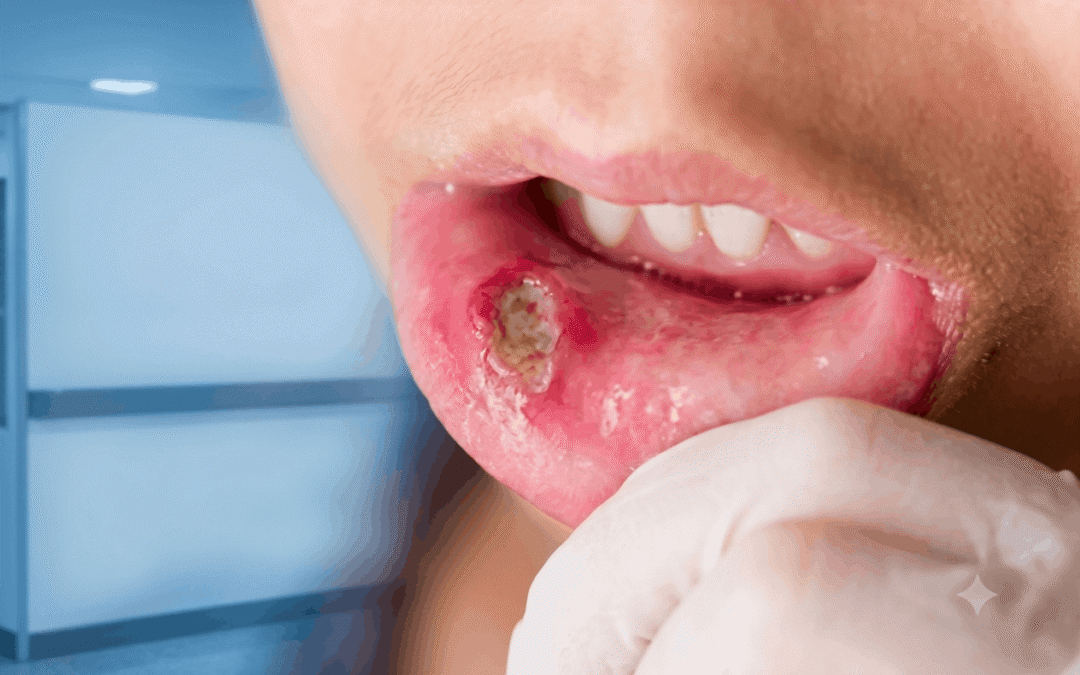
No. Not always, not even close, most of the time. A sore hanging around your mouth for a while is usually something ordinary, a sharp edge on a tooth rubbing the same spot over and over, dentures that don’t quite fit right, a burn from something too hot, stress, low vitamin B12 or iron. Boring stuff, mostly. But here’s the part that actually matters. Two weeks. If a sore’s still there for the past two weeks, that’s the line where you stop assuming and start checking.
Dr. Sandeep Nayak, who provides Best Cancer Treatment in Bangalore, puts it plainly. “Most mouth ulcers I see aren’t cancer, not even close. Somebody’s been biting the same cheek for a month because of a broken tooth, or their denture’s rubbing wrong. But every so often, someone comes in with a sore that’s been there six, eight weeks, and they kept waiting because it didn’t hurt much. That’s actually one of the warning signs I pay closest attention to. Cancer sores in the mouth often don’t hurt the way you’d expect.”
Got a mouth sore that’s been hanging around longer than it should?
What Usually Causes a Mouth Sore That Won't Heal?
Most of the time, it’s something mechanical or nutritional, not cancer at all.
Sharp teeth or dental work. A chipped tooth, rough filling, or broken denture edge rubbing against the same spot day after day. The sore keeps reopening because whatever’s causing it never stops.
Ill-fitting dentures. Same idea. Constant friction in one spot, sore never gets a real chance to close up.
Minor burns or bites. Hot food, hot tea, an accidental cheek bite during a meal. Usually heals within a week or two on its own.
Stress and low immunity. Canker sores linked to stress, poor sleep, or a run-down immune system tend to come and go, sometimes lingering longer than expected.
Vitamin deficiencies. Low B12, folate, or iron can cause sores that just don’t want to close properly, no matter how much time passes.
When Does It Stop Being Something to Wait Out?
A handful of specific things push a sore from “probably nothing” into “needs a look.”
Past two weeks with no improvement. This is the single clearest signal. Ordinary sores heal within that window. One that doesn’t deserves a proper exam, not another round of waiting.
No pain, or barely any. Counterintuitive, but true. A lot of oral cancers don’t hurt much, especially early on. People often assume something painless can’t be serious, and that assumption is exactly backwards here.
A hard, raised, or thickened edge. Ordinary sores tend to feel flat and soft around the border. Something firmer, raised, or oddly textured is worth flagging specifically.
Bleeding without an obvious cause. A sore that bleeds easily when touched, without you biting it or irritating it recently.
Risk factors stacking up. Tobacco use, heavy alcohol consumption, or a history of chewing tobacco all raise the stakes considerably if a sore isn’t healing. Our blog on what are the early signs of oral cancer covers the wider symptom picture beyond just ulcers specifically.
Why Choose MACS Clinic for Non-Healing Mouth Sores?
Dr. Sandeep Nayak’s team at MACS Clinic doesn’t jump to conclusions with every mouth sore that walks through the door, most genuinely aren’t anything serious. But a proper exam, and biopsy when something looks even slightly off, catches the ones that matter before they’ve had time to grow into something bigger.
For patients where oral cancer is confirmed, RIA-MIND and other minimally invasive surgical techniques are available depending on the case. A sore that’s overstayed its welcome? Reach the team at +91 9482202240.
FAQs
How long should a normal mouth ulcer take to heal?
Most heal within one to two weeks on their own, especially the kind caused by minor irritation or stress. Anything sticking around past that window is worth getting looked at.
Do cancerous mouth sores usually hurt?
Often not, or not much, which is exactly why they get ignored longer than they should. Painless doesn’t mean harmless in this case.
Can a dentist catch this before a doctor does?
Yes, often. Dentists see the inside of your mouth regularly and can spot something unusual early. If they flag a sore as concerning, that referral is worth taking seriously.
What happens during the checkup for a non-healing sore?
Usually a visual exam first, followed by a biopsy if anything looks suspicious. A small tissue sample gets tested, and results typically come back within a few days.
Disclaimer: This content is published for educational and informational purposes only.