
A port or a PICC line (peripherally inserted central catheter) gives the chemo team one dependable way into a big vein. That’s the whole point. Months of treatment through small arm veins leave them bruised, sore and hard to find, and a few of the drugs can damage the skin badly if they leak out. With a port or PICC line in place, the drugs go straight into a large vein and you’re not poked again and again.
According to Dr. Sandeep Nayak, who provides cancer treatment in Bangalore, “Patients often ask me what a chemo port is, and usually they’re a bit frightened of it. It’s a small device under the skin, and that’s all. Some of the drugs we use can damage a thin vein badly. A port or PICC line takes that risk away, and it saves people a great deal of pain over the months of treatment.”
Learn why ports and PICC lines are used during chemotherapy, how they make treatment easier and safer, and how to choose the right option with your oncology team.
What Is a Chemo Port and Why Do Doctors Suggest One?
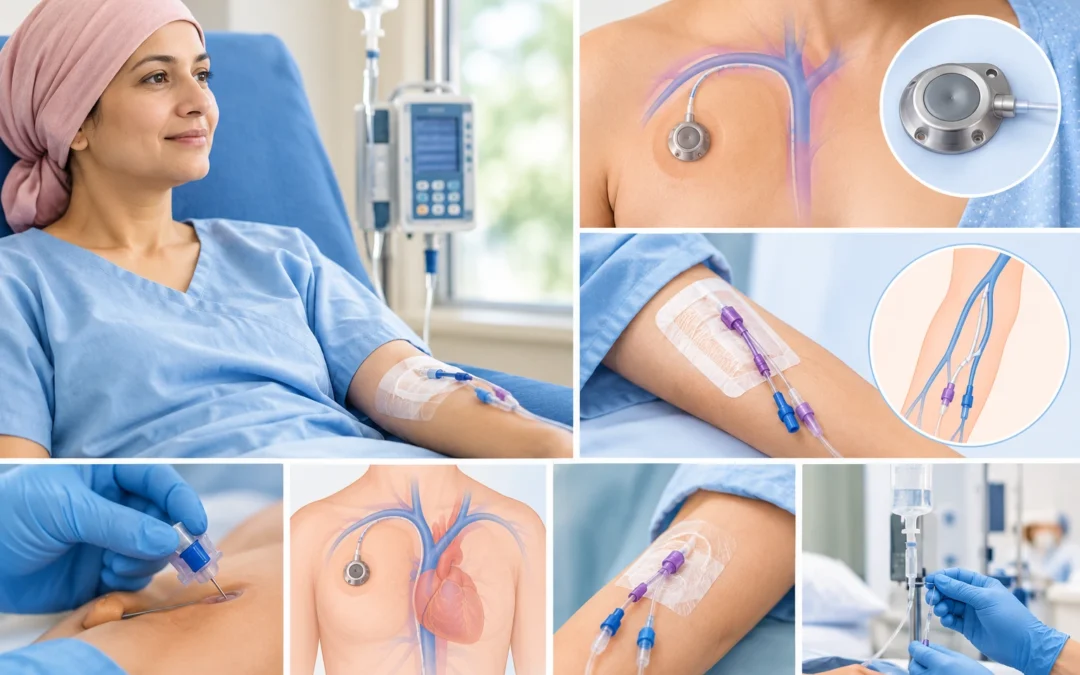
- It’s smaller than most people expect. A little disc under the skin below the collarbone, with a soft tube going into a big vein near the heart. You’ll feel a bump if you press on it. Nobody else will notice. After it heals there’s no dressing, nothing dangling, nothing to look after day to day.
- Getting it in doesn’t take long. You’re numbed, you can have sedation if you’re nervous, and you walk out the same evening. Expect a sore chest for a couple of days. Not more.
- On treatment days, the nurse slips a special needle through the skin into the port, and the blood tests and drugs all go through that one spot. Think of a long course, like the combinations used in colon cancer or breast cancer. Without a port, that’s dozens of needle sticks. With one, it’s the same quick prick each time.
- Ports last. Months, often years, as long as they’re working. When it’s sitting idle, the hospital will flush it every month or two, and they’ll tell you the exact gap. Most people swim, shower and carry on as usual once it’s healed. Two things to watch for are infection and, rarely, a clot. A fever, or swelling and redness around the site, means call the team that day.
When Is a PICC Line for Chemotherapy Used Instead?
- A PICC line for chemotherapy goes in through a vein in the upper arm. A long thin tube runs up to a large vein near the heart, and a short end stays outside, covered with a dressing. It’s often placed at the bedside or in a small procedure room, and usually there’s no surgery involved.
- Doctors pick it when treatment is shorter, say a few weeks to a few months. It also helps when someone needs to start quickly, or when they aren’t well enough for even a small operation to place a port.
- It does ask more of you. A nurse has to change the dressing regularly, and the arm must stay dry, which means wrapping it up for every shower. No heavy lifting. No hard arm exercise. Eating well helps your skin and the site cope, and diet counselling can make that easier during treatment.
- Ring the hospital straight away if the arm turns red, swollen or painful, if the line seems to have moved, or if you get a fever or chills. These can point to an infection or a clot. Our post on common chemotherapy side effects lists which symptoms shouldn’t wait.
What Determines Whether a Port or a PICC Line Is Right for You?
- How long the treatment will last. A short course may only need a PICC line. Months of therapy often point towards a port.
- Which drugs you’ll receive. Some medicines are harsh on small veins, and infusions that run for hours or days need a dependable central line. Newer options like immunotherapy and precision oncology drugs also follow a schedule that shapes this choice.
- The state of your veins and your general health. Thin, scarred or collapsed veins are hard to use. A history of blood clots, kidney disease or a weak immune system can change which device is safer.
- Your lifestyle and comfort. Some people hate the idea of a tube outside the body, while others don’t want a minor procedure. Swimmers, manual workers and people who live far from the hospital often prefer a port. Talk it through with your surgeon and oncologist, and if worry is getting in the way, an onco-psychology specialist can help.
Key Takeaways
- Both devices give safe, repeat access to a large vein so chemo can be given without ruining your arm veins.
- A chemo port sits fully under the skin and suits long treatment. A PICC line has a tube outside the arm and suits shorter courses.
- Neither is a sign the cancer is worse. It’s a practical tool and no more than that.
- Fever, redness, swelling or pain near the device needs a prompt call to your team.
- The choice depends on your drugs, your treatment length, your veins and your own preference.
FAQs
Does a port or PICC line mean my cancer has spread?
No. It only means treatment will go on for a while, or that the drugs are rough on small veins. Plenty of people with early cancers get one.
Will it hurt going in?
Not much. You’re numbed first, so you feel pushing and pressure and not pain. The spot can be sore for a couple of days. Most patients say the port is easier than being stuck with needles every cycle.
How long does it stay in?
A PICC line is usually there for a few weeks up to a few months. A port can stay for years if it’s working fine. Either one comes out once your treatment is done.
Can I have a shower or go swimming?
With a PICC line, the dressing has to stay dry, so showers mean wrapping the arm, and swimming is out. A healed port is much less noisy and most people can bathe and swim as normal. Check with your team before you do.
References
- National Cancer Institute, Chemotherapy to Treat Cancer: https://www.cancer.gov/about-cancer/treatment/types/chemotherapy
- American Cancer Society, Central Venous Catheters: https://www.cancer.org/cancer/managing-cancer/treatment-types/chemotherapy/central-venous-catheters.html
Disclaimer
This content is published for educational and informational purposes only and is not a substitute for medical advice. Please speak to your oncologist before changing or stopping any treatment.