
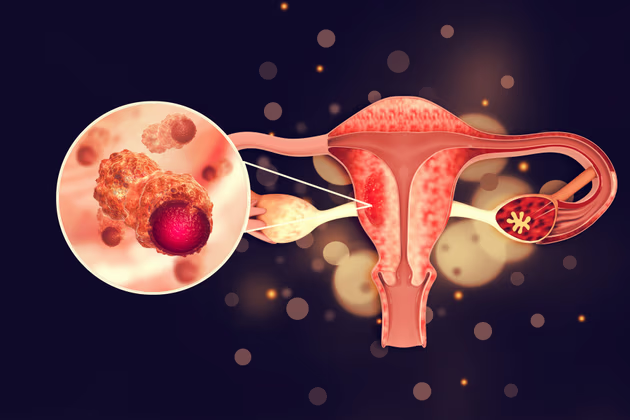
Ovarian cancer can be treated without removing both ovaries in selected cases, specifically early-stage disease in young women where fertility preservation is a clinical priority. Stage IA germ cell and sex cord-stromal tumours routinely qualify for unilateral salpingo-oophorectomy, preserving the opposite ovary and uterus. Standard epithelial ovarian cancer in advanced stages requires bilateral oophorectomy with hysterectomy as part of cytoreductive surgery.
According to Dr. Sandeep Nayak, Best cancer treatment in Bangalore, “Preserving one ovary in ovarian cancer is not a compromise on treatment. In early-stage germ cell and borderline tumours, it’s the standard approach. The question is whether the histology, stage, and the patient’s age and fertility goals align with what fertility-sparing surgery can safely deliver.”
Diagnosed with ovarian cancer and concerned about preserving fertility? Stage and tumour type give you the clinical answer.
Which Ovarian Cancers Allow Preservation of One Ovary?
Not all ovarian cancers are the same. The tumour type and stage together determine whether one ovary can safely be left in place.
- Germ Cell Tumours:
Germ cell tumours occur predominantly in young women and girls and carry excellent cure rates. Unilateral salpingo-oophorectomy with preservation of the uterus and opposite ovary is the standard surgical approach for Stage I disease regardless of fertility intent. - Sex Cord-Stromal Tumours:
Granulosa cell and Sertoli-Leydig tumours are treated with unilateral oophorectomy in Stage IA cases. Lymph node dissection isn’t routinely required because nodal spread is rare. Recurrence can occur years later so follow-up continues long-term. - Borderline Epithelial Tumours:
Borderline ovarian tumours are not frankly malignant and fertility-sparing surgery is appropriate even when peritoneal implants are present in young women who want to conceive. Cystectomy alone is acceptable for serous borderline tumours. - Early Epithelial Ovarian Cancer:
Stage IA Grade 1 epithelial ovarian cancer in young women qualifies for fertility-sparing surgery with unilateral salpingo-oophorectomy in selected centres. Comprehensive staging including peritoneal biopsies and omentectomy must be completed at the same surgery to confirm the stage.
Ovarian Cancer Treatment at MACS Clinic includes a formal assessment of fertility-sparing eligibility at the first consultation based on histology, staging, and patient age before any surgical plan is confirmed.
When Must Both Ovaries Be Removed in Ovarian Cancer?
Several clinical situations make bilateral oophorectomy necessary regardless of patient age or fertility wishes.
- Advanced Epithelial Ovarian Cancer:
Stage III and IV epithelial ovarian cancer requires maximum cytoreductive surgery including bilateral oophorectomy, hysterectomy, and omentectomy. Leaving an ovary in place compromises the surgical cytoreduction that determines survival in advanced disease. - BRCA Mutation Carriers:
Women with confirmed BRCA1 or BRCA2 mutations face significantly elevated contralateral ovarian cancer risk. The opposite ovary is removed even in early-stage cases because the lifetime risk of a second primary ovarian cancer is too high to justify preservation. - Bilateral Ovarian Involvement:
Stage IB disease by definition involves both ovaries. Preservation isn’t technically possible when both sides carry tumour. Bilateral involvement on imaging requires bilateral removal regardless of tumour type. - Genetic Counselling Before Surgery:
BRCA testing before ovarian cancer surgery directly changes the surgical plan. A young patient who appears to have early-stage disease and qualifies for fertility-sparing surgery may carry a BRCA mutation that makes preservation clinically inappropriate. Germline testing before the first operation avoids making an irreversible surgical decision without the full genetic picture.
For more on how age affects cancer risk and when younger patients need earlier investigation, our previous blog on Young People Colon Cancer covers how cancer behaves differently in younger adults and why assumptions about age cost stages.
Why Choose MACS Clinic for Ovarian Cancer Treatment?
Dr. Sandeep Nayak’s team at MACS Clinic performs fertility-sparing surgery for germ cell tumours, sex cord-stromal tumours, and selected early epithelial ovarian cancers using laparoscopic and robotic approaches, with comprehensive staging completed at the same procedure to confirm the cancer remains confined before the ovary is preserved.
Patient here doesn’t get a blanket recommendation to remove both ovaries because it’s the safer administrative decision. They get an honest assessment of whether their specific histology, stage, and BRCA status make preservation oncologically appropriate. Because getting that wrong in either direction has consequences that last decades.
Call +91 8035740000 to book your consultation.
FAQs
Can ovarian cancer be treated without removing both ovaries?
Yes, in selected early-stage germ cell, sex cord-stromal, and borderline tumours where fertility-sparing surgery is oncologically safe.
What is fertility-sparing surgery for ovarian cancer?
Unilateral salpingo-oophorectomy preserving the opposite ovary and uterus, used in early-stage ovarian cancers in young women wanting to conceive.
Does BRCA mutation affect whether one ovary can be preserved?
Yes. BRCA1 or BRCA2 carriers face high contralateral ovarian cancer risk, making preservation clinically inappropriate even in early-stage cases.
Is fertility-sparing ovarian surgery safe oncologically?
Published data confirms comparable survival in carefully selected Stage IA germ cell and borderline tumours treated with unilateral oophorectomy and comprehensive staging.
Disclaimer: This blog is intended for informational purposes only and does not substitute professional medical advice, diagnosis, or treatment. Consult a qualified oncologist for personalised guidance.