

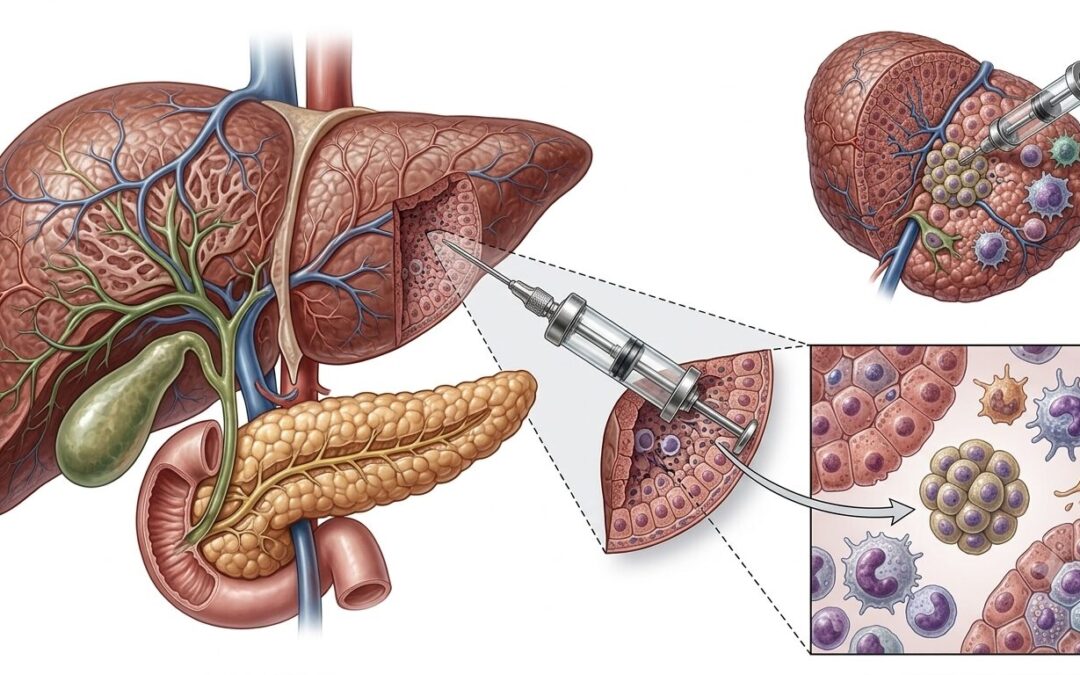
Neither is universally better. That’s the honest answer and the one most patients don’t get early enough. Liver resection removes the part of the liver containing the tumour and leaves the rest intact. Liver transplant removes the entire diseased liver and replaces it with a healthy donor organ. Both can be used for liver cancer, but they’re not interchangeable options sitting on equal footing. The tumour size, number of lesions, the condition of the surrounding liver, and whether a donor organ is available all determine which one is even on the table for a given patient.
Dr. Sandeep Nayak, Best Cancer Treatment in Bangalore, explains the core of it: “Transplant offers the theoretical advantage of removing the diseased liver entirely, including areas where new tumours could develop. But it comes with a donor wait, lifelong immunosuppression, and the surgical complexity of a major organ replacement. Resection, when the remaining liver is healthy enough and the tumour is in a resectable location, gives equivalent outcomes for carefully selected patients without any of that. The question isn’t which surgery is better. It’s which surgery this patient actually qualifies for and which one gives the best result for their specific situation.”
Want a proper assessment of which approach applies to you?
What Does a Liquid Biopsy Pick Up?
Liver Resection vs Transplant: What’s the Difference?
|
Liver Resection |
Liver Transplant |
|
|
What’s Done |
Tumour and surrounding liver tissue removed |
Entire liver removed, replaced with donor organ |
|
Best For |
Single tumour, healthy surrounding liver |
Multiple tumours, underlying cirrhosis, Milan criteria met |
|
Liver Function After |
Remaining liver regenerates |
New liver takes over completely |
|
Recurrence Risk |
Higher if underlying liver disease present |
Lower, diseased liver fully removed |
|
Waiting Period |
No wait, surgery when ready |
Donor organ availability required |
|
Lifelong Medication |
Not required |
Immunosuppressants for life |
|
Recovery |
Faster, less complex |
Longer, more intensive |
|
Availability in India |
Widely available |
Limited by donor organ supply |
The table shows the differences side by side, but numbers alone don’t make this decision. Underlying liver health and tumour characteristics together determine what’s surgically appropriate. More detail on how liver cancer is approached at MACS Clinic is on the Liver and Gall Bladder Cancer page.
What Determines Which Surgery Is Used?
The patient doesn’t choose between resection and transplant. Their liver and their tumour largely make that call.
Condition of the Surrounding Liver: This is the most important factor. If the liver around the tumour is healthy, resection is usually feasible and the remaining liver will regenerate. If the patient has cirrhosis, hepatitis B or C related damage, or significant fibrosis, removing part of an already compromised liver leaves too little functional tissue behind. Transplant becomes the more appropriate option because it removes the diseased liver entirely rather than cutting into it. Go gor the blog which shows the signs of Liver Cancer.
Tumour Size and Number: For resection, a single tumour in an accessible location without major vascular involvement is the ideal scenario. For transplant, the Milan Criteria are the standard reference point — one tumour under 5 centimetres, or up to three tumours none larger than 3 centimetres, without vascular invasion or distant spread. Patients within these criteria who get transplanted have outcomes comparable to those transplanted for non-cancerous liver disease.
Vascular Involvement: When the tumour wraps around or invades major hepatic vessels, resection becomes technically much harder or impossible. This is where surgical experience and imaging interpretation matter most in planning.
Recurrence Risk After Resection: In a liver affected by underlying disease, new tumours can develop in the remaining tissue after resection. Patients who’ve had one liver cancer in a cirrhotic liver are at significantly higher risk of developing another. Transplant removes that risk by taking the diseased tissue entirely. For patients with significant underlying liver disease, this is a real factor in the transplant argument.
Donor Availability: Transplant is only possible when a suitable donor organ exists. In India, deceased donor organ availability is limited and waiting times are variable. Living donor transplant, where a healthy family member donates a portion of their liver, is more commonly used in India and has made transplant accessible to patients who couldn’t wait for a deceased donor.
Patient’s Overall Health: Major transplant surgery with lifelong immunosuppression requires the patient to be in good enough overall condition to tolerate both the operation and the medication regimen that follows. Patients with significant other health conditions may not be suitable transplant candidates regardless of tumour characteristics.
Why Choose MACS Clinic for Liver Cancer Surgery?
Dr. Sandeep Nayak’s team at MACS Clinic evaluates liver cancer cases through a multidisciplinary review surgical oncology, medical oncology, hepatology, and radiology together before any treatment decision is made. For patients where resection is appropriate, laparoscopic and minimally invasive techniques are used wherever oncologically feasible, reducing blood loss, hospital stay, and recovery time without compromising the extent of tumour removal.
For patients where underlying liver disease makes resection risky, the transplant pathway and its eligibility criteria are discussed as part of the same conversation, not as a separate referral made weeks later. Those who want to understand which option applies to their situation can reach the team at +91 9482202240. For patients with peritoneal involvement alongside liver disease, HIPEC is also available at MACS Clinic for selected cases.
FAQs
Which is better for liver cancer, resection or transplant?
Neither is better in absolute terms. Resection works well when the surrounding liver is healthy and the tumour is resectable. Transplant is better when underlying liver disease makes resection too risky or when the tumour meets transplant criteria. The right answer depends entirely on the individual case.
Can the liver grow back after resection?
Yes. The liver has a unique ability to regenerate. Up to 70% of the liver can be removed in a patient with healthy liver function and the remaining portion will grow back to near-normal size over weeks to months.
How long is the wait for a liver transplant in India?
Deceased donor waiting times vary significantly by region and blood type. Living donor transplant, where a family member donates part of their liver, is more commonly used in India and avoids the waiting list entirely for eligible patients.
Does liver transplant cure cancer permanently?
For patients within the Milan Criteria, five-year survival rates after transplant are around 70%, which is comparable to transplant for non-cancerous indications. Recurrence can still happen, particularly if the original staging underestimated tumour extent. Lifelong follow-up continues after transplant regardless of how well things go initially.
Disclaimer: This content is published for educational and informational purposes only.