
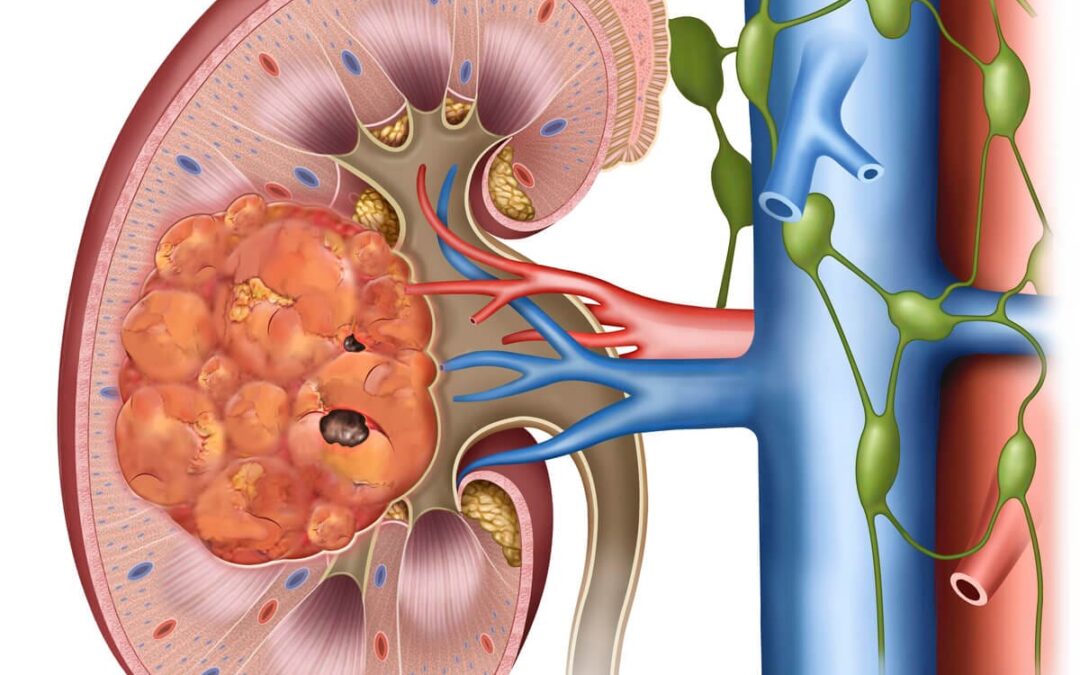
Yes, for a large share of early kidney cancers. Partial nephrectomy, removing only the tumour and a margin of healthy tissue around it, is now the preferred approach for small, localised kidney tumours under major urology guidelines, including those from the AUA and EAU. The logic isn’t just about keeping the organ intact for its own sake. Removing the whole kidney trades a treated cancer for a lifelong drop in kidney function, and for a tumour confined to one part of the organ, that trade often isn’t necessary. More on how kidney cancer is staged and assessed at MACS Clinic is on the service page.
Dr. Sandeep Nayak who provides Best Cancer Treatment in Bangalore, explains it this way: “A radical nephrectomy was the default for decades because it was the safer operation technically. The evidence has shifted. For the right tumour, taking less tissue treats the cancer just as well and protects the kidney you’re leaving behind.”
Wondering whether nephron-sparing surgery is possible in your case?
Who Is a Candidate for Partial Nephrectomy?
Tumour size and location decide this more than almost anything else.
Small, Early-Stage Tumours (T1a): Tumours under 4cm confined to the kidney are the clearest candidates. Guidelines from the AUA and EAU list nephron-sparing surgery as the recommended standard here, not just an alternative.
Moderately Sized Tumours (T1b) Are Often Included Too: Tumours between 4 and 7cm can still be candidates for partial nephrectomy in many cases, particularly where the location allows it technically.
Exophytic Tumours Are Easier to Spare: A tumour growing outward from the kidney’s surface is more straightforward to remove with a margin than one buried deep inside the kidney tissue. Endophytic, deep-seated tumours are technically harder and carry a somewhat higher complication rate.
A Single Kidney or Reduced Baseline Function Raises the Stakes: For patients with one kidney, or with chronic kidney disease already affecting the other side, preserving function isn’t optional, it’s the whole point of the operation.
Larger or More Advanced Tumours Usually Still Need Radical Surgery: Once a tumour is large, invasive, or has grown into surrounding structures, radical nephrectomy, removing the whole kidney, remains the standard treatment. The randomised EORTC 30904 trial actually found a modest survival edge for radical surgery over partial in tumours up to 5cm, which is a reminder that partial nephrectomy isn’t automatically the better choice in every case, it’s the better choice for the right tumour.
Our page on Kidney Cancer covers how imaging and staging determine which category a tumour falls into before surgery is planned.
What Does Partial Nephrectomy Actually Change?
Removing less tissue changes more than just the operation itself.
Kidney Function Holds Up Better: Multiple studies comparing the two approaches show partial nephrectomy patients have a meaningfully lower risk of developing severe chronic kidney disease after surgery compared with radical nephrectomy.
Cancer Control Is Comparable for the Right Tumours: For T1a tumours especially, oncologic outcomes between partial and radical nephrectomy are considered equivalent by current guidelines, which is exactly why the recommendation shifted.
The Operation Itself Is More Technically Demanding: Partial nephrectomy generally takes longer and carries a higher risk of certain complications, like urine leaks, than radical nephrectomy. It’s a harder operation to perform well, which is part of why surgeon experience matters here.
Robotic and Laparoscopic Approaches Are Now Standard: Minimally invasive techniques let surgeons perform partial nephrectomy without the large flank incision open surgery once required, shortening recovery without changing what gets removed.
Long-Term Follow-Up Doesn’t Stop: Because kidney tissue remains, imaging surveillance continues after surgery to watch for recurrence in the treated kidney, not just the rest of the body.
Our Precision Oncology approach outlines how tumour staging and imaging feed into surgical planning across cancer types, including kidney cancer.
Why Choose MACS Clinic for Kidney-Sparing Surgery?
Dr. Sandeep Nayak’s team at MACS Clinic doesn’t default to removing the whole kidney because it’s the simpler operation. Every kidney cancer case is reviewed with full imaging and staging before any recommendation is made. Partial nephrectomy is offered where it’s oncologically sound. Radical nephrectomy is recommended where partial removal genuinely isn’t appropriate. Neither approach is pushed as a default.
For patients who qualify for nephron-sparing surgery, robotic and laparoscopic techniques mean the tumour comes out with precision, warm ischaemia time stays short, and recovery is significantly faster than open surgery. Those who want to discuss whether partial nephrectomy is possible in their case can reach the team at +91 9482202240.
FAQs
Does every oral cancer patient need a neck dissection?
Not every single case but most do. T2 and above tumours, and any tumour with depth of invasion above 4mm, carry enough risk of occult nodal spread that elective neck dissection is now standard practice. Early T1 tumours with shallow invasion may not need it.
Is partial nephrectomy as effective as full kidney removal?
For early-stage T1a tumours, yes, current guidelines consider oncologic outcomes equivalent. For larger tumours, some data shows a modest survival edge for radical surgery, so candidacy matters.
Does partial nephrectomy protect kidney function?
Yes, that’s its main advantage. Studies consistently show a lower risk of severe chronic kidney disease after partial nephrectomy compared with radical nephrectomy.
Is partial nephrectomy a harder surgery than radical nephrectomy?
Generally, yes. It takes longer and carries a somewhat higher risk of certain complications, which is why surgeon experience with the technique matters for outcomes.
Disclaimer: This content is published for educational and informational purposes only.