
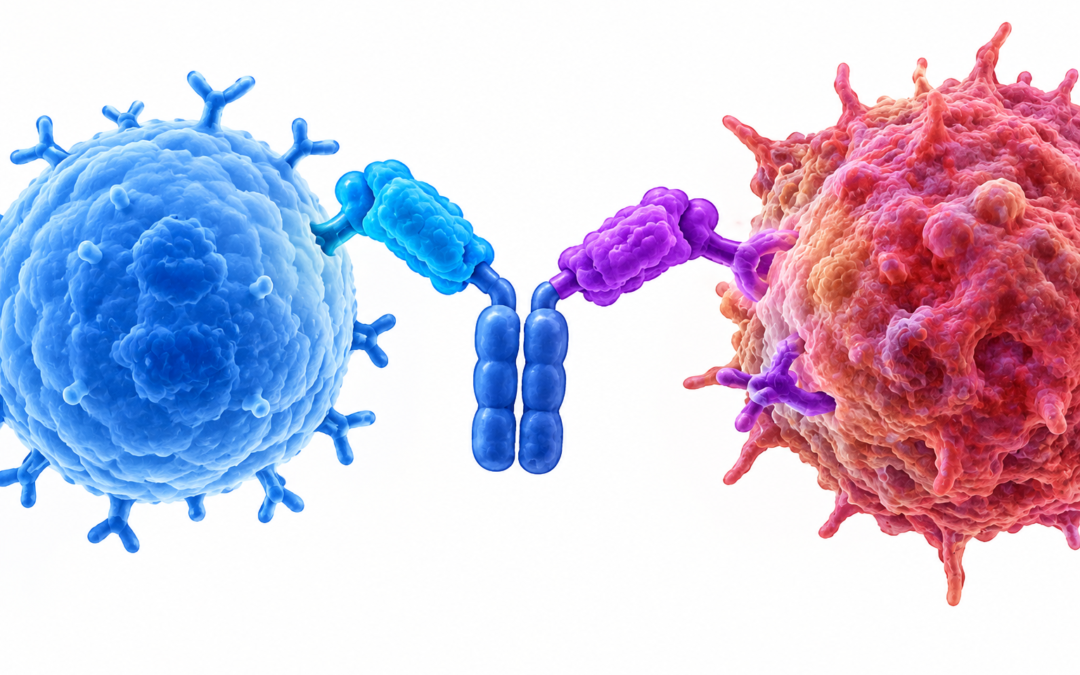
Bispecific antibodies are lab-made proteins built to grab two different targets at once, usually one marker on a cancer cell and one on an immune cell, physically dragging the two together so the immune system can actually go after the tumor. So why does grabbing two things at once matter so much more than a drug that only hits one? Because cancer’s really good at slipping past the immune system unnoticed, and this approach basically forces a T cell and a cancer cell to meet face to face, something the body often can’t manage entirely on its own.
Dr. Sandeep Nayak, known for the Best Cancer Treatment in Bangalore, puts it pretty bluntly. “Most immunotherapy is about helping the immune system notice cancer it was missing. This takes that further, it’s literally grabbing a T cell by the collar and walking it over to the cancer cell. Blinatumomab proved this could actually work, in leukemia first, and now the same idea’s showing up in lung cancer, gastric cancer, a bunch of solid tumors too.”
Curious whether a bispecific antibody applies to your own treatment options?
How These Drugs Actually Work?
There’s more than one way to build one of these, and the design shapes what it’s actually good for:
- T-cell engagers, sometimes called BiTEs, hold onto a T cell with one arm and a cancer cell with the other, forcing an immune attack that just wouldn’t happen otherwise
- Some versions block two growth signals at the same time, amivantamab is a good example, shutting down both EGFR and MET, two proteins that help certain lung cancers grow and dodge treatment
- Dual checkpoint blockers go after two separate immune brakes at once, trying to get a stronger response than releasing just one brake usually gets you
- Blinatumomab, approved for acute lymphoblastic leukemia, is still the clearest proof this whole approach works in real patients, not just on paper
None of these designs are interchangeable, honestly. Which type gets used comes down entirely to the specific cancer and what’s actually driving it.
Where This Technology Is Headed and What It Means for Patients?
Why Choose MACS Clinic for Access to Advanced Immunotherapy Options?
Dr. Sandeep Nayak’s team keeps tabs on bispecific antibody approvals and trial results as part of ongoing precision oncology planning, rather than sticking with older immunotherapy just because it’s more familiar. For patients whose cancer’s stopped responding to standard treatment, that means the team’s actively checking whether something newer has come along for that specific cancer, not waiting for a patient to bring it up first. Watching for side effects like cytokine release syndrome gets built into the plan from day one too, since catching it early matters a lot more than reacting once it’s already underway.
Want to know if a bispecific antibody applies to your own diagnosis? Reach the team at +91 9482202240.
FAQs
Is this basically the same thing as regular immunotherapy?
Sort of, it’s a specific kind. Regular checkpoint inhibitors just release a brake on the immune system, this actually physically links immune cells to cancer cells instead.
Does this only work for blood cancers, or solid tumors too?
Both now, actually. It started with leukemia, but plenty are approved or deep in trials for lung, gastric, and other solid tumors these days.
What's cytokine release syndrome, and is it something to actually worry about?
It’s an overactive immune reaction that can happen with the T-cell engaging kind, mild in some cases, more serious in others. It’s watched closely, not a reason to skip treatment outright.
Can these be paired with other cancer treatments?
Yeah, combining them with chemo, antibody-drug conjugates, or other immunotherapies is being actively studied, and in some cases it’s already happening in practice.
References
- Mayo Clinic: Bispecific Antibody Therapy Overview
- ScienceDirect: Bispecific Antibodies in Lung Cancer, Molecular Engineering to Clinical Breakthroughs
- PMC: Global Development of Bispecific Antibodies in Oncology
Disclaimer:This content is published for educational and informational purposes only.