
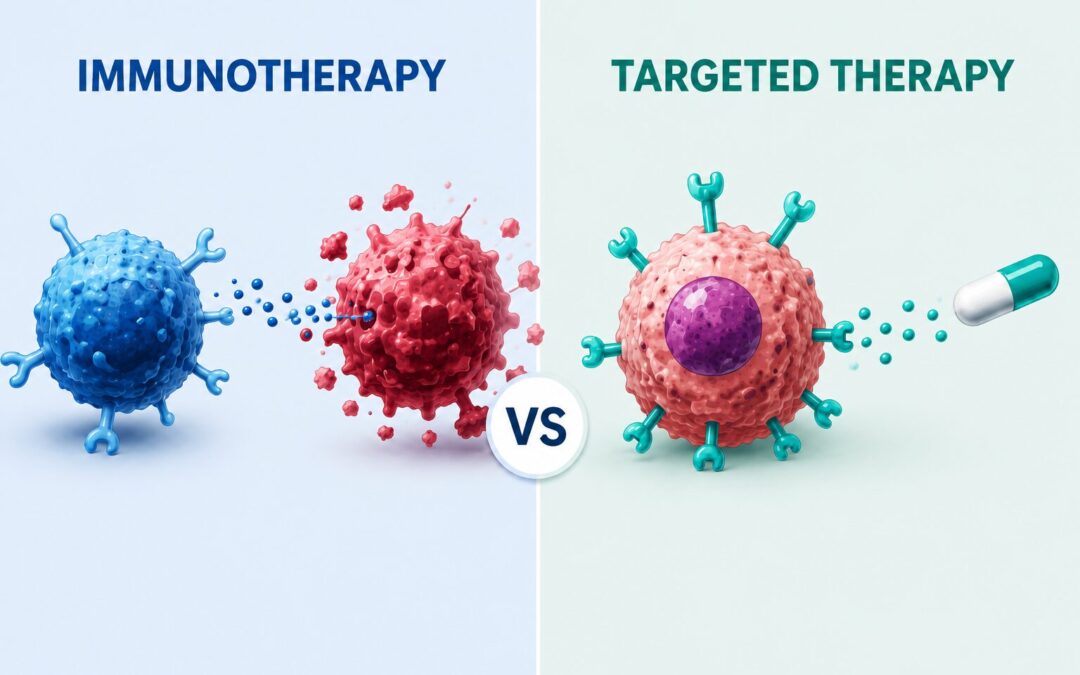
Neither is better as a general rule. That’s the honest starting point. These two treatments work completely differently, are used for different tumour profiles, and in some cases are used together rather than as alternatives. Targeted therapy goes after a specific genetic mutation driving the cancer it blocks the signal that’s telling cancer cells to grow. Immunotherapy doesn’t attack the cancer directly. It wakes up the immune system and lets it do the job. Which one works for a given patient comes down entirely to what’s going on in their tumour biology, not which treatment sounds more advanced.
Dr. Sandeep Nayak, Best Cancer Treatment in Bangalore, explains it directly: “Patients often ask which is better targeted therapy or immunotherapy. The question doesn’t have a universal answer. Targeted therapy works brilliantly when there’s a specific mutation to target, like EGFR in lung cancer or HER2 in breast cancer. Immunotherapy works best when the tumour has features that make it visible to the immune system. Getting molecular testing done is what tells you which conversation is even relevant.”
Want to know which treatment applies to your tumour?
Immunotherapy vs Targeted Therapy: What's the Difference?
|
Targeted Therapy |
Immunotherapy |
|
|
How It Works |
Blocks specific mutations driving cancer growth |
Activates the immune system to find and attack cancer |
|
Requires Testing |
Yes, mutation testing (EGFR, HER2, BRAF, ALK) |
Yes, PD-L1 expression, TMB, MSI testing |
|
Works Best For |
Tumours with specific actionable mutations |
Tumours with high immune visibility |
|
Examples |
Osimertinib, Trastuzumab, Imatinib |
Pembrolizumab, Nivolumab, Atezolizumab |
|
Response |
Often rapid, highly specific |
Slower but can be durable and long-lasting |
|
Resistance |
Common over time as tumours adapt |
Less common but does occur |
|
Side Effects |
Targeted, manageable, organ-specific |
Immune-related inflammation across multiple organs |
|
Used Together |
Yes, sometimes combined with immunotherapy |
Yes, sometimes combined with targeted therapy |
|
Cancer Types |
Lung, breast, colon, thyroid, melanoma |
Melanoma, lung, bladder, kidney, head and neck |
The table captures the difference in how they work, but in practice the choice isn’t always this clean. Some tumours respond to both. Some are eligible for combinations. What drives the decision is molecular profiling — without it, neither conversation is grounded in anything useful. More on how precision oncology and molecular testing work at MACS Clinic is on the service page.
What Determines Which One Is Used?
The tumour’s biology makes most of this decision not the oncologist’s preference and not which treatment is newer.
Specific Actionable Mutations: If molecular testing reveals EGFR, ALK, ROS1, BRAF, HER2, or similar mutations, targeted therapy is almost always the first conversation. These mutations are the tumour’s engine. Targeted drugs switch that engine off with a precision that broader treatments can’t match. This is exactly the territory immunotherapy in India and targeted therapy navigate differently.
PD-L1 Expression: Immunotherapy’s effectiveness in many tumour types is tied to PD-L1 expression — a protein on tumour cells that essentially tells the immune system to stand down. High PD-L1 expression means the immune checkpoint inhibitors have something to work with. Low expression doesn’t rule out immunotherapy entirely but changes which drugs and combinations make sense.
Tumour Mutational Burden: Tumours with a high number of mutations, called high TMB, tend to respond better to immunotherapy. More mutations mean more abnormal proteins on the cancer cell surface for the immune system to recognise and attack.
Microsatellite Instability: MSI-high tumours have defects in their DNA repair machinery that make them particularly responsive to immunotherapy. This marker cuts across cancer types colorectal, endometrial, gastric and its presence is often a stronger predictor of immunotherapy response than the cancer’s location.
No Actionable Mutation Found: When molecular testing comes back without a targetable mutation, immunotherapy becomes the more relevant option depending on PD-L1 and TMB status. Targeted therapy without a target doesn’t work. Our blog on liquid biopsy covers how molecular testing is done from a blood sample when tissue isn’t accessible.
Both Together: Some treatment protocols combine targeted therapy and immunotherapy. Certain kidney cancer and lung cancer regimens pair them specifically because the combination outperforms either alone in selected patient groups.
Why Choose MACS Clinic for Targeted Therapy and Immunotherapy?
Dr. Sandeep Nayak’s team at MACS Clinic doesn’t prescribe targeted therapy or immunotherapy based on cancer type alone. Every case goes through molecular profiling Next-Generation Sequencing, PD-L1 testing, MSI status before a treatment recommendation is made. Surgical oncology, medical oncology, and pathology review each case together. The treatment that gets recommended is the one the tumour biology actually supports, not the one that fits a general protocol for that cancer site.
For patients where neither targeted therapy nor immunotherapy is the primary route, precision oncology still informs how chemotherapy is selected and sequenced. The molecular picture matters regardless of which treatment follows. Those who want their tumour biology assessed properly can reach the team at +91 9482202240.
FAQs
Can you have both immunotherapy and targeted therapy at the same time?
In some cases yes. Certain kidney and lung cancer regimens specifically combine the two because the outcomes are better together than either alone. It depends on the cancer type, the mutations present, and what the evidence supports for that combination.
How do you know which one will work for you?
Molecular testing. Without knowing what mutations are present and what the PD-L1 and TMB status looks like, there’s no reliable way to predict which treatment will respond. That testing is the starting point, not an optional extra.
What happens when targeted therapy stops working?
Resistance develops in most patients eventually. Repeat molecular testing often reveals a new mutation that’s driving resistance. A different targeted drug, a switch to immunotherapy, or a combination approach may follow depending on what the new testing shows.
Is immunotherapy safe?
It can have significant side effects but they’re different from chemotherapy. Because it activates the immune system broadly, inflammation can occur in organs that weren’t involved in the cancer at all lungs, liver, gut, joints. These are manageable when caught early, which is why monitoring during treatment matters.
Disclaimer: This content is published for educational and informational purposes only.