

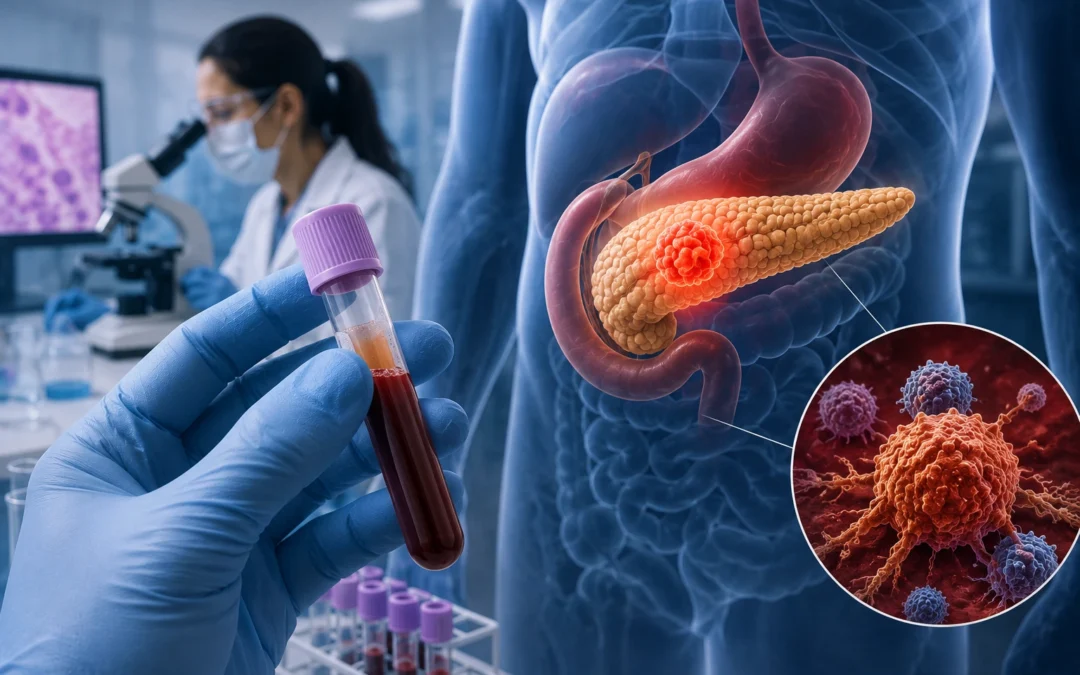
Not with the blood work most people have in mind. If you’re picturing a routine complete blood count or a liver panel, that kind of test simply isn’t built to catch pancreatic cancer early. Part of why this cancer gets diagnosed so late is that it doesn’t make noise — it grows quietly, often for months, before anything shows up on a standard panel or in symptoms. What’s actually changed in the last several years is the research happening around liquid biopsies: blood tests designed from the ground up to pick up the faint traces a tumour sheds before a person feels sick.
According to Dr. Sandeep Nayak, Best Cancer Treatment in Bangalore,hears this question constantly. “It usually comes up after someone’s routine checkup comes back clean and they want reassurance,” he says. “And I have to be straight with them — a normal blood panel doesn’t rule out pancreatic cancer. It was never built for that. The tests that might actually get there are still mostly confined to research, not something we use day to day yet.”
Worried about pancreatic cancer risk or symptoms?
Why Ordinary Blood Tests Miss It and What Liquid Biopsies Are Chasing Instead?
There isn’t a blood marker in routine use that reliably flags pancreatic cancer early, and the reasons come down to biology as much as technology. Liquid biopsy, the newer category of blood tests built to catch cancer through what a tumour releases into circulation, rather than through a scan or tissue sample exists precisely to work around these gaps, though it hasn’t closed them yet.
- CA 19-9 was never built to screen. It’s the marker doctors reach for most, but it climbs with a blocked bile duct, pancreatitis, and other conditions that have nothing to do with cancer — and some people with confirmed pancreatic cancer never see it rise at all, especially early on.
- The anatomy doesn’t help. The pancreas sits tucked deep behind the stomach, out of easy reach, so a tumour can grow for a long stretch before it causes anything obvious enough to send someone in for testing.
- Early tumours barely leak into the bloodstream. Whatever DNA fragments or proteins do escape tend to be too faint for older methods to pick up which is exactly the gap liquid biopsy is trying to close, by hunting for circulating tumour DNA and exosome or protein panels that combine several biomarkers instead of relying on one.
- Promising in trials isn’t the same as being ready for a clinic. Some of these panels are flagging pancreatic cancer earlier than symptoms typically would, but none have crossed over into something recommended for general population screening yet.
For anyone carrying inherited risk, this is also where genetic counselling tends to matter more than any single blood draw and where a proper diagnostic work-up picks up where a blood test leaves off.
Who Actually Needs to Be Screened?
Since there’s no dependable blood-based screening test for the average person right now, imaging-based screening for higher-risk groups remains the more solid option. That generally means:
- People with a strong family history particularly two or more first-degree relatives who’ve had pancreatic cancer
- Carriers of certain genetic mutations, such as BRCA2, PALB2, or the Lynch syndrome genes, who are usually advised to talk through surveillance through genetic counselling
- Anyone who develops diabetes for the first time after 50, especially if it shows up without a clear cause or comes with unexplained weight loss this combination deserves a second look, not a shrug
- Anyone dealing with persistent, unexplained abdominal or back pain, jaundice, or weight loss they can’t account for, which usually calls for imaging rather than a blood test alone
Why Choose a MACS Clinic For Pancreatic Cancer?
Dr. Sandeep Nayak’s team at MACS Clinic doesn’t lean on a single blood marker to chase down a pancreatic cancer diagnosis. Instead, the workup typically pulls together imaging, targeted blood work (CA 19-9 included, where it’s relevant), and diagnostic staging or tissue sampling when needed aiming for a real answer instead of a guess. The clinic’s approach leans on precision oncology and personalized medicine rather than a one-size-fits-all protocol, and for patients who come in with a family history or known genetic risk, the conversation about surveillance starts early, well before anything has had the chance to progress.Reach the team at +91 9482202240.
FAQs
Can CA 19-9 alone confirm or rule out pancreatic cancer?
No. It can back up a diagnosis that’s already suspected from imaging or symptoms, but on its own it isn’t reliable enough to confirm or rule anything out — other conditions can push it up, and some cancers never do.
Are liquid biopsy tests for pancreatic cancer available to the public right now?
A handful are available through select labs or clinical trials, but they haven’t made it into standard screening recommendations for the general public yet. This is a fast-moving area, so that could shift.
Is imaging better than blood tests for catching pancreatic cancer early?
For higher-risk individuals, yes — imaging like MRI or endoscopic ultrasound is currently the more established path. Blood-based screening still has ground to make up in terms of proven reliability.
Should I ask for a pancreatic cancer blood test if I have no symptoms or family history?
Generally, no there’s no blood test currently validated for population-wide early screening, so it’s not necessary for someone at average risk. If risk factors are present, though, that’s a conversation worth having directly with a doctor.