

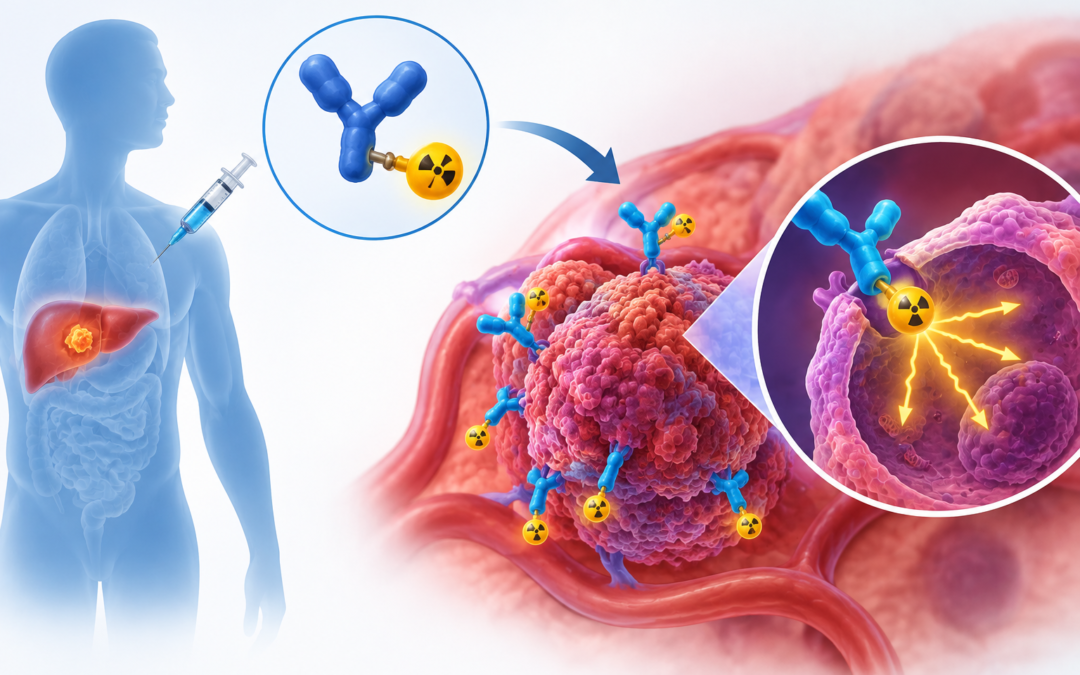
Radioligand therapy pairs a targeted molecule, the ligand, with a radioactive isotope, so the combination can travel through the bloodstream, latch onto cancer cells specifically, and deliver radiation right where it’s needed rather than blasting a fixed area from outside the body. So how is that actually different from standard radiation therapy, which most people already know? Standard radiation aims a beam at a specific spot on the body. Radioligand therapy goes hunting instead, following cancer cells wherever they’ve spread, which matters enormously once a cancer isn’t confined to one place anymore
Dr. Sandeep Nayak, known for the Best Cancer Treatment in Bangalore, sees this as one of the more elegant ideas in modern oncology, not brand new exactly, but finally maturing into real treatments. “We’ve used radioactive iodine for thyroid cancer since the 1950s, so the basic concept isn’t new. What’s changed is the precision. Now we’re building ligands that seek out receptors on prostate cancer cells, on neuroendocrine tumor cells, and riding a radioactive payload straight to them. It’s radiation therapy that goes looking for the target instead of waiting for the target to sit still.”
Curious whether radioligand therapy applies to your own diagnosis?
How Radioligand Therapy Actually Works?
The mechanism comes down to matching the right ligand to the right receptor, and that matching is what makes the whole thing work:
- The ligand is designed to bind to a specific receptor that’s overexpressed on a particular cancer’s cells, PSMA on prostate cancer cells or somatostatin receptors on neuroendocrine tumor cells, for instance
- Once the ligand attaches to the cancer cell, the radioactive isotope riding along with it delivers radiation directly to that cell and its immediate surroundings, largely sparing healthy tissue elsewhere in the body
- Lutathera, using Lutetium-177 attached to a somatostatin-targeting molecule, was approved back in 2018 for certain neuroendocrine tumors and remains one of the clearest proof points for this approach
- Pluvicto, a similar Lutetium-177 based drug targeting PSMA, has since been approved for metastatic prostate cancer, extending the same basic idea to a much more common cancer
None of this replaces surgery, chemotherapy, or standard radiation where those work best. It’s a genuinely different tool, most useful once cancer has spread in ways those other approaches can’t fully address.
Who Actually Benefits From This Kind of Treatment?
Why Choose MACS Clinic for Access to Radioligand Therapy?
Dr. Sandeep Nayak’s team works alongside nuclear medicine specialists who handle PRRT and PSMA ligand therapy directly, so patients whose cancer might respond to this approach get properly evaluated with the specialized imaging needed to confirm receptor expression before treatment ever begins. That coordination between oncology and nuclear medicine happens as part of the same care team rather than through separate, disconnected referrals that can slow things down. For patients who’ve already been through standard treatment lines, this option gets raised as part of ongoing planning rather than left for a patient to discover and ask about independently.
Want to know if radioligand therapy applies to your own treatment path? Reach the team at +91 9482202240.
FAQs
Isn't this basically just regular radiation therapy under a different name?
Not really, no. Regular radiation aims at one fixed spot from outside the body, whereas this rides through the bloodstream and chases down cancer cells no matter where they’ve ended up.
How would someone even know if their cancer would respond to this?
A specialized scan checks whether the tumor’s carrying enough of the right receptor for the ligand to latch onto, that happens before anything gets started, not as an afterthought.
Does this only apply to prostate cancer patients?
Nope. It’s also a solid option for certain neuroendocrine tumors, and researchers are pushing into other cancers too, including some brain tumors, though that side of things is still catching up.
Would this take the place of chemo or surgery?
Not usually. It tends to come in alongside or after those, especially once cancer’s spread enough that surgery or a fixed radiation beam just can’t keep up on their own.
References
- PMC: Realising the Potential of Radioligand Therapy, Policy Solutions for Barriers to Implementation Across Europe
- PMC: Safety and Therapeutic Optimization of Lutetium-177 Based Radiopharmaceuticals
- PMC: Efficacy and Safety of Radioligand Therapy with Actinium-225 DOTATATE in Neuroendocrine Neoplasms
Disclaimer:This content is published for educational and informational purposes only.