

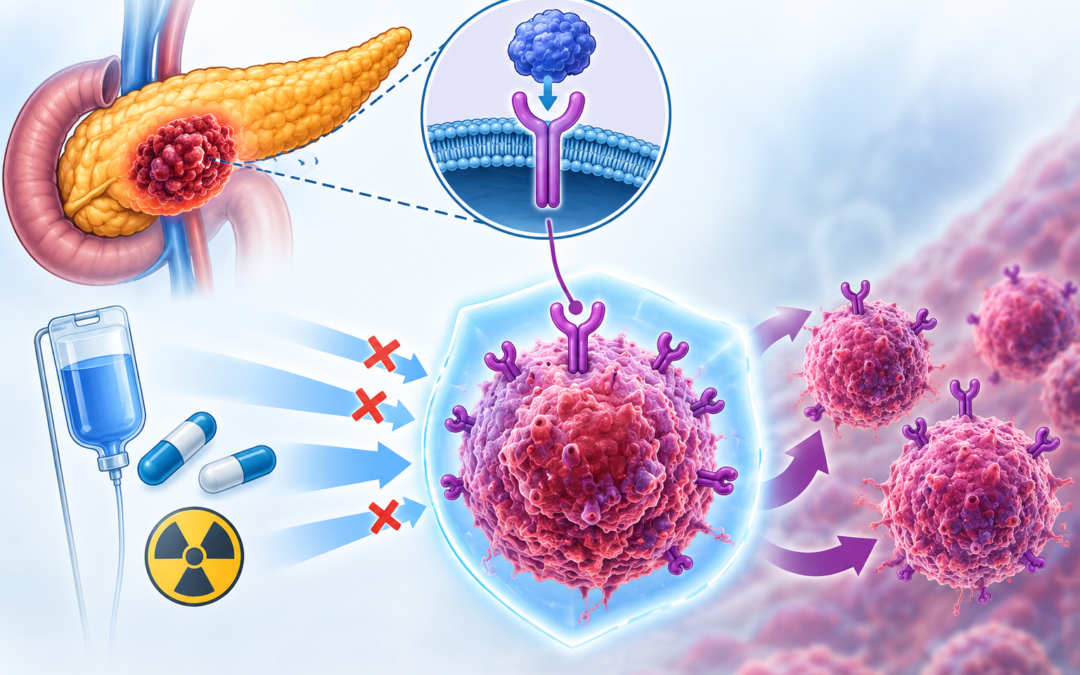
It props the tumour up from the inside. IL1RAP, the mouthful that stands for Interleukin-1 Receptor Accessory Protein, runs an inflammatory network inside pancreatic tumours that helps them shrug off the very treatments meant to kill them. Not by some direct trick, though. That’s the part people get wrong. High levels of it push tumour growth along, sure, but the real damage is in the defences it throws up, the ones that let the cancer just sit there while chemo bounces off harmlessly. Knock it out and those defences start coming apart. Which hands the drugs you already have a genuine shot at working. That, in a sentence, is the hope riding on IL1RAP and pancreatic cancer, one of the meanest cancers going
Dr. Sandeep Nayak, who provides the Best Cancer Treatment in Bangalore, checks it more than people expect. “I test vitamin D in a lot of my breast cancer patients, and a surprising number come back low. It’s not the headline of their treatment, surgery and the rest of it still are, but it’s the sort of thing that quietlyDr. Sandeep Nayak, who provides the Best Cancer Treatment in Bangalore, puts the science in context. “Pancreatic cancer is brutal, partly because it builds a wall around itself that keeps treatment out. IL1RAP is one of the bricks in that wall. The exciting part isn’t that blocking it is a cure, it isn’t, not on its own. It’s that it could make the chemo we already have work far better than it does now. In a cancer this stubborn, that’s not a small thing.” tilts the odds the wrong way if you ignore it. Correcting a deficiency is cheap, it’s safe, and it’s one less thing working against the patient. I’d rather fix it than pretend it doesn’t matter.”
Want to understand your pancreatic cancer options properly?
What Does IL1RAP Actually Do in the Tumour?
Honestly, think of it less as a weapon and more as a fixer. It organises the tumour’s own survival.
Start with the inflammation. IL1RAP teams up with interleukin-1, a little messenger molecule, and together they crank the inflammation right around the tumour way up. That inflamed pocket isn’t just noise in the background. The cancer actually uses it. Grows in it, hides in it.
And it doesn’t stop there. All that signalling pulls in other cells and factors, the reinforcements, basically, and they stack up into the wall Dr. Nayak was talking about. The one drugs can’t get a grip on. On top of that, the cancer cells themselves turn hardier when IL1RAP is running high, stubbornly refusing to die off the way treatment is supposed to force them to. Which is exactly the kind of molecular knot that careful precision oncology exists to untangle and go after.
What Happens When You Block IL1RAP?
Why Choose MACS Clinic for Pancreatic Cancer Care?
Dr. Sandeep Nayak’s team at MACS Clinic keeps an eye on where pancreatic cancer research is going while treating patients with what genuinely works right now. Emerging science like IL1RAP matters, no question, but the day-to-day stays on solid surgery, careful staging, and therapies with real evidence under them, not whatever’s trending. Behind that sits two decades in surgical oncology, a lot of it on the tough abdominal cases.
Patients get an honest read on what’s proven and what’s still a way off, no spin in either direction. Nobody here gets handed tomorrow’s research dressed up as today’s cure.
Call +91 8104310753 to book your consultation.
FAQs
Is IL1RAP blocking available as a treatment now?
Mostly it’s still research, not standard care. Promising, yes, but it hasn’t turned into a routine pancreatic cancer treatment yet.
Does blocking IL1RAP cure pancreatic cancer?
No. The whole idea is to make existing therapies like chemo work better, not to beat the cancer on its own.
Why is pancreatic cancer so hard to treat?
It walls itself off and tends to get caught late. Both of those blunt how well the standard treatments can do their job.
Could IL1RAP research change future treatment?
It might. If blocking it reliably cracks tumour resistance, current therapies could end up far more effective than they are today.
Reference
- PubMed – IL1RAP in pancreatic cancer: Shows that IL1RAP is expressed in pancreatic ductal adenocarcinoma and that its overexpression is associated with poorer overall survival.
PubMed – IL1RAP and Pancreatic Cancer - JCI Insight – IL1RAP and treatment resistance: Recent research examines how IL1RAP-expressing myeloid and stromal networks contribute to chemotherapy resistance and how blocking IL1RAP may improve chemoimmunotherapy sensitivity.
Disclaimer:This content is published for educational and informational purposes only.