

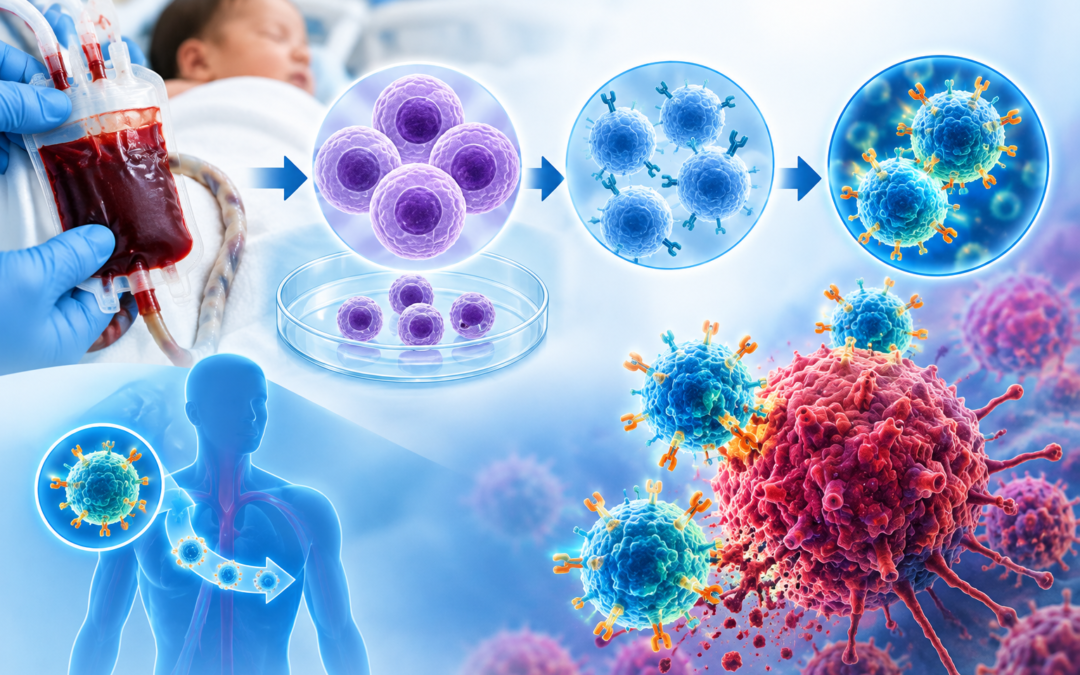
In the lab, yes. As something you can actually receive at a clinic today, no. Cord blood is rich in blood-forming stem cells, the same ones already used in transplants for leukaemia and lymphoma. Researchers have worked out ways to nudge those cells into becoming T cells, and then to equip them with a receptor that locks onto a marker found on cancer cells. The appeal is simple. Banked cord blood is already collected and frozen, so in theory it could become an off-the-shelf treatment instead of something built from scratch for each patient.
Dr. Sandeep Nayak, who provides the Best Cancer Treatment in Bangalore,, follows this kind of research with interest and caution. “The idea makes sense. Cord blood is already collected, stored, and used in transplants. If those cells can be turned into T cells that recognise cancer, you’d have something ready to go rather than waiting weeks to engineer a patient’s own cells. But getting from a good idea to a safe, consistent treatment takes years of testing. Right now this is research, not routine care, and patients should hear it that way.”
Curious where cell therapy for cancer actually stands today?
How Do Cord Blood Stem Cells Become T Cells?
It’s a step by step process, and every step has to be done carefully for the end product to be usable.
Collection and banking. Cord blood gets collected after birth and frozen in a bank, where it can sit for years. That ready supply is a big part of why researchers find it attractive.
Isolating the stem cells. The blood-forming stem cells get separated from the rest of the cord blood. These are the cells with the potential to become different kinds of blood and immune cells.
Guiding them toward becoming T cells. In the lab, the stem cells are grown with specific signals that mimic the environment where T cells normally mature in the body. It takes time, and it doesn’t always go to plan.
Giving them a target. The developing T cells are engineered with a receptor built to recognise a particular marker on cancer cells. This is the same basic idea behind other immunotherapy approaches, aiming the immune system at something it would otherwise ignore.
Testing before any use. Each batch has to be checked for safety and consistency, since these are living cells and small differences between batches can matter a lot.
Where Does This Stand Compared to Treatments Available Now?
Why Choose MACS Clinic for Guidance on Emerging Cancer Therapies?
Dr. Sandeep Nayak’s team at MACS Clinic keeps up with developments like this and tells patients plainly what’s proven, what’s promising, and what’s still being tested. Precision oncology testing helps work out which treatments, established or investigational, are actually relevant to a specific tumour.
For patients looking at their options, clinical trials are discussed honestly as one possibility among others, without overselling anything. Want to talk through your treatment options? Reach the team at +91 9482202240.
FAQs
Can I get T cells made from cord blood as a treatment right now?
No. This approach is still experimental and is being studied in the lab and in early trials. It isn’t part of standard cancer care anywhere yet.
Is this the same as a cord blood transplant?
No. A transplant uses cord blood stem cells to rebuild the blood and immune system. The newer idea turns those stem cells into engineered T cells designed to attack cancer directly.
Why use cord blood instead of a patient's own cells?
A patient’s own cells can be weakened by earlier treatment, and engineering them takes weeks. Banked cord blood could be ready sooner, which is why researchers are interested in it.
Should I bank my baby's cord blood for future cancer treatment?
There’s no proven use yet for banking cord blood specifically for this purpose. It’s a decision worth talking through with your obstetrician and a specialist before paying for private storage.
Reference
- NCI – Cord Blood-Derived CAR-T Cells: Provides information on genetically engineered T cells derived from cord blood and their potential to target tumor cells.
NCI – Cord Blood-Derived CAR-T Cells - PubMed – Cord Blood-Derived T Cells in Cancer Immunotherapy: Reviews how cord blood can serve as a source for T-cell expansion and genetic modification for cancer immunotherapy.
PubMed – Cord Blood-Derived T Cells in Cancer Immunotherapy
Disclaimer:This content is published for educational and informational purposes only.