

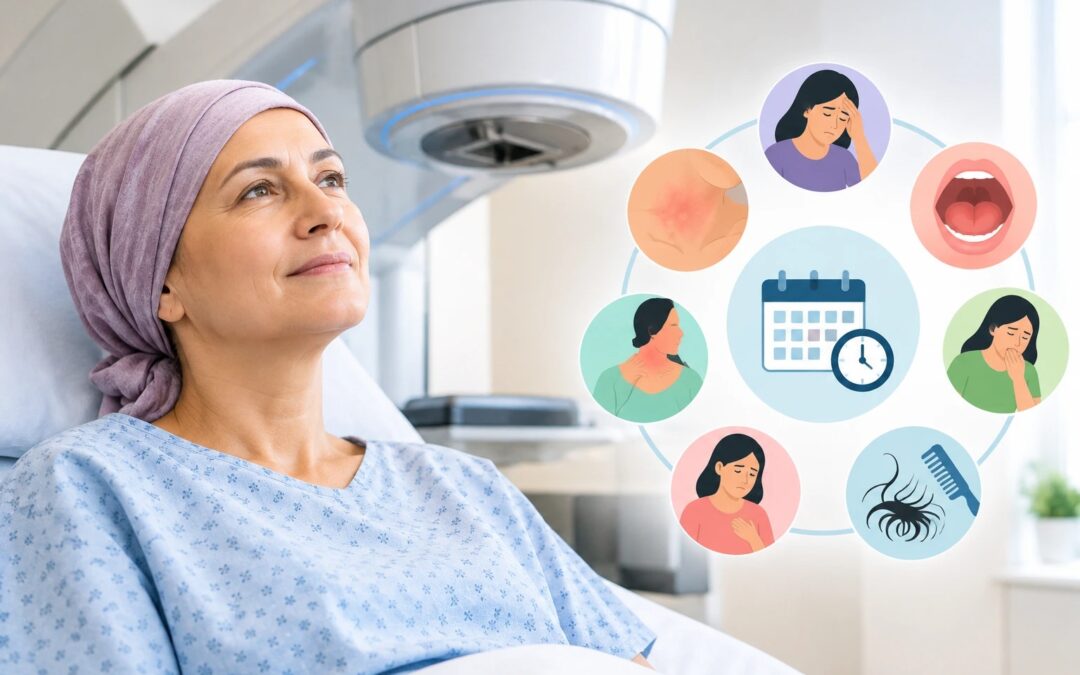
It depends. On the effect, and on where you were treated. Most side effects start in week two or three. They fade within a few weeks of your last session, sometimes up to two months. Tiredness hangs around longer. A few effects don’t show up for months or years. Some of those stay. So there are three timelines: short-term, long-term and permanent.
Dr. Sandeep Nayak, who provides cancer treatment in Bangalore, tells patients not to judge it by the last day. “Radiation keeps working for a couple of weeks after the final session. So people often feel a little worse before they feel better. That surprises them. What I ask everyone is to call us early. Most of these problems are far easier to settle when they’re small.”
Worried about what to expect? Call us on +91 9482202240
Radiation Therapy Side Effects: Short-Term, Long-Term and Permanent
| Type of effect | What it looks like | When it starts | How long it lasts |
| Short-term (early) | Skin redness, dryness and tiredness | During treatment, usually in the second or third week | Mostly eases within a few weeks of the last session. Some take up to two months. |
| Tiredness | Feeling worn out, builds as treatment goes on | Builds across the sessions | Several weeks, occasionally a few months |
| Long-term (late) | Stiffness in treated tissue, dry mouth, bladder and bowel changes | Months or even years afterwards | Not everyone gets them |
| Permanent | Darker or scarred skin in the treated area | Can appear at any stage | Stays for good. Careful planning is meant to keep that risk low. |
The full picture of how we plan and deliver treatment is on our radiation therapy page.
How Long Do Radiation Treatment Side Effects Last in Different Parts of the Body?
Where the beam points decides most of this. Roughly, this is what to expect.
- Head and neck. A sore mouth and throat usually settle over several weeks. A dry mouth or changed taste can last longer. See our page on oral cancer treatment in Bangalore.
- Breast and chest. Skin that turns red, dry or peels typically calms down within a few weeks. Tiredness often outlasts the skin. Our breast cancer treatment page covers how radiation fits in.
- Pelvis. Bladder irritation and loose stools are common, and they mostly settle in the weeks after treatment. Some bladder or bowel changes can turn up later. Our prostate cancer treatment page explains where radiation comes in.
- Abdomen. Nausea and diarrhoea often start a few weeks in and improve once treatment is over.
Don’t wait it out if something feels wrong. Call your team promptly for a high fever, skin that breaks open or weeps, bleeding, trouble swallowing, or if you can’t keep fluids down.
What Determines the Right Treatment Approach?
How long side effects last, and how bad they get, is shaped by the plan your team builds for you.
- The area treated. And how big it is. A smaller field affects less healthy tissue.
- Dose and number of sessions. Higher total doses and longer courses tend to mean more effects.
- The type of radiation. Modern, more precise techniques aim to spare nearby healthy tissue.
- Other treatment alongside. Chemotherapy given with radiation can make some effects stronger.
- Your general health. Things like diabetes, smoking and earlier treatment can change how you heal.
- Your cancer and its stage. This decides whether radiation is the right tool at all.
The plan follows your scans, your staging and a frank talk about benefits and trade-offs.
Key Takeaways
- Week one is usually fine. Trouble starts around week two or three.
- Most side effects fade within a few weeks of your last session. A few take up to two months.
- Tiredness lasts longest. Weeks, sometimes months.
- Some effects show up months or years later. Not everyone gets them. A few, like scarred or darker skin, are permanent.
- Notice something new? Call your team early.
FAQs
When do radiation therapy side effects start?
Not on day one. Week one is usually fine. Around week two or three, the skin turns pink and dry, and the tiredness starts. After that it depends on the area. Mouth sores for head and neck. Loose stools for the pelvis.
Can side effects get worse after treatment ends?
Yes, briefly. The radiation keeps working for a week or two after your last session. So the worst point can fall just after treatment, not during it. Then things ease. If you’re still getting worse after two weeks, call us.
Do radiation side effects ever become permanent?
Some do. Darker skin. Scarring. A dry mouth that doesn’t fully recover. Firmer tissue in the treated area. Many people get none of these. Ask your radiation oncologist what’s likely for your treatment area.
What can I do to ease side effects?
Rest. Really. Wear loose cotton over the treated area and keep it out of the sun. Don’t put anything new on the skin, not even a cream you trust, before asking us. Eat small meals, often. Drink water. If something new shows up, call the same day.
Reference
- American Cancer Society, Radiation Therapy Side Effects. https://www.cancer.org/treatment/treatments-and-side-effects/treatment-types/radiation/coping.html
- Canadian Cancer Society, Side effects of radiation therapy. https://cdn.cancer.ca/en/treatments/treatment-types/radiation-therapy/side-effects-of-radiation-therapy
- National Cancer Institute, Radiation Therapy Side Effects. https://www.cancer.gov/about-cancer/treatment/types/radiation-therapy/side-effects
Disclaimer
This content is published for educational and informational purposes only. It is not a substitute for medical advice, diagnosis or treatment. Please consult a qualified doctor about your own condition.