

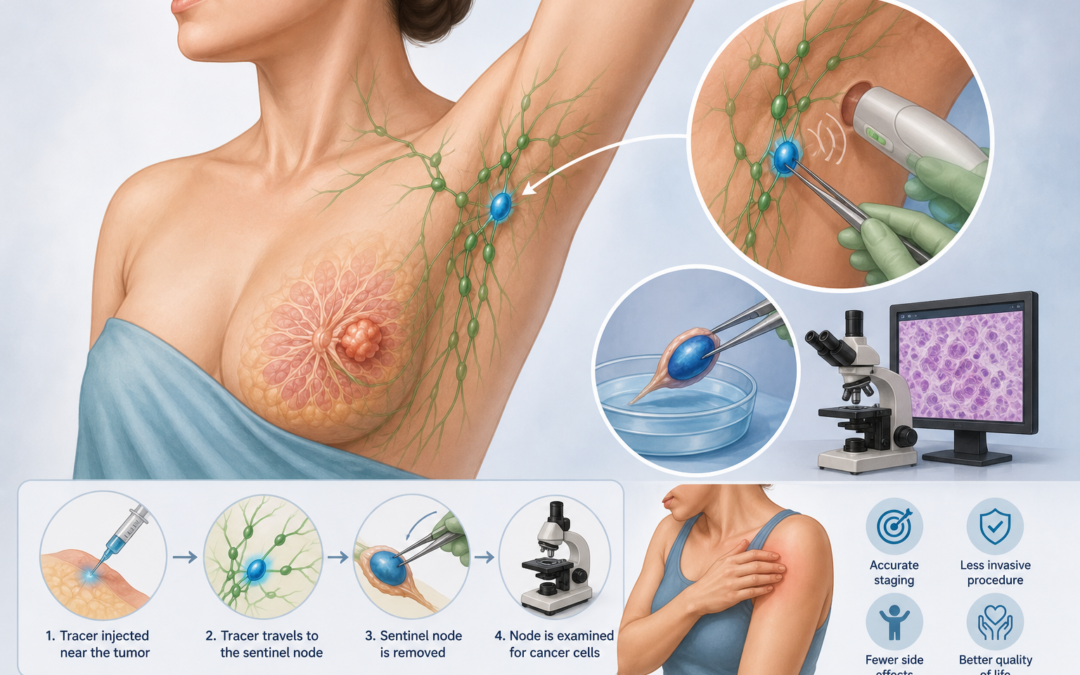
A sentinel lymph node biopsy is a small operation to find the first lymph node a cancer would reach if it started to spread, take it out and look at it under a microscope. Think of it as a spot check. If that one node is clear, the ones behind it almost always are too, so the surgeon leaves them alone. You’ll hear about it mostly with breast cancer and melanoma.
Dr. Sandeep Nayak, who provides cancer treatment in Bangalore, says the words “lymph node” scare people far more than the procedure does. “I tell patients it’s like checking the first gate on a road. If the first gate is clear, we don’t need to walk the whole road. Not so long ago we took out a bunch of nodes from the armpit every single time, just in case, and a lot of women lived with a swollen, stiff arm afterwards. Most people don’t need that anymore.”
Been told you need a node check before surgery?
What Is a Sentinel Lymph Node Biopsy? How the Procedure Works
Here’s roughly how the day goes:
- A tracer goes in first, close to the tumour. It might be a radioactive one, a blue dye, or a dye that glows under a special camera, and sometimes two of them together. It travels the same route cancer cells would and settles in the first node or two. The blue dye can turn your urine greenish for a day. It looks odd but it’s harmless.
- Then the surgeon finds those nodes, either with a handheld probe or by spotting the blue. A small cut, usually in the armpit for breast cancer, and one to three nodes come out.
- The nodes go to the pathologist. Some centres can give a quick answer while you’re still on the table. Otherwise the full report takes about a week. Our breast cancer treatment in Bangalore page explains how this sits alongside the main surgery.
- Most of the time it’s done in the same sitting as the main operation. You go home that day or the next morning with a sore, tight armpit.
Why Is Sentinel Lymph Node Biopsy Done? Who Needs It
- Mainly to find out whether the cancer has moved. A node with cancer in it changes the stage, and the stage drives most of the decisions that come after.
- To avoid taking out nodes that don’t need to go. If the sentinel node is clear, clearing the whole armpit can usually be skipped, which means less swelling, numbness and shoulder stiffness down the line.
- It helps plan what comes next. A positive node might mean chemotherapy or radiation, and a clear one might let you skip some of that. This is where personalised plans matter, because two people with the same size tumour can need quite different follow-up.
- Breast cancer and melanoma are the usual cases, and now and then vulval or penile cancer. It doesn’t suit everyone, so our oncology team goes through your scans before suggesting it.
What Determines the Right Treatment Approach?
Not everyone goes straight to a sentinel lymph node biopsy. A few things decide it:
- The type and size of the tumour. Small, early cancers are the best fit.
- How the nodes look before surgery. If an ultrasound or needle test has already found cancer in a node, the plan changes, and sometimes chemotherapy comes first.
- Earlier surgery or radiation in the same area, since scar tissue can change how the tracer drains and the surgeon may pick a different method.
- Your general health. Pregnancy and dye allergies both affect which tracer is safe.
- Whether the result would change anything at all. For some older women with small, hormone-sensitive breast cancers, doctors now ask if the biopsy is needed, because the answer may not alter the treatment.
Key Takeaways
- A sentinel lymph node biopsy looks at just the first node cancer would reach. One small cut instead of a big armpit operation.
- Node clear? The others usually stay where they are, so there’s less chance of a swollen or stiff arm later.
- Breast cancer and melanoma are where it’s used most. Plenty of patients don’t need it, though.
- What the pathologist finds can change your treatment afterwards, so it’s not a formality.
- Got questions about your own case? Contact the clinic on +91 9482202240.
FAQs
Is a sentinel lymph node biopsy painful?
Nobody feels anything during it, since you’re under anaesthesia. The soreness comes after. Most patients tell us the armpit feels tight, a bit like a pulled muscle, and a few get a numb patch on the inside of the upper arm. Paracetamol usually does the job, but check with your surgeon first. If the pain is getting worse instead of better, call us.
Does a positive sentinel node mean the cancer has spread everywhere?
No. All it tells us is that cancer cells reached that node. Where else they went, if anywhere, we work out from your scans and the rest of your reports. The plans vary a lot. Some patients need a second surgery, some go on to radiation or tablets, and some we simply keep an eye on.
Can I still get lymphedema after a sentinel lymph node biopsy?
It’s possible, though we see it far less than we used to after the old full armpit clearance. Watch for a heavy feeling in the arm, a sleeve or bangle getting tight, or a puffy hand. Tell us early if you notice any of it. Caught soon, it’s much easier to manage.
How long does it take to get sentinel lymph node biopsy results?
A week, give or take. Some hospitals can look at the node during the operation, so you may hear sooner. Ask your surgeon before the day so you aren’t left guessing by the phone.
References
- National Cancer Institute (NCI): Sentinel Lymph Node Biopsy – https://www.cancer.gov/about-cancer/diagnosis-staging/staging/sentinel-node-biopsy-fact-sheet
- MedlinePlus: Sentinel Lymph Node Biopsy – https://medlineplus.gov/lab-tests/sentinel-lymph-node-biopsy/
Disclaimer
This content is published for educational and informational purposes only and is not a substitute for medical advice. Please speak to your oncologist before changing or stopping any treatment.