
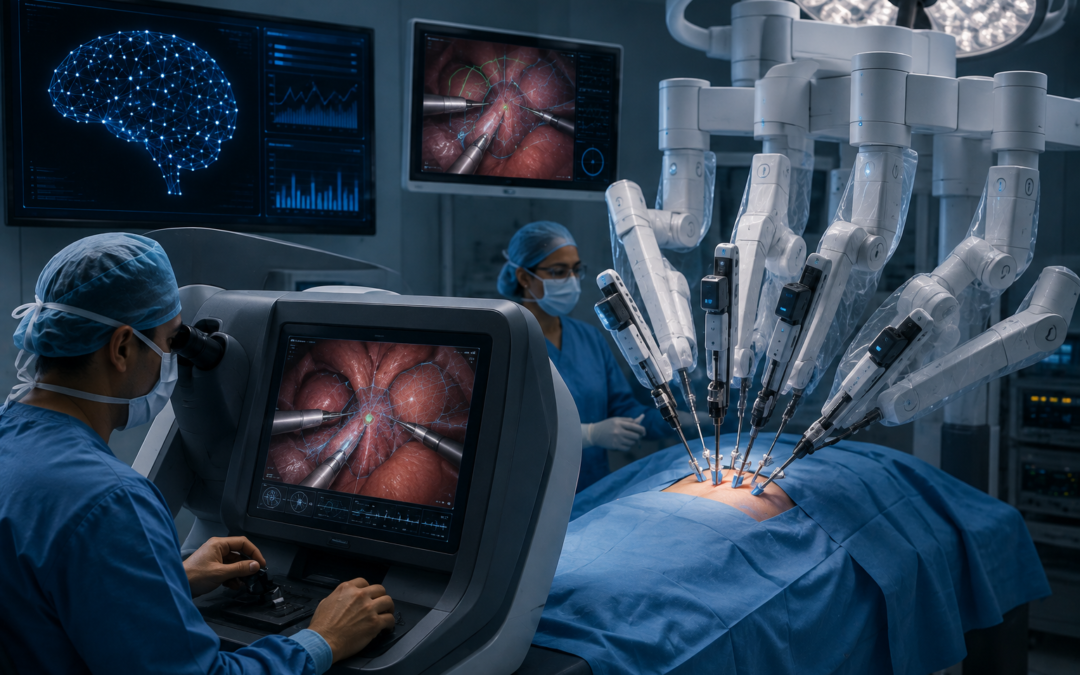
Yes. AI is helping robotic cancer surgery in a few concrete ways: sharper real time visualization during the operation, earlier warning of anatomical risks like nearby nerves or blood vessels, and more precise guidance while the tumor is being removed. It isn’t replacing the surgeon’s judgment or hands. It’s giving them better information at the exact moment they need it.
Dr. Sandeep Nayak, known for the Best Cancer Treatment in Bangalore, puts it simply: “The robot already gave us dexterity and a magnified view. AI adds context, catching things a second faster than the eye alone would.”
Curious how AI-assisted surgery could apply to your case?
What AI Actually Does During Surgery?
AI shows up at a few specific points in the operation, not as one single feature. Here’s where it actually helps:
- Sharpens contrast between tumor and healthy tissue in real time
- Flags where nerves or major vessels are likely sitting before the surgeon gets there
- Overlays the pre-op scan on the live view to help protect the margin
- Reviews recorded procedures afterward to improve training and consistency
This works alongside robotic and laparoscopic surgery, not instead of it. None of these tools operate independently, they layer onto the surgeon’s own skill rather than working around it. The surgeon is still the one making every call in real time.
Does It Actually Improve Accuracy?
Better information tends to mean fewer surprises mid-procedure. Here’s what actually changes, and what doesn’t:
- Fewer mid-procedure pauses, since the surgeon has more information upfront
- Better odds of a clean margin, especially on irregular tumor edges
- No shortcut on skill, the surgeon’s read still overrides the software
- Outcome data is still catching up to how fast the technology is being adopted
That gap matters if you’re weighing this as a patient. The technology helps, but it isn’t a substitute for an experienced surgical team making the actual calls, and it’s worth reading up on robotic cancer surgery success rates separately from the AI angle.
Why Choose MACS Clinic for AI-Assisted Robotic Cancer Surgery?
Dr. Sandeep Nayak’s team at MACS Clinic uses robotic and laparoscopic platforms as a standard part of cancer surgery, tied into the same precision oncology thinking that shapes the treatment plan long before anyone’s in the operating room. Every case goes through diagnostic staging first, so whatever technology gets used during surgery is built around what that specific tumor looks like, not a one-size-fits-all protocol pulled off a shelf.
Considering robotic surgery for a cancer diagnosis? Reach the team at +91 9482202240.
FAQs
Does AI replace the surgeon in robotic cancer surgery?
No. It supports visualization and risk flagging, but the surgeon makes every decision.
Is AI-assisted robotic surgery available for every cancer type?
Not evenly. It’s furthest along in prostate, kidney, colorectal, and some gynecological and head and neck cancers.
Does AI add to the cost of robotic surgery?
Often, yes, since some features are tied to newer platforms. Worth confirming what’s included beforehand.
How do I know if this applies to my case?
Tumor type, stage, and location matter more than the technology. Start there with your surgical team.