

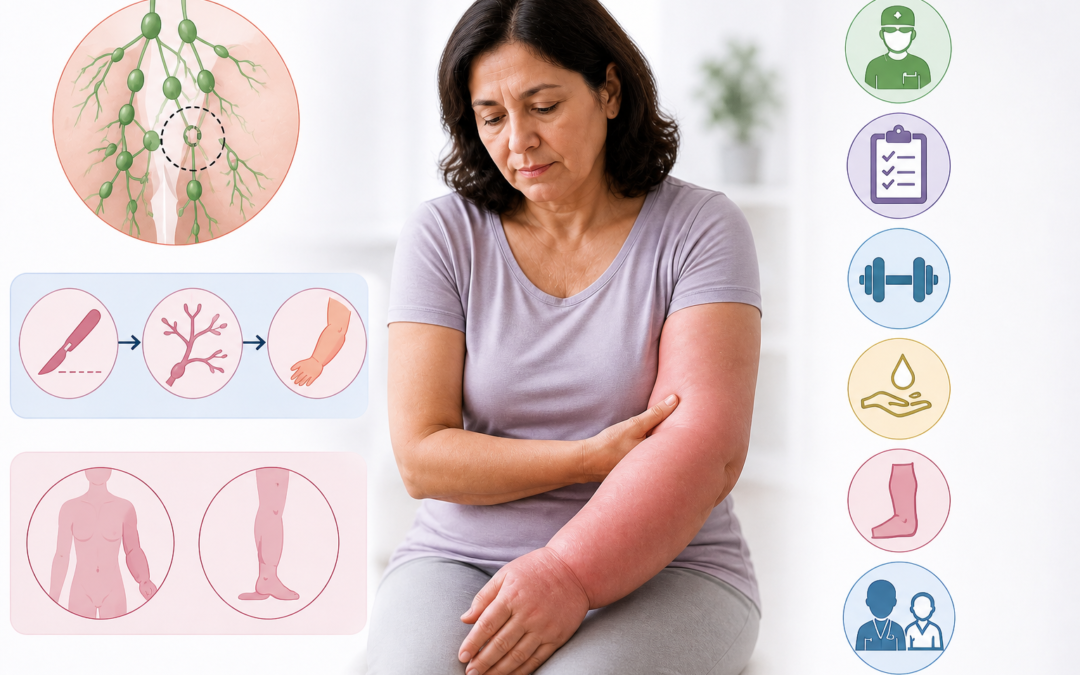
Yes, cancer surgery can cause lymphedema. When surgery removes or damages lymph nodes and the tiny vessels around them, lymph fluid can’t drain properly, and it builds up as swelling, usually in the arm or leg. The chest, armpit, trunk or neck can swell too. Not everyone gets it. The risk depends on how many nodes are removed, whether you have radiation, and a few other things you can partly control.
Dr. Sandeep Nayak, who provides the best cancer treatment in Bangalore, says patients rarely ask about it before surgery and then feel blindsided. “I’d rather they knew. The honest picture is that we remove as few nodes as we safely can, and for many women a sentinel biopsy is enough. If swelling does come, it’s much easier to manage early than late. A sleeve that feels tight, a ring that won’t come off, an arm that’s heavy by evening. Tell us then, not six months later.”
Worried about swelling after your surgery?
Lymphedema After Cancer Surgery: Who Is at Risk and Why
It’s not random. A few things push the risk up:
- The number of nodes removed matters most. After breast cancer surgery, roughly 3 to 8 in 100 women get lymphedema after a sentinel node biopsy, against about 15 to 25 in 100 after removing a full set of armpit nodes. Our breast cancer surgeries page explains the difference.
- Radiation adds to it. Radiation to the armpit, on top of node removal, can push the risk to somewhere between 25 and 40 in 100. Our radiation therapy page explains how it’s planned.
- Extra weight, infection and injury raise it too. A higher body weight, an infection in the arm, or an injury to it since surgery are all linked with lymphedema.
- It isn’t only a breast cancer problem, and it isn’t always immediate. Leg swelling can follow node surgery in the groin or pelvis, and swelling of the neck or face can follow a neck dissection. It can show up months or even years afterwards.
Can Lymphedema Be Prevented? What Actually Helps
You can’t remove the risk completely, but you can lower it:
- Take fewer nodes when it’s safe. Moving from full node removal to sentinel biopsy has done more than anything else to reduce lymphedema. Newer techniques, such as mapping which vessels drain the arm and joining lymph vessels to veins during the operation, aim to protect drainage too.
- Keep moving, and build up gradually. The old advice was to avoid lifting. Studies now suggest that progressive exercise after node surgery doesn’t raise the risk and may lower it. Guidelines encourage at-risk patients to exercise, ideally with a trained therapist showing the way.
- Look after your weight and skin. Staying at a healthy weight helps, and so does treating cuts promptly. A red, hot, swollen arm, especially with fever, needs a doctor the same day, because it can be an infection.
- Catch it early. Watch for heaviness, tightness, snug rings or sleeves, or slight swelling. Measurements or a bioimpedance scan can spot it before it’s visible, and treatment started early works best. That usually means compression, manual lymphatic drainage and exercise with a lymphedema therapist.
What Determines the Right Treatment Approach?
Two people having cancer surgery can end up with quite different plans. A few things decide it:
- The type and stage of the cancer. Whether lymph nodes need to come out at all, and how many, depends on where the cancer started and how far it has gone.
- Whether the nodes already contain cancer. If they do, a bigger operation may be needed. For some women with only one or two affected nodes, radiation can sometimes replace full node removal.
- What treatment comes after. Radiation or chemotherapy affects both the cancer plan and the lymphedema risk, so they’re planned together.
- Your own risk factors. Your weight, your dominant arm, past infections and other conditions all count.
- What’s available to protect drainage. Some centres can reconnect lymph vessels to veins at the time of surgery. Ask your surgeon whether that’s an option for you.
Key Takeaways
- Cancer surgery can cause lymphedema when lymph nodes or vessels are removed or damaged, most often in the arm or leg.
- Risk rises with the number of nodes removed, with radiation to the area, and with extra weight, infection or injury.
- You can’t remove the risk completely, but fewer nodes removed, gradual exercise and a healthy weight all help.
- Heaviness, tightness or slight swelling should be reported early, and a red, hot, swollen limb with fever needs a doctor the same day.
- For questions about your own situation, you can contact the clinic at +91 9482202240.
FAQs
Does everyone who has lymph nodes removed get lymphedema?
No, most people don’t. The risk depends on how many nodes were taken, whether you had radiation, and things like your weight. Even so, it’s worth knowing the signs, because it can start years later.
How soon after surgery can lymphedema show up?
It varies. After full node removal it often appears within the first year. After a sentinel biopsy plus radiation, it can appear a few years on. Mild swelling in the first weeks after surgery is normal, but swelling that persists or returns needs a look.
Can lymphedema be cured?
It usually can’t be cured, but it can be controlled, and it’s much easier to control when treated early. Compression, manual lymphatic drainage and exercise with a trained therapist are the mainstays. Some people benefit from a surgical procedure that reroutes lymph into veins.
Is it safe to exercise and lift weights after node surgery?
Gradual exercise appears to be safe, and may lower the risk. Wait until your surgeon clears you, start light, build up slowly, and stop and report it if you notice new swelling or heaviness. A therapist who knows lymphedema can guide you.
References
- Guidelines for the Diagnosis, Detection, Prevention and Treatment of Breast Cancer-Related Lymphedema, Breast360
- Common Questions About Breast-Related Lymphedema, Memorial Sloan Kettering Cancer Center
- Reducing Breast Cancer-Related Lymphedema Risk With Surgical Strategies and Surveillance, Mayo Clinic
- Effects of Early Exercise on the Development of Lymphedema in Patients With Breast Cancer Treated With Axillary Lymph Node Dissection, PubMed Central
- Breast Cancer Surgeries, MACS Clinic
Disclaimer
This content is published for educational and informational purposes only and is not a substitute for medical advice. Please speak to your oncologist before changing or stopping any treatment.