

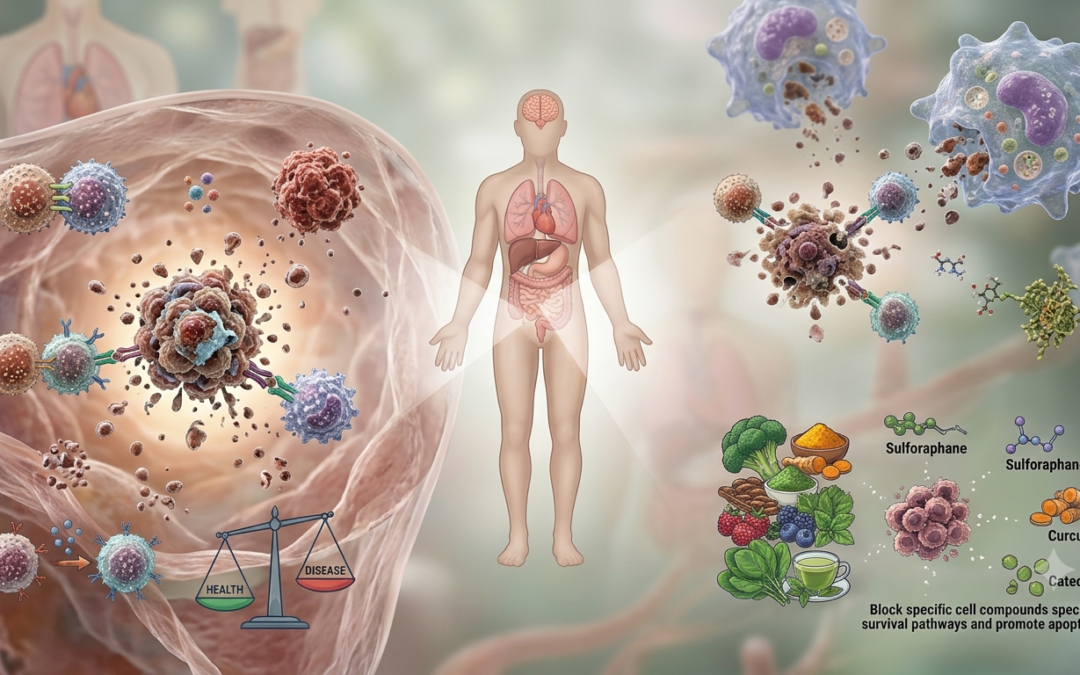
Mainly your immune system. It checks the body all the time for cells that have gone wrong, and the ones that do most of the killing are cytotoxic T cells and natural killer cells, or NK cells. Cytotoxic T cells recognise cancer cells by the markers on their surface and destroy them. NK cells are the first line of defence and can act without needing those markers. It’s one reason many abnormal cells never grow into a tumour. But cancer cells are good at hiding. Some switch off the immune cells nearby, and some stop showing their markers. So the immune system is a real defence, but it isn’t a guarantee. And no food, juice or supplement has been shown to boost it enough to treat cancer.
Dr. Sandeep Nayak, who provides cancer treatment in Bangalore, says it helps to separate two ideas. “The immune system does fight abnormal cells every day, and some of today’s treatments, like immunotherapy, work by helping it do that better. But that’s very different from saying a food or a supplement can destroy a tumour. It can’t. What a good diet can do is support your health and lower your risk over the years. If you already have cancer, treatment has to come first, and anything extra should be talked through with your oncologist.”
Wondering what you can do yourself, whether for prevention or alongside treatment? A short conversation with a specialist and a dietitian can separate what’s useful from what’s hype. Share your questions with our team, and they’ll point you to the right next step.
How the Body Naturally Fights Cancer Cells?
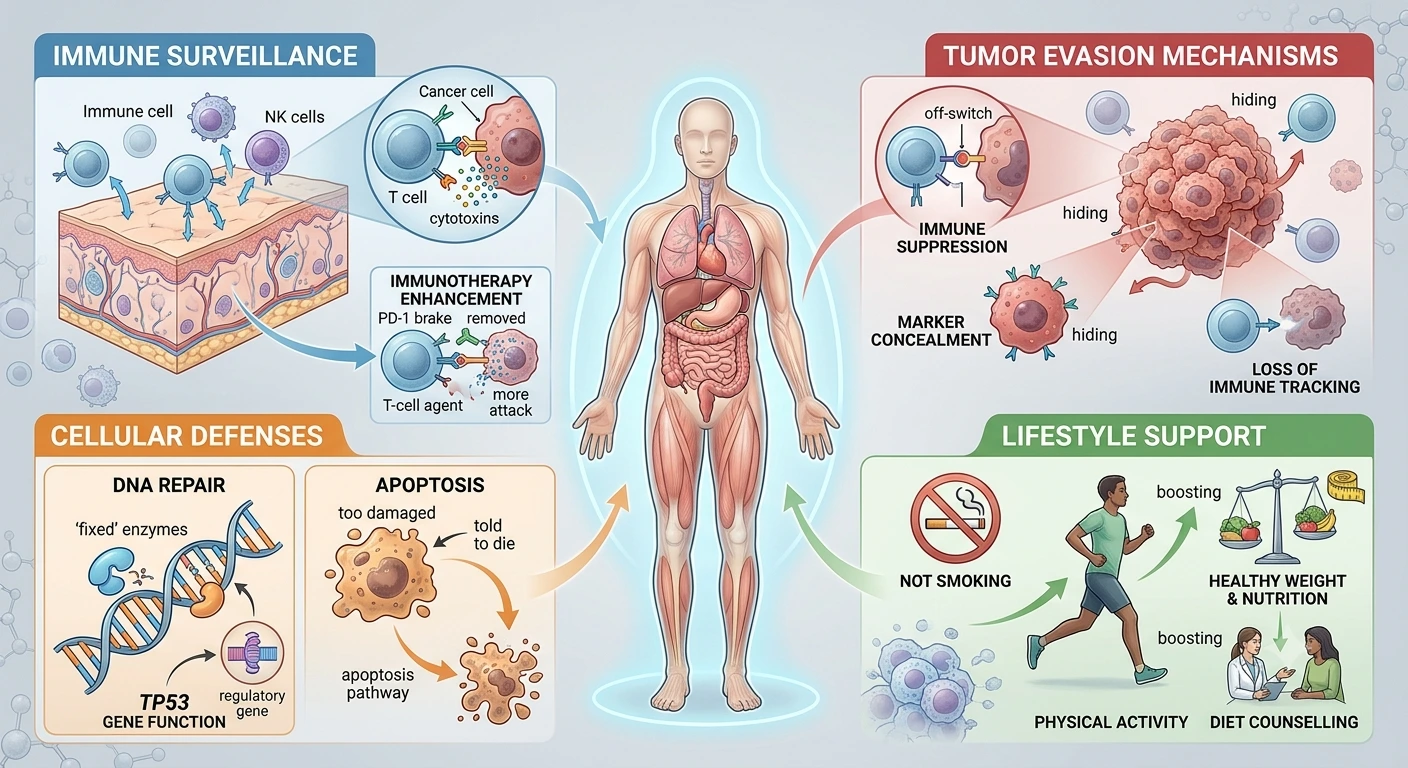
- T cells and NK cells patrol the body. This is called immune surveillance. Cytotoxic T cells recognise and kill cancer cells that display specific markers, and NK cells respond to stressed or abnormal cells. Immunotherapy builds on this by taking the brakes off T cells, which you can read about on our immunotherapy in India page.
- Cells also have their own repair and self-destruct systems. Damaged DNA is fixed where possible, and cells that are too damaged are told to die. Genes like TP53, which suppress tumour growth, help run this.
- Cancer gets round these defences. Tumours can switch off nearby T cells or hide their markers, so the immune system loses track of them.
- Healthy habits help the body’s defences work well. Not smoking, staying active and keeping a healthy weight all lower cancer risk, and a dietitian can build a plan around your treatment through diet counselling.
Natural Ways to Fight Cancer Cells: What the Evidence Says?
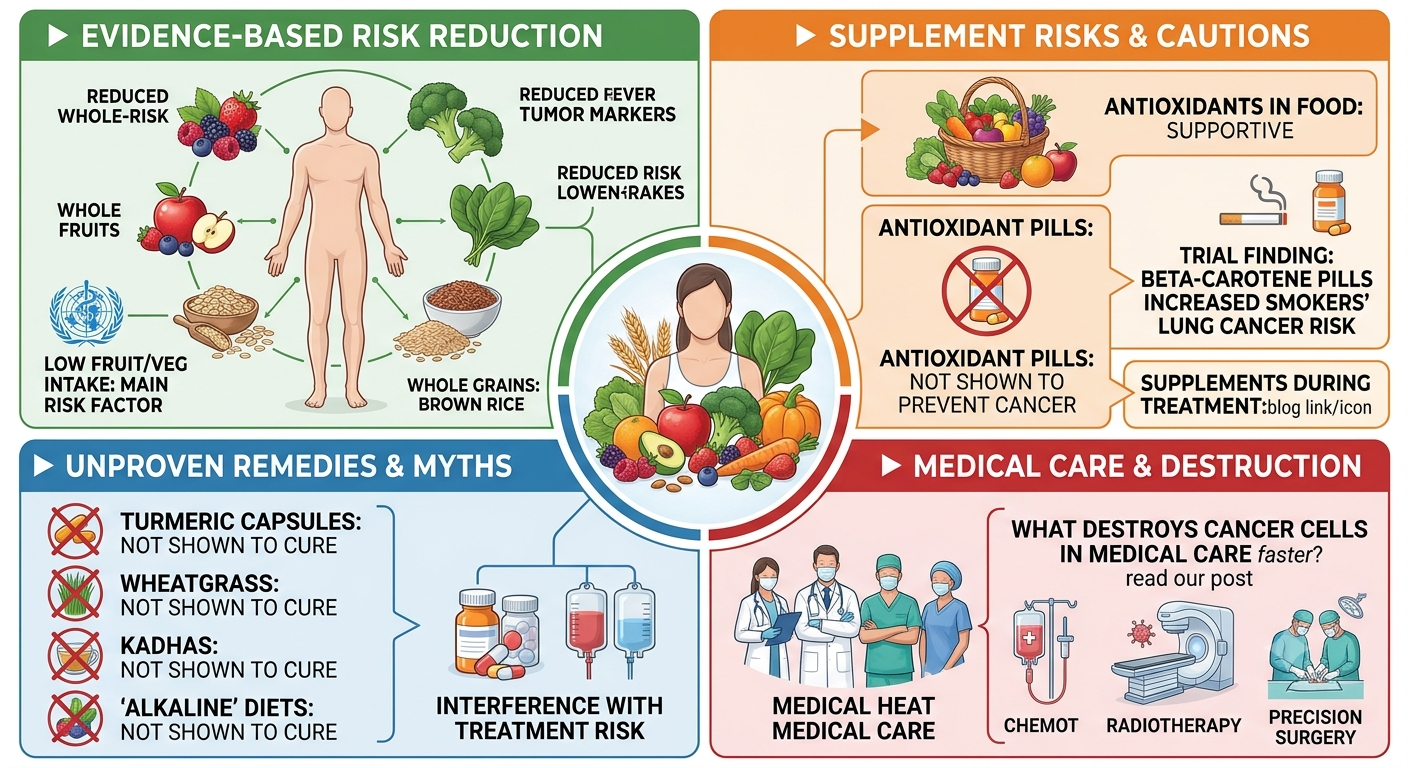
- Foods that help fight cancer don’t exist as such. No single food kills cancer cells. But diets rich in fruit, vegetables and whole grains are linked with lower risk of some cancers, and WHO lists low fruit and vegetable intake among the main risk factors.
- Antioxidants and cancer prevention is where people often go wrong. Antioxidants in food are fine. Antioxidant pills haven’t been shown to prevent cancer, and in trials, beta-carotene pills raised lung cancer risk in smokers. Our blog on supplements during cancer treatment explains why this matters during treatment.
- Turmeric capsules, wheatgrass, kadhas and “alkaline” diets all get promoted. None has been shown to cure cancer, and some can interfere with treatment.
- If you want to know what does destroy cancer cells in medical care, read our post on what kills cancer cells faster.
What Decides Whether a Natural Approach Is Safe for You?
It isn’t the same for everyone, and a few things matter.
-
- Whether you’re well or have cancer. Prevention and treatment are different questions, and food can help with the first, not the second.
- What you take, and how much. A plate of vegetables isn’t the same as a high-dose pill.
- Your treatment. Some supplements and herbs can interfere with chemotherapy or radiation.
- Whether you smoke. Beta-carotene supplements have been linked to more lung cancer in smokers and former smokers.
- Your other medicines. Vitamin E supplements, for one, can interact with blood thinners.
- Your doctor’s advice. Tell your oncologist about anything you plan to take before you start it.
FAQs
What kills cancer cells in the body naturally?
Mostly your immune system. Cytotoxic T cells and NK cells find and destroy abnormal cells, and cells also have their own repair and self-destruct systems. None of this guarantees that a cancer won’t develop.
Can foods that help fight cancer actually kill cancer cells?
No. A healthy diet can lower the risk of some cancers over time, but no food has been shown to destroy cancer cells in someone who has the disease.
Do antioxidants prevent cancer?
Antioxidants in fruit and vegetables are part of a healthy diet. But in trials, antioxidant supplements didn’t prevent cancer, and beta-carotene pills increased lung cancer risk in smokers.
Can I boost my immune system to fight cancer?
Healthy habits support your immune system in general, but there’s no proven way to “boost” it enough to treat cancer. Immunotherapy is the medical way to help immune cells attack cancer, and it only works for certain cancers.
Reference Links:
- Antioxidant Supplements: What You Need To Know, National Center for Complementary and Integrative Health, NIH
- Routine Vitamin Supplementation to Prevent Cancer: A Summary of the Evidence for the U.S. Preventive Services Task Force, NCBI Bookshelf
Disclaimer
This content is published for educational and informational purposes only and is not a substitute for medical advice. Which treatment is right depends on your individual case, so please consult your oncologist.