


Yes, kidney cancer surgery can often save the kidney. The operation is called a partial nephrectomy, or kidney-sparing surgery. Instead of taking out the whole organ, the surgeon removes the tumour along with a thin rim of healthy tissue and leaves the rest of the kidney working. It isn’t possible for every tumour, though. The size, the position, and the health of your other kidney all decide it.
Dr. Sandeep Nayak, who provides Cancer treatment in Bangalore, says the first thing most patients ask is whether they’ll need dialysis. “For most small tumours we can take just the tumour and keep the kidney, and that protects your kidney function over the years. But it isn’t always the right call. If the tumour is big, deep in the centre, or has grown into the vein, taking the whole kidney can be safer. Cancer comes first. We save the kidney when we can do it without putting the cure at risk.”
Just been diagnosed with a kidney tumour? Learn about your diagnosis, understand your treatment options, and explore the next steps with guidance from a cancer care specialist.
Kidney-Sparing Surgery: How a Partial Nephrectomy Works?
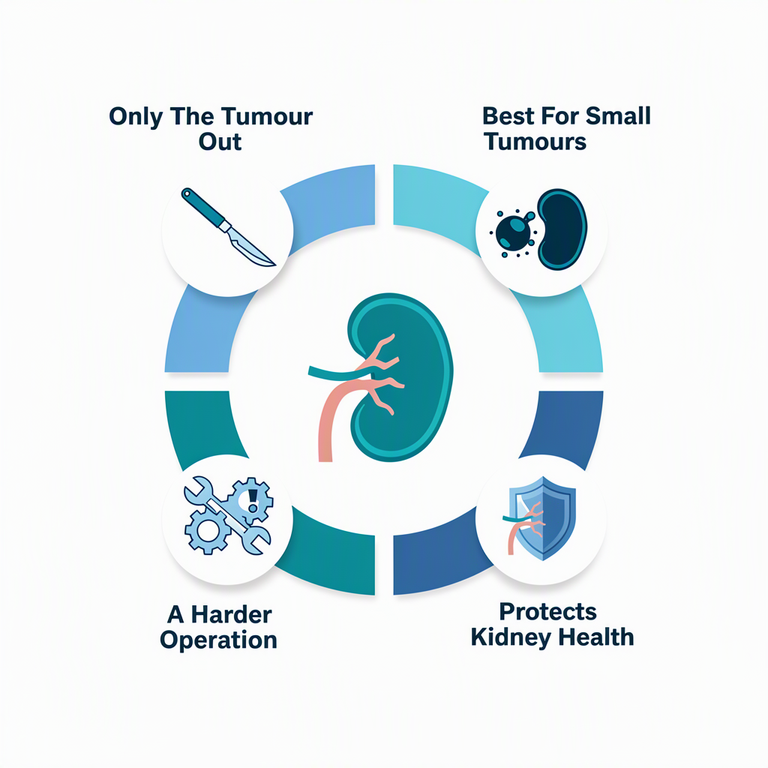
Here’s what’s involved, and why it’s now the preferred operation for many tumours:
- Only the tumour comes out, plus a thin edge of healthy tissue. The rest of the kidney stays and keeps working. It’s often done with keyhole or robotic surgery, and the kidney’s blood supply is briefly clamped while the tumour is removed and the kidney is repaired.
- It works best for smaller tumours. Guidelines recommend a partial nephrectomy for tumours up to 4 cm in the US and up to 7 cm in Europe, whenever it’s feasible. For these tumours, cancer control is comparable to removing the whole kidney.
- The reason is kidney health later on. Keeping more of the kidney lowers the chance of chronic kidney disease. In one study, removing the whole kidney raised the risk of stage 3 kidney disease about two and a half times. Our kidney cancer treatment in Bangalore page explains how it’s decided.
- It’s the harder operation. Short-term risks, such as bleeding or a urine leak, are higher than with removing the whole kidney. That’s why the surgeon’s experience counts.
When Kidney Cancer Surgery Means Removing the Whole Kidney?
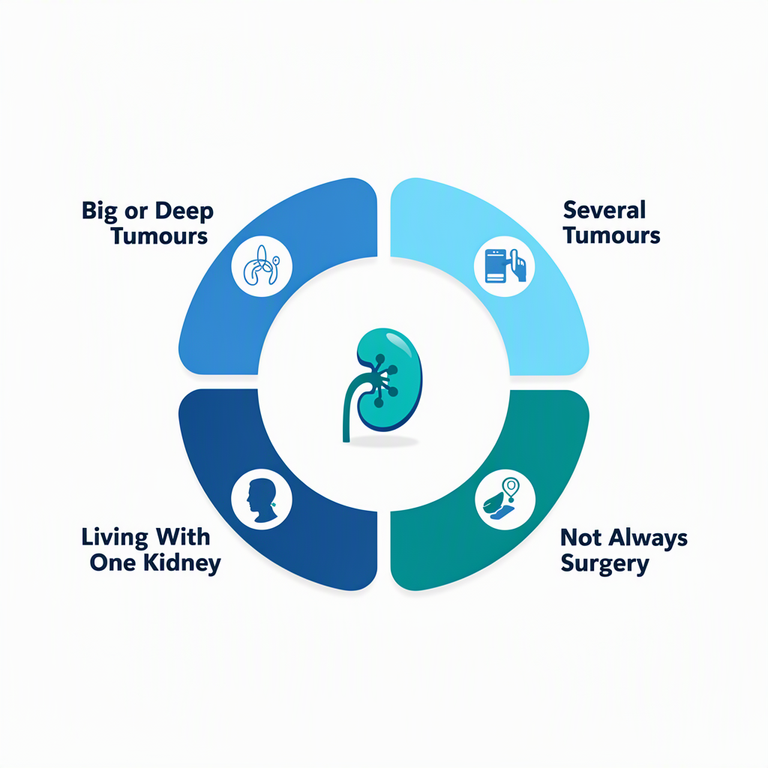
Sometimes the safest option is a radical nephrectomy, and that’s a reasonable decision:
- Big or deep tumours often need the whole kidney to come out. If the tumour is large, sits in the centre near the main blood vessels, or has grown into the renal vein, a partial operation may leave cancer behind or be too risky.
- Several tumours in the same kidney can tip it the same way. Cutting out multiple growths may not leave enough healthy kidney to be worth saving.
- Living with one kidney is usually fine. Most people do well on one healthy kidney, as long as the other one works properly. It’s why your kidney function tests matter before anything is decided.
- Not every small mass needs surgery right away. A very small tumour in an older or frail person can sometimes be watched with regular scans, or treated with freezing or heat (ablation) when surgery isn’t suitable. A fair number of small masses also turn out not to be cancer.
What Determines the Right Treatment Approach?
Two people with kidney cancer can be offered quite different plans. A few things decide it:
- How big the tumour is, and where it sits. A small tumour growing outward from the kidney is much easier to remove safely than one buried in the middle.
- The stage. Whether it has grown into the vein or spread elsewhere changes the whole plan, and advanced disease may call for drug treatment as well as surgery.
- Your other kidney and your kidney function. If you have only one kidney, or you already have kidney disease, saving every bit of working tissue matters even more.
- Your age and general health. Fitness for surgery counts, and for a small tumour in someone frail, watching or ablation can make more sense than an operation.
- Whether kidney cancer runs in your family. If you have several tumours, or they come back, a hereditary cause may be involved, and keeping as much kidney as possible becomes important. Our genetic counselling page explains how that’s checked.
Key Takeaways
Kidney cancer surgery can often save the kidney, using a partial nephrectomy that reoves only the tumour.
It’s the preferred approach for many smaller tumours, and cancer control is comparable to removing the whole kidney.
Larger, deeper tumours, or ones that have grown into the vein, often need the whole kidney removed.
Most people live normally with one healthy kidney, and some very small tumours can be watched rather than operated on.
For questions about your own situation, you can contact the clinic at +91 9482202240.
FAQs
Can kidney cancer be treated without removing the whole kidney?
Often, yes. A partial nephrectomy takes out only the tumour and a thin rim of healthy tissue, and it’s the preferred option for many smaller tumours. Whether it’s possible depends on the size, the position and your overall health.
Will I need dialysis after kidney cancer surgery?
Unlikely, if your other kidney is healthy. The risk is higher if you already have kidney disease or only one kidney, and that’s a big reason surgeons try to save as much kidney as they can.
Is a partial nephrectomy as safe as removing the whole kidney?
For the cancer, it’s comparable in smaller tumours. For the operation itself, short-term risks such as bleeding or a urine leak are higher, which is why it should be done by a surgeon who does it regularly.
How long does recovery take after kidney cancer surgery?
Usually a few days in hospital, and most people are back to light activity within a couple of weeks, with normal activity after a month or two. Keyhole and robotic surgery tend to shorten it. Your surgeon will tell you when you can drive and lift again.
Reference
- Comparison of the Oncological, Perioperative and Functional Outcomes of Partial Nephrectomy Versus Radical Nephrectomy for Clinical T1b Renal Cell Carcinoma, PubMed Central
- EAU 2020: Controversies in Renal Cancer Surgery: Organ Preservation: Do the Benefits Outweigh Additional Risks? Pro Partial Nephrectomy, UroToday
- Contemporary Management of Clinical T2 Renal Masses: Current Evidence and Recommendations, AUA News
Disclaimer
This content is published for educational and informational purposes only. It is not a substitute for medical advice, diagnosis or treatment. Please consult a qualified doctor about your own condition.