

Most people hear “lung cancer” and immediately think of smokers. That’s fair, because smoking is the biggest risk factor. But it’s nowhere near the only one.Somewhere between 10% and 20% of lung cancer patients never smoked. Not occasional smokers. Never smoked. And in India, that number is even higher particularly in women. Nobody warns you about that.
Dr. Sandeep Nayak,who provides Best Cancer Treatment in Bangalore, says it directly: “Lung cancer in non-smokers is a completely different disease from what smokers get. Younger patients, more women, different tumour biology. And very often, EGFR or ALK mutations that targeted drugs work really well against. The real problem? Nobody suspects it because there’s no smoking history. That delay is what hurts patients.”
Non-smoker doesn’t mean no risk. It means the cause is different and so is the treatment.
So If It's Not Smoking, What Causes It?
This surprises most people.
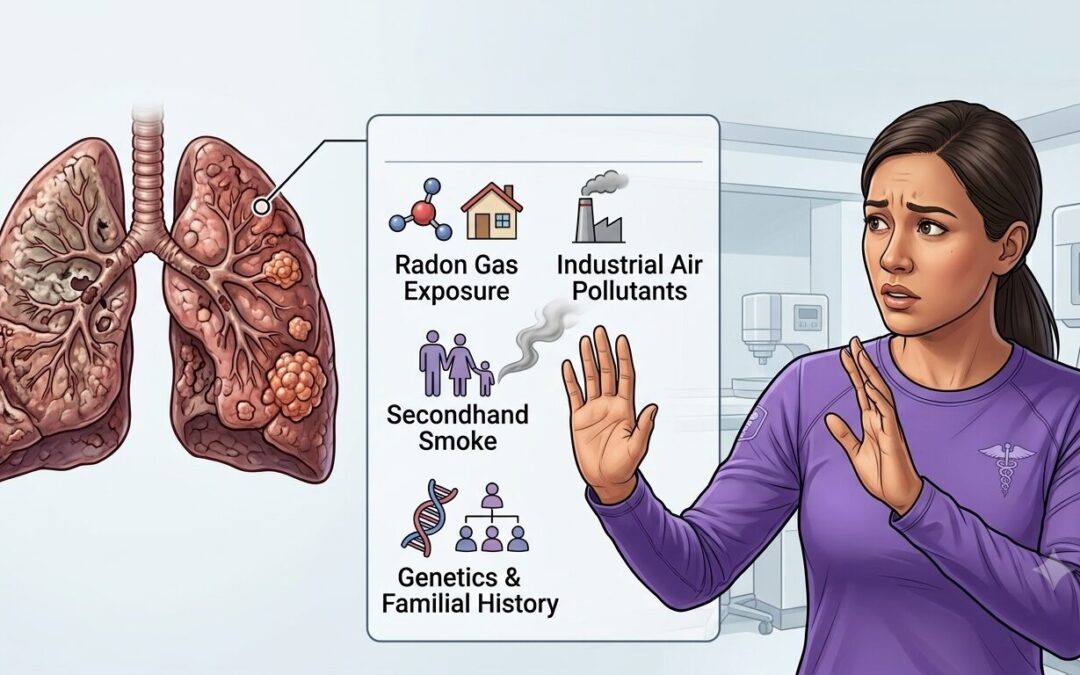
Radon Gas: Never heard of it? Most haven’t. It’s a radioactive gas that comes up naturally from the ground and collects inside buildings, basements, lower floors, and closed rooms. You can’t smell it, can’t see it, and most homes in India have never been tested for it. It’s the single biggest cause of lung cancer in non-smokers worldwide.
Secondhand Smoke: You didn’t smoke. But maybe your father did, at home, for thirty years. Or your workplace did. That exposure adds up the same way your lungs don’t know the cigarette wasn’t yours.
Cooking Smoke: This one hits close to home for many Indian families. Chulhas, wood-burning stoves, coal the smoke from cooking over these every single day releases particles that slowly damage lung tissue. It’s not dramatic. It’s just years of quiet exposure. And it’s a major reason non-smoking Indian women get lung cancer at rates that catch people off guard.
Workplace Exposure: Construction sites, factories, mining asbestos, diesel fumes, arsenic, industrial chemicals. If that’s been your environment for years without proper protection, your lungs have absorbed it.
Family History: Sometimes it’s just in the genes. A parent or sibling with lung cancer raises your own risk, smoking or not. Some inherited mutations genuinely increase susceptibility that’s where genetic counselling becomes important, especially if cancer runs in your family.
What Symptoms Shouldn't You Ignore?
Early lung cancer is quiet. That’s the whole problem with it. By the time something feels wrong enough to act on, it’s often been growing for a while.
These are the things worth paying attention to:
- A cough that just won’t leave: three weeks, four weeks, no cold, no infection, just there
- Chest pain when you breathe deeply or when you cough
- Getting breathless during walks, stairs, things that never bothered you before
- Coughing up blood even once, even a small amount
- The same chest infection coming back in the same part of the lung
- Tiredness that doesn’t improve no matter how much you sleep
Any one of these alone? Might be nothing. But if several of these are happening together, or one has been going on for weeks that needs a CT scan. Not an X-ray, not a “let’s wait and see.” A proper scan. Our blog on Persistent Fatigue as a Cancer Symptom goes deeper on why tiredness specifically shouldn’t be brushed off.
Why Choose MACS Clinic for Lung Cancer in Non-Smokers?
Dr. Sandeep Nayak’s team at MACS Clinic approaches non-smoker lung cancer differently from the start because it is a different disease. Molecular profiling is done at diagnosis, not after other options fail. For patients carrying EGFR, ALK, or ROS1 mutations, treatment is built around those findings from day one, with targeted therapy considered before anything else.
Surgical oncology, medical oncology, and radiation oncology review every case together. No single specialist making decisions in isolation the full picture goes on the table before a plan is made.A non-smoking history doesn’t make lung cancer less serious. It makes the right diagnosis more important to get to quickly.
FAQs
Can someone who never smoked actually get lung cancer?
Yes and it’s not rare. 10% to 20% of lung cancer cases happen in lifetime non-smokers. In India that number is higher. Radon at home, cooking smoke, secondhand smoke, genetics none of these require you to have ever picked up a cigarette.
What kind of lung cancer do non-smokers get?
Usually adenocarcinoma grows in the outer lung, not the airways. In Indian non-smokers, around half carry EGFR mutations. That’s actually useful information because those mutations respond really well to specific targeted drugs.
What signs should a non-smoker not brush off?
A cough hanging around for weeks, chest pain when breathing in, breathlessness getting worse, any blood when coughing, or the same chest infection returning. These need a CT scan not waiting to see if it passes.
Can it be treated successfully?
Yes, particularly when caught early or when targetable mutations are found. EGFR and ALK-positive cases often respond better to their specific drugs than smoking-related lung cancer responds to chemo. Getting the molecular testing done early matters a lot.
Disclaimer: This content is published for educational and informational purposes only.