

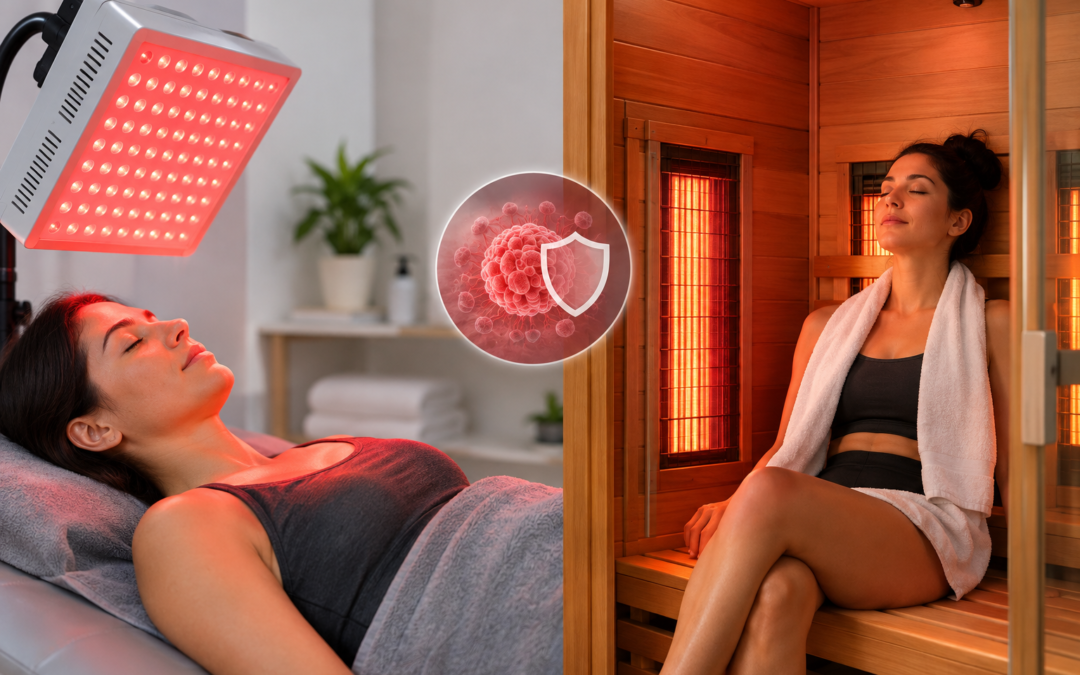
Current evidence says no: neither red light therapy nor infrared saunas has been shown to cause cancer. Both use non-ionizing energy, light or heat, which doesn’t break DNA the way UV rays or X-rays can. The honest caveat is that long-term studies are limited, and anyone who already has cancer should check with their oncologist before using either.
Dr. Sandeep Nayak, who provides cancer treatment in Bangalore, says the confusion usually comes from mixing up light and radiation. “Red light isn’t UV, and a sauna is just heat. Neither carries the kind of energy that damages DNA, so neither is known to cause cancer. But neither is known to treat it, either. And in the middle of chemotherapy, heat can bring its own problems, such as dehydration or a higher infection risk when blood counts are low.”
Thinking of trying either during treatment?
Can Infrared Saunas Increase Cancer Risk, and Are They Safe?
Saunas raise a different set of questions, and most of them are practical:
- An infrared sauna works by heat. The infrared it gives off is non-ionizing, and there’s no UV in it, so there’s no sunburn and no route by which it damages DNA the way a tanning bed does.
- The best data comes from Finland. One study followed 2,173 men for about 24 years and found that frequent sauna use wasn’t linked to a higher or lower cancer risk. But it looked at traditional Finnish saunas, in men only. Long-term data on infrared saunas specifically is thin.
- Don’t count on one to prevent cancer or “detox” it away. What actually lowers risk is boring: not smoking, limiting alcohol, vaccination, regular screening, a healthy weight and staying active. Our how to prevent cancer page covers it.
- During treatment, ask first. Heat can cause dizziness and dehydration, add to the infection risk when blood counts are low, irritate skin after radiation, and may be a poor idea if you’ve had lymph nodes removed and are prone to swelling.
Red Light Therapy and Cancer Risk: What the Evidence Shows?
What Determines the Right Treatment Approach?
Questions about saunas, light devices and similar wellness products during treatment don’t have one answer for everyone. The right advice depends on a few things the treating team looks at together.
The type of treatment you are on. Chemotherapy, radiation, immunotherapy and surgery recovery each carry different precautions around heat, light and skin exposure.
Your current blood counts and general health. Low counts, dehydration or fatigue change what is safe on a given week.
Medicines and side effects. Some drugs make the skin more sensitive to heat or light, and some can interact with supplements or devices.
Where you are in your treatment cycle. Something that is fine between cycles may not be right just after an infusion.
What the product claims and what the evidence shows. Many wellness devices have little or
no evidence in cancer care, so the team weighs the product itself, not only your health.
Because these factors differ from person to person, check with your treating oncologist before starting any new device, supplement or heat or light therapy.
Key Takeaways
- There is no single answer on saunas or light devices during cancer treatment. It depends on the treatment, blood counts, medicines and timing.
- Some drugs make the skin more sensitive to heat or light.
- Many wellness products have limited evidence in cancer care.
- Ask your treating team before starting anything new.
- For questions about your own situation, you can contact the clinic at +91 9482202240.
FAQs
Does red light therapy cause cancer?
There’s no good evidence that it does. It uses non-ionizing light, not UV. But long-term studies are limited, so it’s best not to aim it at a known tumor or a suspicious spot.
Can cancer patients use red light therapy?
Some forms are used under medical supervision, for example for painful mouth sores from chemo or radiation. Don’t use a home device on your own over a tumor or treated skin without asking your oncologist.
Do infrared saunas cause cancer?
No evidence says so. An infrared sauna is heat, not UV. The best long-term study was on traditional saunas and found no link either way, so infrared-specific data is still thin.
Is it safe to use an infrared sauna during chemotherapy?
Check with your oncologist first. Heat can bring dizziness and dehydration, and if your blood counts are low, it may raise infection risk. Skin that’s been through radiation can also react badly.
Reference
- Safety and Efficacy of Photobiomodulation Therapy in Oncology: A Systematic Review, PubMed Central
- Photobiomodulation Therapy in Oral Mucositis and Potentially Malignant Oral Lesions: A Therapy Towards the Future, PubMed Central
- Finnish Sauna Bathing Does Not Increase or Decrease the Risk of Cancer in Men: A Prospective Cohort Study, European Journal of Cancer
- How to Prevent Cancer, MACS Clinic
Disclaimer:
This content is published for educational and informational purposes only and is not a substitute for medical advice. Please consult your doctor before changing any treatment.