
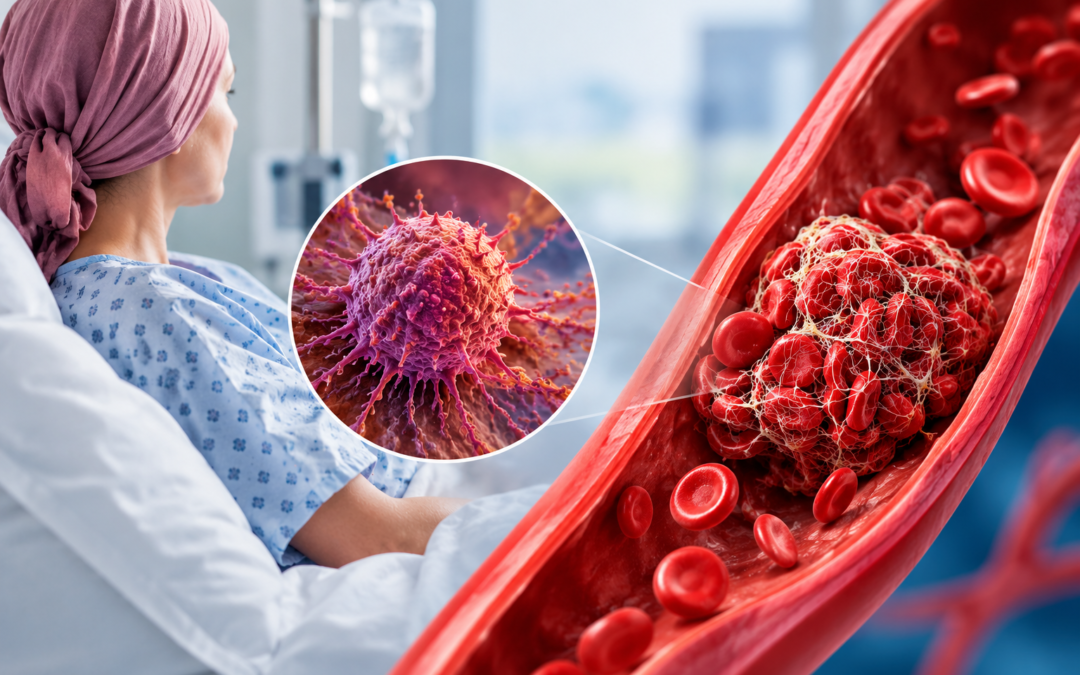
Yes, cancer raises the risk of a dangerous blood clot, a venous thromboembolism, meaning deep vein thrombosis or pulmonary embolism, by roughly four to seven times compared to someone without cancer. So why does a disease that has nothing to do with the blood vessels directly cause this? Because cancer cells release substances that make blood genuinely stickier, pushing the body’s clotting system into overdrive, and certain chemotherapy drugs, central lines, and even prolonged inactivity during treatment stack additional risk right on top of that.
Dr. Sandeep Nayak, known for the Best Cancer Treatment in Bangalore, treats this risk as something to actively manage, not a rare complication to worry about only in hindsight. “Blood clots are the second leading cause of death in cancer patients, right behind cancer itself. That’s not a statistic to brush past. The risk is highest in the first few months after diagnosis, exactly when a lot of the focus naturally goes entirely toward treatment. Patients need to know the warning signs just as clearly as they know their treatment schedule.”
Concerned about blood clot risk during your own treatment?
What Actually Drives This Risk Up?
The increased clotting risk in cancer comes from several overlapping factors, not one single cause:
- Cancer cells release chemicals that stimulate the liver to produce more clotting factors, making blood measurably stickier than it would be otherwise
- Certain cancers carry substantially higher clot risk than others, pancreatic, stomach, brain, and lung cancers sit at the top of that list, along with anyone with metastatic disease
- Several chemotherapy drugs independently raise clotting risk further, on top of whatever risk the cancer itself already carries
- Reduced mobility during recovery from surgery or while managing treatment side effects, combined with central venous catheters used for treatment delivery, both add mechanical risk factors to the biological ones already in play
None of these factors act alone. They tend to stack, which is exactly why risk climbs so much higher in cancer patients than the general population.
Recognizing the Signs Before They Become an Emergency
Catching a clot early, while it’s still in the leg and hasn’t traveled to the lungs yet, makes a huge difference in how manageable the whole thing turns out to be:
- Swelling, warmth, redness, or a persistent ache in one leg or arm, especially if it’s clearly worse on one side than the other, is worth flagging right away rather than chalking up to ordinary treatment fatigue
- Sudden shortness of breath, chest pain that gets worse with a deep breath, a racing heartbeat, or coughing up blood point toward a possible pulmonary embolism, and that means emergency care right now, not waiting to see how it feels tomorrow
- The riskiest stretch tends to be the first few months after diagnosis, right when treatment is usually hitting its hardest and there’s already a lot competing for attention
- Calling the care team the same day new leg swelling or breathing trouble shows up, instead of saving it for the next appointment, genuinely makes sense given how fast this can turn serious
None of this is meant to pile more worry onto an already hard diagnosis. It’s really just about knowing which symptoms mean call today, not which ones might come up eventually.
Why Choose MACS Clinic for Blood Clot Risk Management During Cancer Treatment?
Dr. Sandeep Nayak’s team assesses clot risk as a standard part of treatment planning, factoring in cancer type, treatment regimen, and individual risk factors rather than treating this as an afterthought separate from the main cancer treatment plan. For higher-risk patients, that can include preventive blood thinners or specific mobility guidance built directly into the treatment schedule, not a generic warning handed out once and forgotten. Patients are also given clear, specific instructions on which symptoms warrant an immediate call versus which can wait for a scheduled visit, so nobody has to guess how urgent a new symptom actually is.
Noticed swelling, breathing changes, or other symptoms worth checking? Reach the team at +91 9482202240.
FAQs
Which cancers come with the biggest clot risk?
Pancreatic, stomach, brain, and lung top that list, and honestly any cancer that’s already spread elsewhere in the body pushes the risk up too.
Does every cancer patient need to be on blood thinners just in case?
No, it’s really case by case, weighing the specific cancer type, the treatment plan, and personal risk factors, not something handed out across the board.
Can clots show up even for someone not on chemo?
Yes, actually, cancer alone raises clotting risk regardless of treatment, chemo and things like limited mobility just pile on more risk from there.
Does a clot during treatment always mean rushing to the ER?
If it looks like a pulmonary embolism, sudden breathlessness, chest pain, yes, that’s an emergency every time. Leg swelling pointing toward a DVT still needs quick attention, just maybe not a 911 call.
Reference
- Cancer and Pulmonary Embolism, Healthline
- Blood Clots and Cancer, CDC
- Can Cancer Patients Travel by Air During Treatment, MACS Clinic
Disclaimer:This content is published for educational and informational purposes only.