

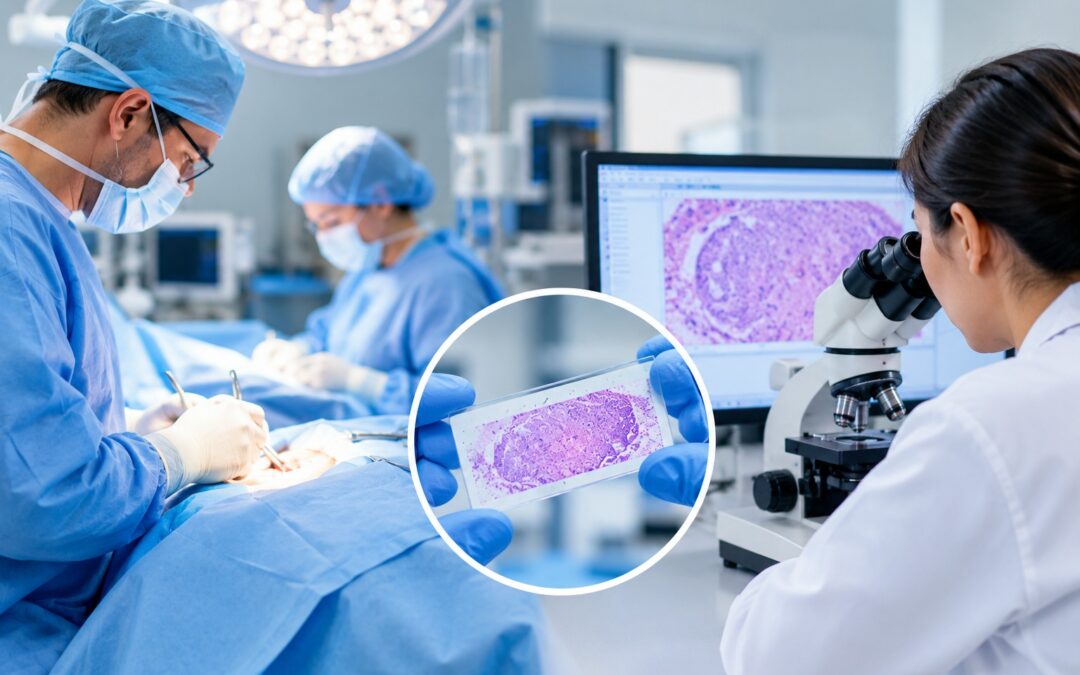
They don’t, not with certainty, while they’re actually still in the operating room. Surgeons rely on a detailed pathology report, examined under a microscope in a lab after the operation, to actually confirm whether the cancer came out completely. So if the surgeon can’t tell at the moment, what’s actually happening during the operation to even make a reasonable attempt at it? The surgeon removes the tumor along with a margin of surrounding tissue that looks and feels healthy, then that entire specimen goes to pathology, where the real answer comes from.
Dr. Sandeep Nayak, who provides the Best Cancer Treatment in Bangalore explains why this question comes up so often from anxious patients right after surgery. “People wake up and ask immediately, did you get it all? I understand why, but the honest answer takes days, not hours. What I can tell them in the recovery room is what the tissue looked like and felt like during the operation. What actually confirms clear margins is the pathologist examining that tissue under a microscope, sometimes with special stains, checking the edges of what was removed millimeter by millimeter.”
Recently had surgery and waiting on your own pathology results?
What Actually Happens Between Surgery and the Final Answer?
The process runs through a few distinct steps before anyone can say with real confidence that the cancer is gone.
- During surgery, a frozen section can sometimes be used, a rapid, rougher version of pathology done in minutes while the patient is still on the table, giving the surgeon an early read on whether margins look clear enough to finish the operation as planned
- After surgery, the full specimen gets processed properly, fixed, sliced, stained, and examined in complete detail, which is far more thorough than what frozen section can achieve and typically takes several days
- The pathologist checks the outer edge of the removed tissue specifically, classifying the result as clear, meaning no cancer cells at the cut surface, or positive, meaning cancer cells were found right at the edge
- A positive margin generally means more treatment is needed, sometimes further surgery, sometimes radiation, since cells sitting right at the edge of removed tissue raise real concern about what might have been left behind
None of this happens instantly, and that gap between surgery and a confirmed result is exactly why patients get asked to wait rather than getting a same day answer.
Why Even Clear Margins Don't Mean Absolute Certainty?
Why Choose MACS Clinic for Surgical Precision and Honest Pathology Communication?
Dr. Sandeep Nayak’s team at MACS Clinic uses frozen section analysis during surgery itself wherever it genuinely changes the operative plan, so margins get addressed in the operating room when that’s possible rather than only discovered after the fact. Final pathology results get reviewed and communicated to patients directly and promptly once they arrive, rather than sitting in a file until the next scheduled appointment. For patients with a positive margin or any finding that changes the plan, next steps get discussed honestly and immediately, since clarity at that moment matters more than softening difficult news.
Waiting on your own pathology results or want your surgical plan explained clearly? Reach the team at +91 9482202240.
FAQs
Can a surgeon tell during the operation if all the cancer is out?
Not with full certainty, no. A frozen section can give an early read in some cases, but the detailed final pathology report, which takes several days, is what actually confirms margin status.
What does a positive margin on a pathology report actually mean?
It means cancer cells were found right at the edge of the removed tissue, which usually leads to a conversation about additional treatment, further surgery or radiation, to address what might remain.
Does a clear margin guarantee the cancer won't come back?
No, it significantly improves the odds, but it isn’t an absolute guarantee, since microscopic cells can occasionally exist in tissue that otherwise looks and tests normal.
How long does it typically take to get a final pathology result after surgery?
Usually several days to about a week, depending on the complexity of the tissue and whether any additional specialized testing is needed.
Reference
Can Cancer Come Back After Surgery, MACS Clinic (https://macsforcancer.com/blogs/can-cancer-come-back-after-surgery/)
Can Cancer Surgery Spread Cancer, MACS Clinic (https://macsforcancer.com/blogs/can-cancer-surgery-spread-cancer/) Resection Margin, Wikipedia (https://en.wikipedia.org/wiki/Resection_margin)
Disclaimer:This content is published for educational and informational purposes only.