

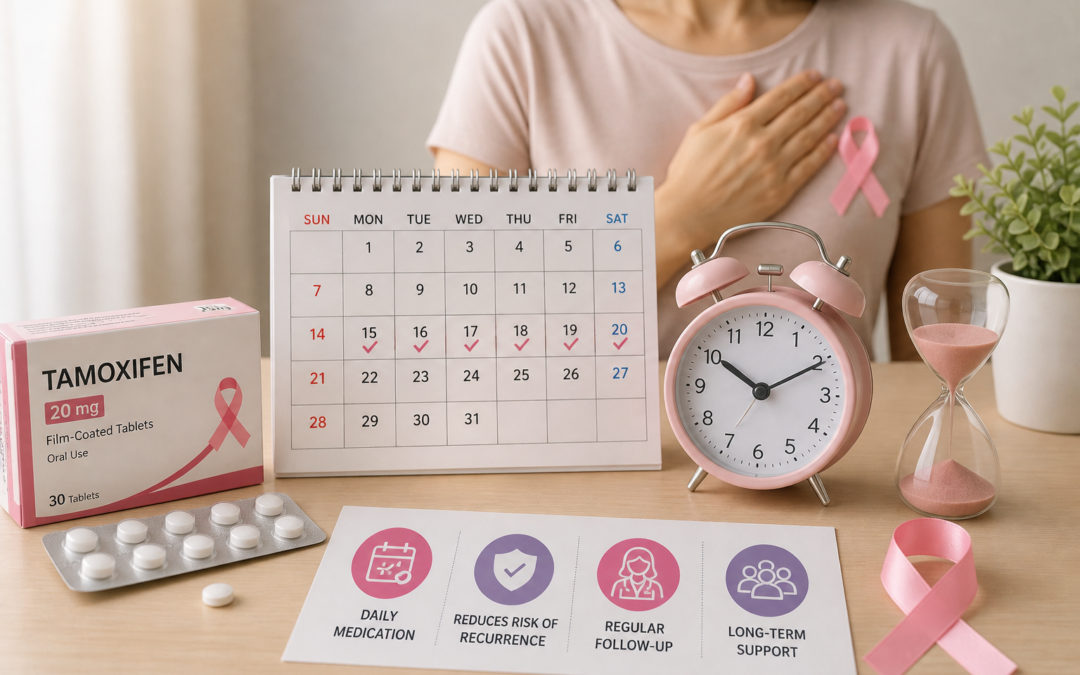
Most people take tamoxifen for five to ten years after a breast cancer diagnosis. Five years has been the standard for decades, and for many women with hormone receptor-positive cancer, going on to ten years lowers the chance of the cancer coming back. Which one is right for you depends on your recurrence risk, whether you’ve been through menopause, and how you’re tolerating it. Tamoxifen only works for hormone receptor-positive cancer.
Dr. Sandeep Nayak, who provides Cancer treatment in Bangalore, says patients hear “five to ten years” and feel their heart sink. “It sounds like forever. But it’s a small tablet a day, and it’s lowering the chance of the cancer coming back, which is the whole point. I don’t fix the number on the first visit. We look at the stage, the tumour, your age and menopause status, and how you’re feeling on it at five years. And if side effects are getting in the way, tell us. There’s often something we can do, and stopping quietly on your own is the one thing I’d ask you not to do.”
Unsure how long your own course should run?
How Long Do You Take Tamoxifen for Breast Cancer? The Usual Timelines
The standard plan has a few common versions:
- Five years is the standard. Most women start after surgery, and after chemotherapy or radiation if they need it, and take a tablet once a day for five years.
- Ten years may be offered when risk is higher. Two large trials, ATLAS and aTTom, found that continuing to ten years lowered recurrence and breast cancer deaths in women with hormone receptor-positive cancer. In ATLAS, that worked out to about three fewer recurrences and about two fewer breast cancer deaths for every hundred women.
- If you’re postmenopausal, there are other routes. After five years you might carry on with tamoxifen, or switch to a different type of drug called an aromatase inhibitor, for a total of up to ten years. Some people switch after two or three years. Aromatase inhibitors only work after menopause, so premenopausal women usually stay on tamoxifen.
- Shorter courses exist too. Tamoxifen taken after DCIS, or to lower risk in high-risk women, is usually five years. Our breast cancer treatment in Bangalore page explains the options.
Tamoxifen Treatment Duration: What Affects How Long You Stay On It
The number isn’t fixed. These are the things that move it up or down:
- Your risk of recurrence. A larger tumour, cancer in the lymph nodes, or a higher grade all push toward a longer course. A small, low-risk cancer can sensibly stop at five years.
- How your body copes with it. Hot flushes, joint aches and vaginal dryness are common. The extra risks of going to ten years are small but real: cancer of the womb lining and blood clots are a little more common. In ATLAS, womb lining cancer was 3.1% against 1.6%, and lung clots were 0.63% against 0.32%. So report any unusual vaginal bleeding, leg swelling or sudden breathlessness straight away.
- Stopping early costs you something. The benefit comes from finishing the course, and many women stop because of side effects. Talk to your team first. There are ways to ease them, or to switch to another drug. Our oncology team can walk you through it.
- Pregnancy plans and other medicines. You shouldn’t get pregnant on tamoxifen, so ask about timing if that’s on your mind. Tell your doctor about every medicine you take, because some antidepressants can weaken its effect.
What Determines the Right Treatment Approach?
Two women with hormone receptor-positive cancer can end up on quite different plans. A few things decide it:
- The tumour’s features. The hormone receptor status is the starting point, and the grade, size and HER2 status add detail. A genomic test can sharpen the picture, and our precision oncology service covers that testing.
- The lymph nodes and the stage. Cancer in the nodes, or a more advanced stage, makes a longer course more attractive.
- Menopause and age at diagnosis. This often decides between tamoxifen and an aromatase inhibitor, and whether the ovaries need suppressing as well.
- Your general health and tolerance. A history of blood clots, womb problems, bone thinning or other medicines can change what’s safe.
- A proper check-in at five years. The decision to stop or carry on is usually made then, with your doctor, using everything that’s changed since you started.
Key Takeaways
- Most people take tamoxifen for five to ten years, and it only works for hormone receptor-positive breast cancer.
- Ten years may lower the chance of recurrence further for some women, with small added risks such as womb lining cancer and blood clots.
- Menopause status often decides whether you stay on tamoxifen or switch to an aromatase inhibitor.
- Don’t stop on your own if side effects are hard. Tell your team, because there’s often something that helps.
- For questions about your own situation, you can contact the clinic at +91 9482202240.
FAQs
Can I stop tamoxifen after five years?
Many women do. Some benefit from carrying on to ten, depending on how high the original risk was and how they’ve coped. It’s a decision to make with your doctor at the five-year mark, not something to settle on your own.
What happens if I stop tamoxifen early?
Some of the protection goes with it, and the cancer becomes a bit more likely to come back. If side effects are why you want to stop, tell your team first. A lot of them can be eased, and there are other tablets you could switch to.
How do I know if I should take it for ten years?
It depends on your original risk, such as the tumour size, lymph nodes and grade, along with your age and how you’ve tolerated it. Raise it with your oncologist about a year before the five-year mark, so there’s time to decide without rushing.
Is it safe to take tamoxifen for ten years?
For most women, yes, with regular check-ups. A longer course does nudge up the chance of womb lining cancer and blood clots, though. So if you notice unusual vaginal bleeding, a swollen leg or sudden breathlessness, don’t wait for your next visit. Call your doctor.
References
- ASCO Guideline Update Recommends Tamoxifen for Up to 10 Years for Women With Nonmetastatic Hormone Receptor-Positive Breast Cancer, The ASCO Post
- ASCO Guideline Recommends 10 Years of Tamoxifen in HR-Positive Breast Cancer, OncLive
- Extended Tamoxifen Use in Breast Cancer: Is Ten the Magic Number?, CancerNetwork
- Breast Cancer Treatment in Bangalore, MACS Clinic
- Precision Oncology, MACS Clinic
Disclaimer
This content is published for educational and informational purposes only and is not a substitute for medical advice. Please speak to your oncologist before changing or stopping any treatment.