

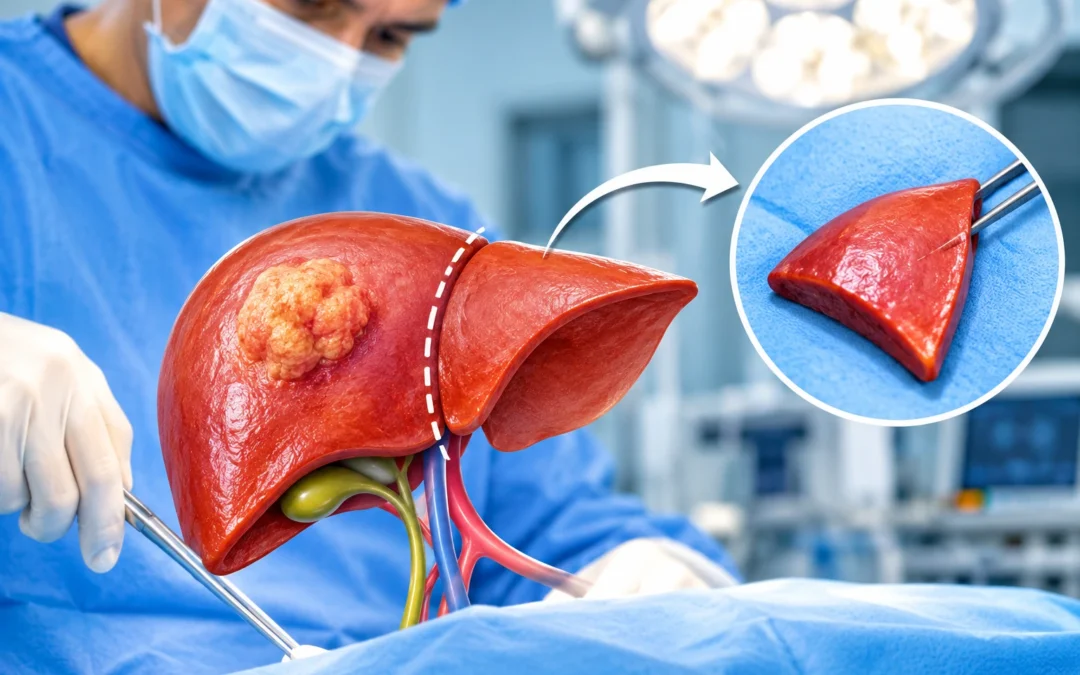
In a healthy liver, surgeons can usually remove up to about 70 to 75 percent of it safely, and occasionally up to 80 percent in carefully chosen cases, as long as what’s left is healthy and has a good blood supply. If the liver is already damaged, by cirrhosis, fatty liver, hepatitis or earlier chemotherapy, the safe amount is smaller.
Dr. Sandeep Nayak, Surgical Oncologist at MACS Clinic, which provides the Best Cancer Treatment in Bangalore, says people hear that most of a liver can be removed and it sounds like a magic trick. “The real work is on what’s left. We don’t ask how much we’re taking. We ask how much we’re leaving, and is it good enough? A healthy liver can lose most of its volume and grow back, and in people most of it returns over about three months. But a liver that’s fatty, scarred or battered by chemo regrows slowly and fails more easily, so there we leave more. And if the part we’d leave is too small, we have ways to grow it before the operation.”
The amount of liver that can be safely removed depends on liver function, health, and the size of the portion that will remain. Learn how surgeons assess the future liver remnant before surgery to reduce the risk of liver failure.
How Much Liver Can Be Removed Safely? The Rule of Thumb

It’s easiest to think of it as how much has to stay, not how much comes out:
- A healthy liver can lose most of its volume. In healthy livers, removing 70 to 80% typically doesn’t lead to liver failure. That works out to leaving roughly 20 to 25% behind, provided the remaining part is working well.
- A fatty, chemo-treated or injured liver needs more left. Around 30% should remain, so the safe amount to remove is lower. In an injured liver, taking more than about 60% can lead to liver failure afterwards. Our post on liver cancer surgery with fatty liver covers that case in detail.
- A scarred (cirrhotic) liver needs the most left. Around 40%, and some surgeons say 50%, has to remain, and generally only people whose liver function is still well preserved (Child-Pugh A) are offered a major operation.
- What remains must work, not just exist. It needs blood flowing in and out, and a way for bile to drain. That’s measured as volume on a CT scan and as function with tests. Our liver cancer treatment in Bangalore page explains how it’s assessed.
Liver Resection for Liver Cancer: How It Regrows and How More Becomes Possible
The liver’s regrowth is what makes this surgery possible, and surgeons have ways to help it along:
- Regrowth starts within days. After a major resection in people, most of the lost volume is restored in around three months. Function usually recovers sooner than shape. A liver that was unhealthy beforehand regrows more slowly.
- If the remaining liver would be too small, it can be grown first. Blocking the blood supply to the side that’s going to be removed, called portal vein embolization, makes the other side grow, usually over four to six weeks. Related approaches include liver venous deprivation and two-stage operations.
- The main danger is liver failure afterwards. Surgeons guard against it by measuring the remaining volume and function beforehand, limiting blood loss, and using careful technique. Some liver operations can be done with keyhole or robotic surgery when the tumour is suitable.
- Other treatments exist when too little could be left. Ablation, TACE, radiation and drug treatment can control tumours that can’t be removed safely. Our radiation therapy page covers one of them.
What Determines the Right Treatment Approach?
Two people with similar tumours can be offered different operations. A few things decide it:
- The tumour’s size and position. Which segments of the liver it sits in, and how close it is to the major blood vessels, decide how much has to come out.
- The quality of the liver around it. Whether it’s healthy, fatty, scarred or has had chemotherapy changes what percentage can safely be left.
- How well the liver works. Child-Pugh grade, blood tests such as the ALBI score, and function tests like the ICG test show how much reserve it has.
- The size and blood supply of the part that remains. It needs to be large enough, with good blood flow in and out and a working bile drain.
- Your overall health. Age (people over 70 carry more risk), the heart, diabetes and the treatment planned after surgery all count. A joint review, as in our post on what a tumour board is, brings it together.
Key Takeaways
- In a healthy liver, surgeons can usually remove up to about 70 to 75% safely, and occasionally up to 80% in selected cases.
- A fatty, chemo-treated or injured liver needs about 30% left behind, and a scarred liver about 40% or more.
- What matters most is the amount and quality of liver that remains, not the amount removed.
- The liver regrows, with most of the volume back in around three months, and a too-small remnant can sometimes be grown before surgery.
- For questions about your own situation, you can contact the clinic at +91 9482202240.
Frequently Asked Questions
1.Can the liver really grow back?
Yes. After a big resection in people, most of the volume returns in about three months, and the function often recovers sooner. It doesn’t regrow in its original shape, and a liver that was fatty, scarred or hurt by chemotherapy regrows more slowly.
2.What’s the minimum amount of liver that has to remain?
As a rough guide, about 20 to 25% of a healthy liver, around 30% if it’s fatty or has had chemotherapy, and about 40% or more if it’s scarred. These are guides, not fixed numbers. Your surgeon also looks at how well that remaining part works.
3.What if too much liver would have to be removed?
Sometimes the remaining liver can be made larger first, with a procedure that blocks the blood supply to the side being removed, so the other side grows over a few weeks. If that isn’t possible, treatments such as ablation, TACE, radiation or drugs can be used instead.
4.Will I be able to live normally after a large part of my liver is removed?
Most people do once the liver has regrown and recovered, though the first weeks can bring tiredness. You’ll be advised to avoid alcohol and to go for regular follow-up. How you feel depends on how healthy the remaining liver is.
Disclaimer
This content is published for educational and informational purposes only and is not a substitute for medical advice. Please speak to your liver surgeon about how much can safely be removed in your own case.
References:
- Liver Regeneration After Hepatectomy and Partial Liver Transplantation, International Journal of Molecular Sciences, PubMed Central
- Partial Hepatectomy for Hepatic Metastases of Colorectal Cancer: Literature Review, Arquivos Brasileiros de Cirurgia Digestiva (SciELO)
- Preoperative Albumin-Bilirubin Score and Liver Resection Percentage Determine Postoperative Liver Regeneration After Partial Hepatectomy, World Journal of Gastroenterology
- Optimization of the Future Remnant Liver: Review of the Current Strategies in Europe, Hepatobiliary Surgery and Nutrition
- Liver and Gall Bladder Cancer Treatment, MACS Clinic