

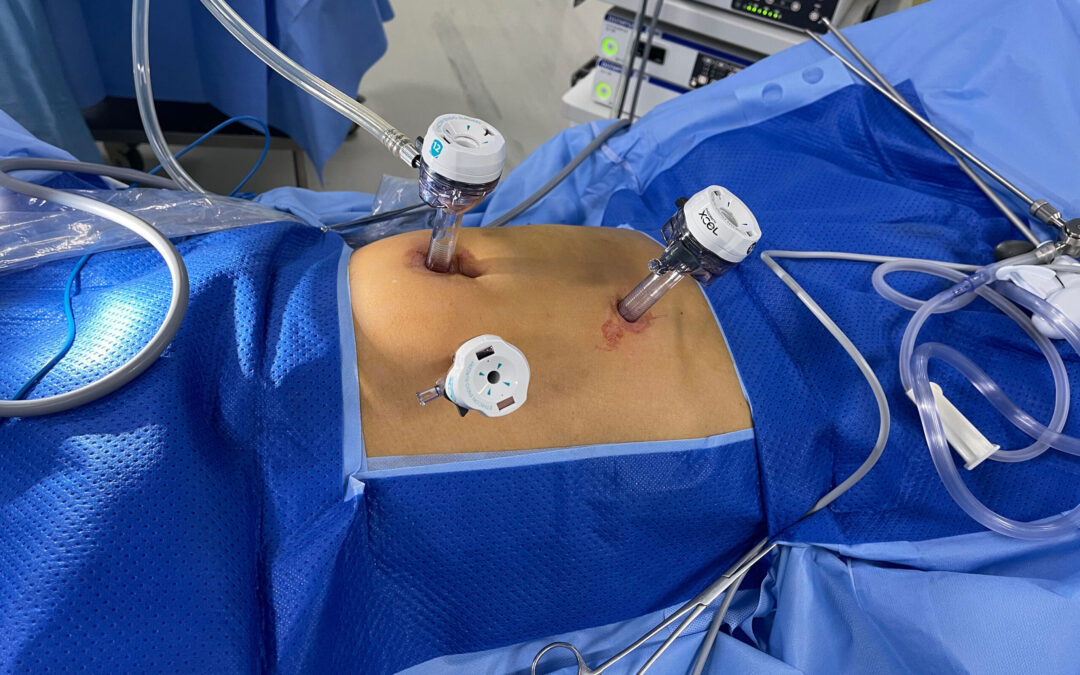
Laparoscopic gastrectomy achieves equivalent oncological outcomes to open surgery for stomach cancer in eligible patients, with published trial data confirming comparable lymph node harvest, margin clearance, and long-term survival. The minimally invasive approach reduces blood loss, shortens hospital stay, and speeds recovery without compromising cancer control. Not every stomach cancer qualifies. Tumour location, stage, and surgeon experience determine whether laparoscopic gastrectomy is the right approach for a specific patient.
According to Dr. Sandeep Nayak, Best cancer treatment in Bangalore, “Laparoscopic gastrectomy is safe for stomach cancer when the patient is selected correctly and the surgeon has the volume to execute the technique precisely. The operation is more demanding than open surgery, not less. That’s exactly why experience at the operating surgeon level is what separates good outcomes from bad ones.”
Wondering whether laparoscopic surgery is right for your stomach cancer? The answer starts with the stage and tumour location.
What Does the Evidence Say About Laparoscopic Gastrectomy Safety?
Multiple randomised trials have compared laparoscopic and open gastrectomy for stomach cancer. The data is now robust enough to draw clinical conclusions.
- Oncological Equivalence:
The KLASS-01 and CLASS-01 randomised trials confirmed that laparoscopic distal gastrectomy for early gastric cancer achieves equivalent five-year survival, recurrence rates, and nodal harvest compared to open surgery. Not a minor study. Both enrolled over a thousand patients each. - Lower Surgical Morbidity:
Blood loss, wound infection rates, and time to first oral intake are all measurably better with laparoscopic gastrectomy than open surgery. Hospital stay shortens by 2 to 3 days on average. Recovery is faster because the body isn’t managing a large abdominal wound at the same time as healing from the gastrectomy itself. - D2 Lymphadenectomy Feasibility:
D2 lymph node dissection, which is the oncological standard for resectable gastric cancer in Asia and increasingly in India, is technically achievable laparoscopically in experienced hands. Nodal yield in published trials is comparable to open D2 dissection when performed by high-volume surgeons. - Limitations in Advanced Disease:
Laparoscopic total gastrectomy for proximal or locally advanced gastric cancer is technically more demanding than distal gastrectomy. Evidence for safety in T3 and T4 disease is growing but not yet as definitive as for early-stage cases. Patient selection here requires tumour board review, not a blanket policy.
Stomach Cancer Treatment at MACS Clinic includes diagnostic staging laparoscopy before any gastrectomy to confirm the disease hasn’t spread beyond the limits of curative surgery, preventing unnecessary major resections.
Who Qualifies for Laparoscopic Stomach Cancer Surgery?
Not every gastric cancer patient is a laparoscopic candidate. Several clinical factors determine eligibility.
- Stage and Tumour Location:
Early and locally advanced gastric cancers in the distal stomach are the strongest candidates. Proximal tumours near the gastro-oesophageal junction are more technically challenging laparoscopically and require surgeon-specific assessment before the approach is confirmed. - Absence of Peritoneal Spread:
Peritoneal metastasis picked up on Staging Laparoscopy changes the surgical intent from curative to palliative. Laparoscopic gastrectomy with curative intent isn’t offered when free peritoneal deposits are found at staging, regardless of what the CT scan suggested before the scope went in. - Patient Fitness:
Laparoscopic gastrectomy requires general anaesthesia for a longer operative duration than open surgery in some cases. Cardiorespiratory fitness, BMI, and prior abdominal surgery history all factor into whether the laparoscopic approach is technically safe to complete. - Surgeon Volume:
Laparoscopic D2 gastrectomy has a significant learning curve. Outcomes at centres performing fewer than 20 laparoscopic gastrectomies per year are measurably worse than at high-volume centres. This isn’t about equipment. It’s about the number of cases the surgeon has done.
For more on whether stomach cancer can be fully cured and what factors affect that outcome, our previous blog on Gastric Cancer Curable covers what stage, tumour location, and treatment precision mean for long-term survival.
Why Choose MACS Clinic for Stomach Cancer Surgery?
Dr. Sandeep Nayak’s team at MACS Clinic performs fertility-sparing surgery for germ cell tumours, sex cord-stromal tumours, and selected early epithelial ovarian cancers using laparoscopic and robotic approaches, with comprehensive staging completed at the same procedure to confirm the cancer remains confined before the ovary is preserved.
Patient here doesn’t get a blanket recommendation to remove both ovaries because it’s the safer administrative decision. They get an honest assessment of whether their specific histology, stage, and BRCA status make preservation oncologically appropriate. Because getting that wrong in either direction has consequences that last decades.
Call +91 8035740000 to book your consultation.
FAQs
Is laparoscopic gastrectomy as safe as open surgery for stomach cancer?
Yes. Randomised trial data confirms equivalent oncological outcomes and lower surgical morbidity for eligible early and locally advanced cases.
Which stomach cancers qualify for laparoscopic surgery?
Early and locally advanced distal gastric cancers without peritoneal spread in fit patients at high-volume centres.
Does laparoscopic stomach cancer surgery remove enough lymph nodes?
Published trial data confirms D2 lymph node harvest is comparable between laparoscopic and open gastrectomy at experienced centres.
What is diagnostic staging laparoscopy in stomach cancer?
A laparoscopic examination performed before gastrectomy to confirm no peritoneal spread before committing to curative resection.
Disclaimer: This blog is intended for informational purposes only and does not substitute professional medical advice, diagnosis, or treatment. Consult a qualified oncologist for personalised guidance.