

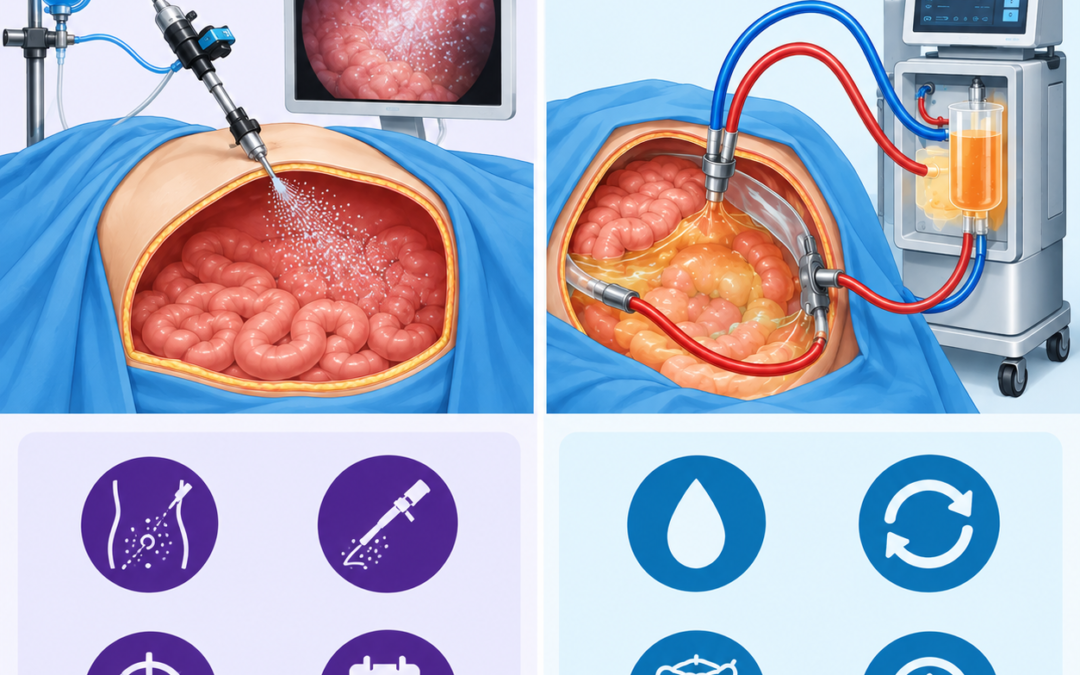
PIPAC and HIPEC both put chemotherapy straight into the abdomen instead of sending it through the blood, but they’re very different treatments. HIPEC is a major operation: surgeons remove the visible tumor, then bathe the abdomen in heated chemo, mostly aiming at cure. PIPAC is a keyhole procedure that sprays a small dose of chemo as a mist, repeated every few weeks, mostly to hold back cancer that can’t be operated on.
Dr. Sandeep Nayak, who provides the best cancer treatment in Bangalore, says patients almost always ask which one is better. “That’s the wrong question. HIPEC is for the person whose cancer we can actually remove completely. PIPAC is for the person for whom that operation is no longer safe or sensible. So we look at how much disease is in the abdomen, how strong the patient is, and how the cancer has behaved so far. Then we choose.”
Not sure which one applies to your situation?
The HIPEC Procedure: Major Surgery Aimed at Cure
HIPEC is really one long operation in two parts, and the surgery is the bigger half:
- Surgery comes first. The team removes every visible tumor from the lining of the abdomen. This is called cytoreductive surgery, and without it the heated chemo wouldn’t do its job.
- Then the abdomen is bathed in warm chemo. The drug is heated to around 41 to 43°C and circulated for about an hour to an hour and a half, while you’re still under anesthesia. The heat helps the drug reach cells that are too small to see.
- It’s a big undertaking. The whole operation can run anywhere from 6 to 12 hours. It’s done once, not in cycles, and recovery takes weeks.
- It works best when the disease is limited and fully removable. Doctors score the spread with the Peritoneal Cancer Index to decide. It’s mainly used for cancers of the appendix, colon, rectum and ovary, along with pseudomyxoma and mesothelioma. Our HIPEC page explains the full process.
PIPAC vs HIPEC Difference: The PIPAC Procedure and Who Gets Which?
Why Choose MACS Clinic for Peritoneal Cancer Treatment?
Picking between PIPAC and HIPEC works best with a surgeon who offers both, because then the advice isn’t tilted toward one. Dr. Sandeep Nayak (MBBS, DNB Surgical Oncology, MRCS UK) founded MACS Clinic and is Executive Director of Surgical Oncology and Robotic Surgery at KIMS Hospital. He and his team have performed more than 50 HIPEC surgeries. Bring your scans and records, and the Expert Opinion consultation will give you a written plan.
Want to know which option fits your case? Call +91 9482202240.
FAQs
Is PIPAC better than HIPEC?
Neither is better across the board. HIPEC is for patients whose cancer can be fully removed by surgery. PIPAC is generally for those where it can’t. They answer different situations.
Can PIPAC cure peritoneal cancer?
At present it’s mainly used to control disease and ease symptoms, not to cure. Researchers are studying whether it can do more, but that isn’t settled yet.
How is recovery different after PIPAC and HIPEC?
HIPEC comes with a very large operation, so expect a hospital stay of a week or more and several weeks to recover. PIPAC is keyhole surgery, so the stay is usually shorter and recovery quicker.
Which cancers are treated with HIPEC and PIPAC?
Mostly cancers that have spread to the lining of the abdomen from the ovary, colon, rectum, appendix or stomach. HIPEC is also used for mesothelioma and pseudomyxoma peritonei.
Reference
- Hyperthermic Intraperitoneal Chemotherapy (HIPEC), Mayo Clinic
- Anaesthesia Considerations and Techniques for Pressurised IntraPeritoneal Aerosol Chemotherapy (PIPAC), PubMed Central
- Overcoming Drug Resistance by Taking Advantage of Physical Principles: PIPAC, PubMed Central
- HIPEC, MACS Clinic
- PIPAC & PITAC, MACS Clinic
Disclaimer:
This content is published for educational and informational purposes only and is not a substitute for medical advice. Please consult your doctor before changing any treatment.