

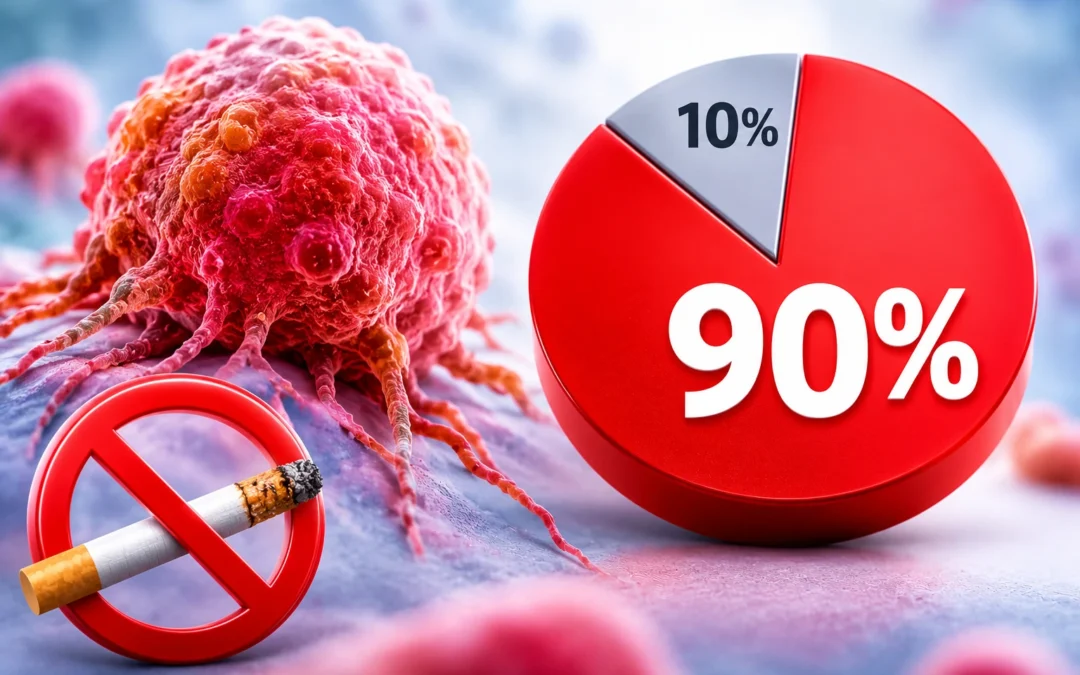
Not inherited genes. Only about 5 to 10 percent of cancers are driven mainly by a faulty gene passed down in a family. That’s the part of the “90%” claim that holds up. The rest are acquired. Ordinary cells slowly pick up DNA damage over a lifetime, from tobacco, infections like HPV and hepatitis, alcohol, excess weight, sunlight and radiation, air pollution and workplace chemicals, and also from plain wear and tear and chance as cells divide. That’s why the main causes of cancer are a mix, and why age is a risk factor in itself. Here’s the catch. “Environmental” doesn’t mean “your fault”, and it doesn’t mean all of it can be avoided. WHO estimates that 30 to 50 percent of cancers can be prevented, which is a lot, but it isn’t 90.
Dr. Sandeep Nayak, who provides cancer treatment in Bangalore, says the biggest cause is also the one people can do most about. “Tobacco, in any form, is the largest preventable cause of cancer. In India that includes gutka, khaini and paan with tobacco, which cause mouth and throat cancers, as well as cigarettes and bidis. Infections, alcohol and excess weight also play a big part. But some cancers happen to people who did everything right. That’s age and chance, and it isn’t anyone’s failure. Knowing your family history matters, and so does screening.”
If you’re worried about your own risk, whether from tobacco, family history or symptoms that haven’t settled, it helps to talk it through with a specialist. Our team can explain what to look out for and which checks are worth having
Main Causes of Cancer: What the Evidence Shows?
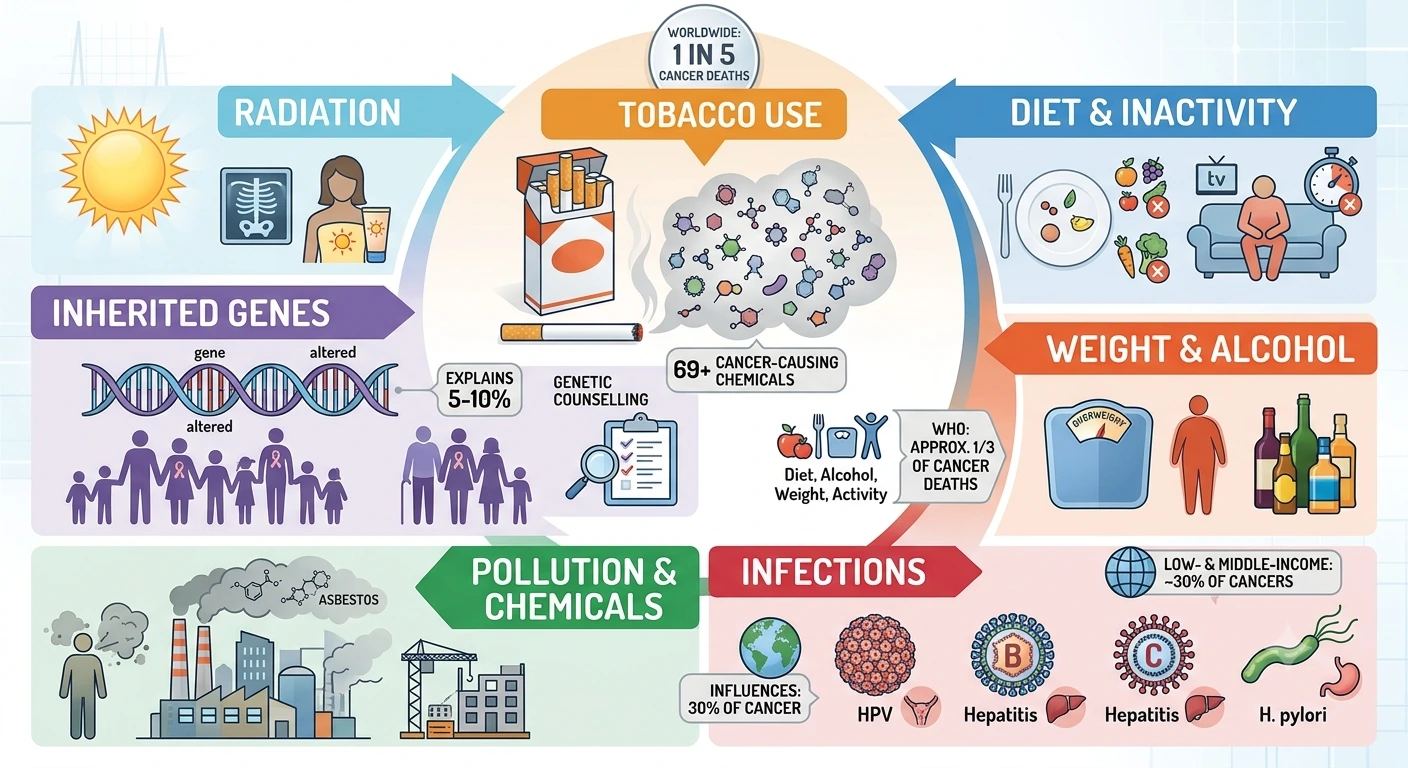
- Tobacco is the biggest single cause. WHO links it to roughly one in five cancer deaths worldwide, and tobacco smoke alone contains at least 69 chemicals known to cause cancer. Our page on how to prevent cancer covers what you can change.
- Alcohol, excess body weight, a diet low in fruit and vegetables, and inactivity matter too. WHO says these, together with tobacco, account for about one third of cancer deaths.
- Infections, radiation, pollution and chemicals are the other big group. HPV, hepatitis B and C and H. pylori raise the risk of cervical, liver and stomach cancers, and in low- and lower-middle-income countries, infections are behind about 30 percent of cancers. Sunlight, asbestos and polluted air add to it.
- Inherited gene changes explain only about 5 to 10 percent. If several relatives have had the same or related cancers, or had them young, genetic counselling can tell you whether it’s worth testing.
Smoking and Cancer Risk: Tobacco-Related Cancers in India?
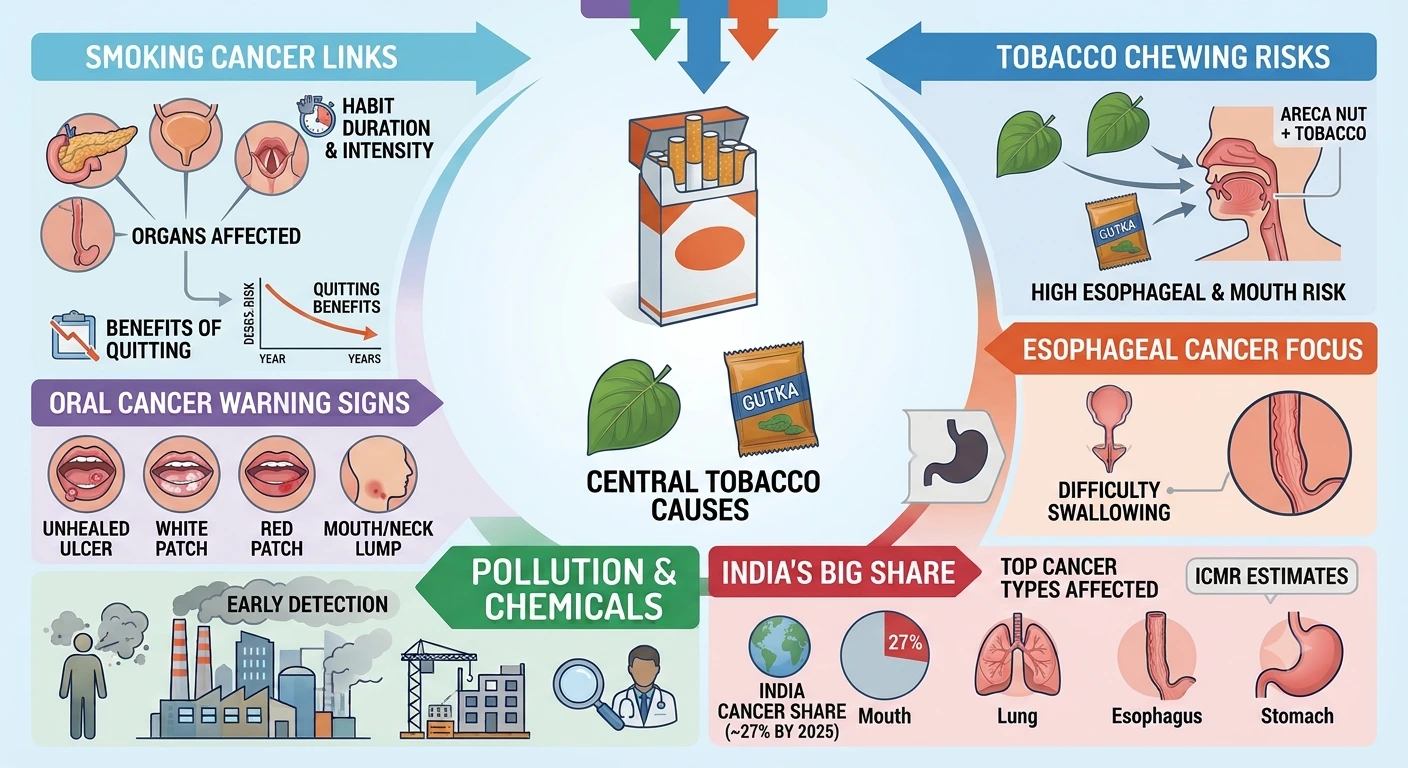
- Smoking and cancer risk aren’t just about the lungs. Smoking is linked to cancers of the mouth, throat, esophagus, pancreas and bladder as well. The longer and heavier the habit, the higher the risk, and quitting lowers it over the years.
- Chewing tobacco isn’t a safe swap. Gutka, khaini and paan with tobacco carry a real risk, especially for mouth and esophageal cancer, and areca nut combined with tobacco is a known carcinogen.
- Tobacco-related cancers are a big share of India’s cancer burden. The ICMR’s national registry estimates they’ll make up about 27 percent of all cancers in 2025, led by cancers of the mouth, lung, esophagus and stomach in men. If swallowing has become difficult, read our blog on difficulty swallowing and esophageal cancer.
- A mouth ulcer that won’t heal, a white or red patch, or a lump are worth showing a doctor early. You can read more about oral cancer treatment on our page.
What Decides Your Own Cancer Risk?
It isn’t one thing, and most people have a mix.
-
- Age. Gene changes build up over time, so risk rises as you get older.
- Tobacco and alcohol. How much, for how long, and whether you’ve stopped.
- Infections and vaccination. HPV and hepatitis B vaccines lower the risk of the cancers they cause.
- Family history. Several relatives with the same cancer, or cancer at a young age, point towards an inherited cause.
- Where you live and work. Air pollution, chemicals and heavy sun exposure all add up.
- Screening. It doesn’t prevent cancer, but it can find some cancers early, when they’re easier to treat.
FAQs
What is 90% of cancer caused by?
Not inherited genes. Only about 5 to 10 percent of cancers are mainly inherited. The rest come from gene changes picked up during life, driven by tobacco, infections, alcohol, diet, radiation, pollution, age and chance.
What are the main causes of cancer?
Tobacco is the biggest. After that come alcohol, excess weight, a poor diet, inactivity, infections such as HPV and hepatitis, radiation, pollution and chemicals. Age matters too, and a small share is inherited.
How much does smoking raise cancer risk?
A lot, and not only for lung cancer. Smoking is linked to cancers of the mouth, throat, esophagus, pancreas, bladder and more. The longer and heavier the habit, the higher the risk, and quitting lowers it over time
Which tobacco-related cancers are most common in India?
In men, cancers of the mouth, lung, esophagus and stomach lead. Smokeless forms like gutka and khaini mainly drive mouth and esophageal cancers.
Reference Links:
- The Genetics of Cancer, National Cancer Institute
- Report on Sites of Cancer Associated With Tobacco Use in India, ICMR-NCDIR
- Tobacco-Driven Oral Cancer in India: Clinicopathological Correlates and Prevention Priorities, PubMed Central
Desclaimer:
This content is published for educational and informational purposes only and is not a substitute for medical advice. Which treatment is right depends on your individual case, so please consult your oncologist.