

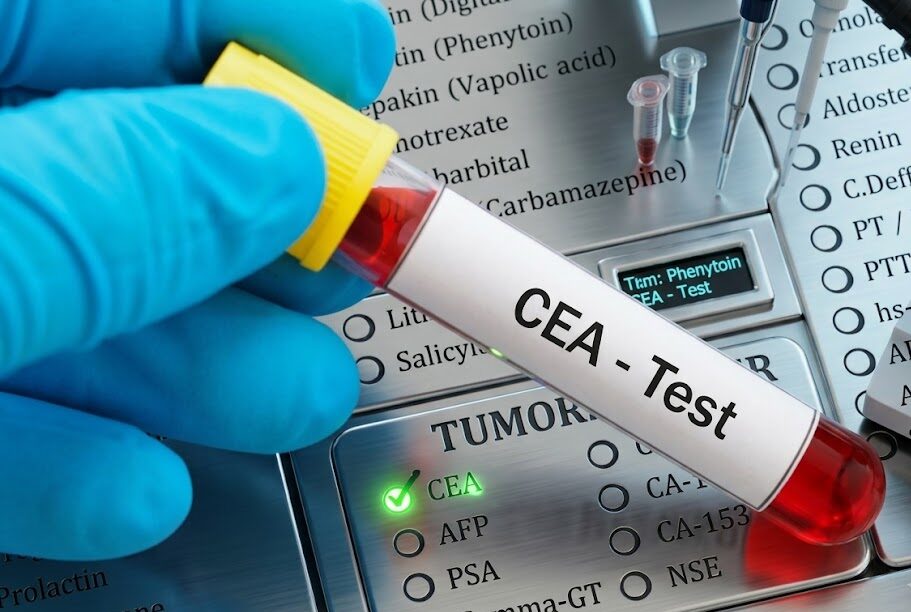
A CEA test measures carcinoembryonic antigen, a protein that colon cancer cells often produce in higher than normal amounts. It’s not a screening test and it won’t diagnose cancer on its own. What it does is track what’s happening after treatment. A pre-operative baseline is taken before surgery, then it’s monitored every few months afterwards to catch rising levels that might signal recurrence before symptoms appear.
According to Dr. Sandeep Nayak,who provides Best cancer treatment in Bangalore, “CEA is not a perfect test. About 40% of colon cancer patients never have an elevated CEA even with active disease. But in the patients where it does rise after a curative resection, it’s often the first signal we get that something is happening before CT imaging shows anything. A rising trend matters more than a single number.”
Had colon cancer surgery and wondering what your CEA numbers actually mean? A single value tells you less than the direction it’s moving over time.
What Does CEA Actually Measure and When Is It Used?
CEA is a glycoprotein produced during foetal development that normally disappears after birth. In adults, elevated levels suggest something is producing it again.
- What It Measures:
CEA is produced by colon cancer cells and released into the bloodstream. Normal levels in non-smokers sit below 2.5 ng/mL. Smokers run slightly higher. Levels above 5 ng/mL in a patient with known colon cancer history prompt further investigation, not panic. - Pre-operative Baseline:
A CEA is taken before surgery on every colon cancer patient. If it’s elevated before surgery and drops to normal after, that’s the marker behaving as expected. If it was never elevated before surgery, a rising CEA after won’t be as useful a surveillance tool for that specific patient. - Post-operative Surveillance:
After curative resection, CEA is checked every 3 months for the first 2 years, then every 6 months until year 5. This schedule exists because 80% of recurrences in colon cancer happen within the first 2 to 3 years. And catching recurrence early enough to still operate on it matters enormously for survival. - Treatment Response Monitoring:
In metastatic colon cancer being treated with chemotherapy, a falling CEA suggests the treatment is working. A rising CEA on treatment prompts a conversation about whether the current regimen is still effective or needs to change.
Colon Cancer Treatment surveillance at MACS Clinic follows this exact schedule with CT imaging alongside CEA monitoring rather than either alone, because the two together catch more recurrences than either one independently.
What Does a Rising CEA Actually Mean?
A single elevated reading is less meaningful than what it does over the next two tests.
- Trend Matters More Than One Number:
A CEA that goes from 2 to 3 to 5 over six months is more concerning than a one-off reading of 5 followed by a return to normal. The trend tells you whether something is producing more of the marker consistently or whether the reading was a blip from another cause. - Non-Cancer Causes of Elevated CEA:
Smoking raises CEA. So do liver disease, inflammatory bowel disease, chronic lung disease, and some benign bowel conditions. A mildly elevated CEA in a non-cancer context doesn’t mean cancer is present. But in someone with a prior colon cancer diagnosis, it needs investigation with imaging. - What Happens After a Rising CEA:
A rising CEA triggers a CT scan of the chest, abdomen, and pelvis. If the CT shows a resectable liver or lung metastasis, that finding changes management immediately. Surgery or targeted ablation for isolated recurrence is still curative in a meaningful proportion of patients caught this way. - When CEA Stays Normal But Cancer Returns:
CEA misses recurrence in a significant minority of patients. Around 40% of colon cancers don’t produce elevated CEA even at recurrence. So normal CEA doesn’t rule out recurrence. CT imaging still runs on schedule regardless of the CEA level.
Our previous blog on Stoma Bag Reversed is worth a read for understanding what the post-surgical recovery period involves and why surveillance like CEA monitoring starts immediately after the operation.
Why Choose MACS Clinic for Colon Cancer Surveillance?
Dr. Sandeep Nayak’s team at MACS Clinic uses CEA alongside scheduled CT imaging rather than waiting for symptoms to appear. A pre-operative baseline is taken on every colon cancer patient before surgery, and the surveillance schedule starts at the first post-operative visit. Rising CEA trends trigger imaging before they cross any specific threshold if the trend itself is consistent across two or three consecutive measurements.
Colon cancer recurrence that’s caught early is still treatable with curative intent in selected cases. Missing that window because surveillance wasn’t structured properly is the outcome the schedule is designed to prevent. Those who want to discuss their specific monitoring plan can reach the team at +91 8035740000.
FAQs
What is a normal CEA level after colon cancer surgery?
CEA should fall to below 2.5 ng/mL within 4 to 6 weeks of a successful curative resection. Persistently elevated CEA after surgery suggests residual disease and needs investigation.
Does a high CEA always mean colon cancer has returned?
No. Smoking, liver disease, IBD, and lung disease all raise CEA. A rising trend in a colon cancer surveillance patient is the concern, not a single mildly elevated reading.
How often is CEA checked after colon cancer surgery?
Every 3 months for the first 2 years, then every 6 months until year 5. Most recurrences happen in the first 2 to 3 years so the frequency is front-loaded.
Can CEA be used to screen for colon cancer?
No. CEA is not sensitive or specific enough for screening. It’s used after diagnosis and treatment to monitor for recurrence, not to detect first-time cancer.
Disclaimer: This content is published for educational and informational purposes only.