

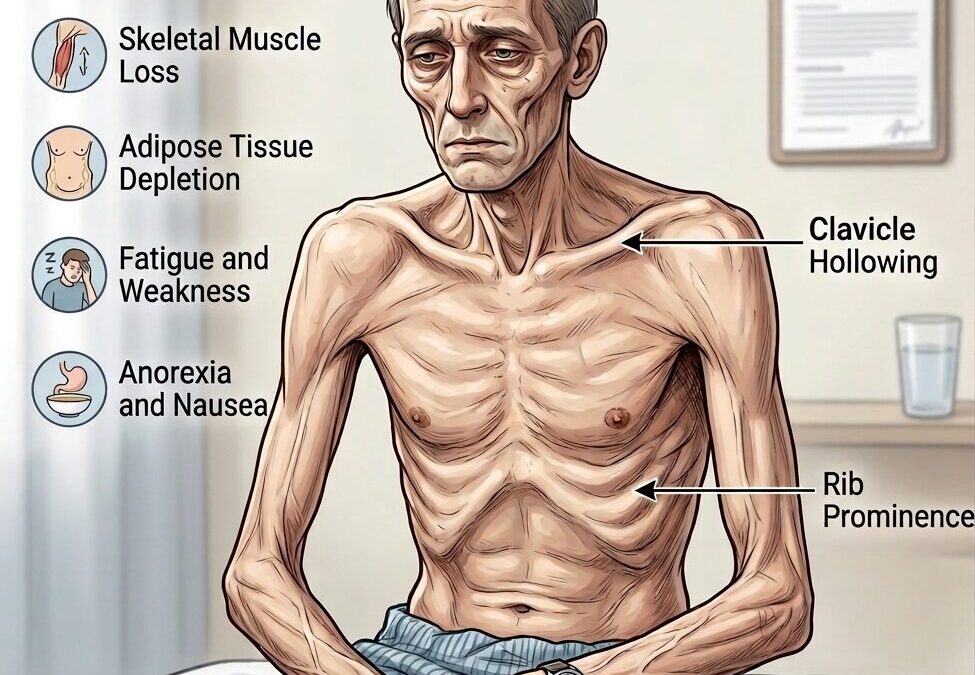
Families notice it first the patient is eating and still losing weight, arms getting thinner, energy disappearing faster than it should. Pushing more food, more protein shakes, more calories rarely works the way anyone hopes. That’s because cachexia isn’t ordinary weight loss. It’s a metabolic syndrome where the tumour has altered the body’s chemistry so fundamentally that muscle and fat break down faster than any amount of eating can rebuild them affecting 50% to 80% of cancer patients and responsible for roughly 20% of cancer deaths, not from the cancer itself but from the physical collapse that follows.
Dr. Sandeep Nayak at MACS Clinic puts it plainly: “Cachexia is not a nutrition problem that more food solves. The tumour is driving a systemic inflammatory response that breaks down muscle and fat regardless of intake. Managing it requires understanding that the body’s metabolism has changed and treating it accordingly.”
Unexplained weight loss during cancer treatment is not something to manage with a diet plan. It needs a clinical assessment
Why Cachexia Happens — and Why Eating More Doesn't Fix It?
Eating More Doesn’t Fix It
The tumour releases cytokines TNF-α, IL-6, IL-1β that instruct the body to break down its own muscle and fat regardless of what’s coming in. The liver shifts into an inflammatory mode that burns through energy reserves faster than normal. Starvation reverses with food. Cachexia doesn’t because the problem isn’t the input, it’s the metabolic environment the tumour has created.
Cancers Drive It Most
Pancreatic, gastric, lung, and colorectal cancers carry the highest cachexia burden. Head and neck cancers add a mechanical layer swallowing difficulties mean patients can’t maintain intake even when appetite is present. The diet counselling team at MACS Clinic works with patients across all these cancer types to adapt nutritional strategy to what the specific tumour and treatment allow.
What Can Actually Be Done About It?
Cachexia management works through a combination of approaches — no single intervention reverses it, but the right combination slows progression, preserves function, and keeps treatment on track.
Nutritional intervention remains the foundation. High-protein intake, omega-3 fatty acids (EPA in particular has evidence for reducing inflammatory cytokine activity), and leucine-enriched formulas all help preserve lean muscle mass. The goal isn’t weight gain — it’s slowing the rate of muscle loss. A dietician calibrates this to the patient’s specific cancer type, treatment phase, and tolerance.
Exercise — specifically resistance training — is counterintuitive for someone already fatigued, but the evidence is clear. Even light resistance exercise signals muscle protein synthesis and partially counteracts the breakdown signal the tumour is sending. Physiotherapy involvement matters here.
Addressing the underlying cancer is the most effective cachexia treatment available. Tumour burden drives the inflammatory signal. Surgery that removes the primary tumour, chemotherapy that reduces disease load, or targeted therapy that controls growth — all of these reduce the cytokine output driving muscle wasting. Cachexia doesn’t respond fully to supportive care while the cancer is still active and growing.
Appetite stimulants and anti-inflammatory agents — megestrol acetate, corticosteroids for short-term use, and emerging drugs targeting the ghrelin pathway — are used in specific cases to address appetite and metabolic dysregulation. These are adjuncts, not primary treatment.
For a broader look at how nutrition is managed across the full cancer treatment journey, the previous blog on Diet Counselling and Cancer Nutrition covers the principles behind nutritional support in detail.
Why Choose MACS Clinic for Cancer and Cachexia Management?
Dr. Sandeep Nayak’s team at MACS Clinic doesn’t treat cachexia as a side issue to be managed separately from the cancer. Nutritional assessment, dietician input, and performance status evaluation happen alongside surgical and oncological planning because a patient who has lost significant muscle mass tolerates surgery and chemotherapy differently than one who hasn’t, and the treatment plan has to account for that.
When the primary tumour is resectable, surgery moves quickly because removing the tumour source is the most direct way to reduce the inflammatory burden driving cachexia. When it isn’t, systemic treatment is sequenced with supportive care to keep the patient strong enough to continue. Reach the team at +91 8035740000
FAQs
Can cachexia be reversed by eating more?
The instinct makes sense, but the tumour has already changed how the body handles food. Muscle keeps breaking down regardless of what goes in. Eating more slows it doesn’t stop it.
Which cancers cause cachexia most?
Pancreatic is the worst; most patients develop it. Gastric, lung, and colorectal follow. Head and neck patients struggle additionally because swallowing itself becomes difficult.
Does cachexia mean the cancer is getting worse?
Not always. Some cancers drive it early regardless of stage. What it signals is that the body is under metabolic stress and the longer that goes unmanaged, the harder treatment gets.
How is it different from normal weight loss during chemo?
Chemo-related loss comes from nausea and poor appetite it responds to support and settles when treatment pauses. Cachexia runs underneath all of that. The tumour is driving it, so it doesn’t pause when treatment does.
Disclaimer: This content is published for educational and informational purposes only.