
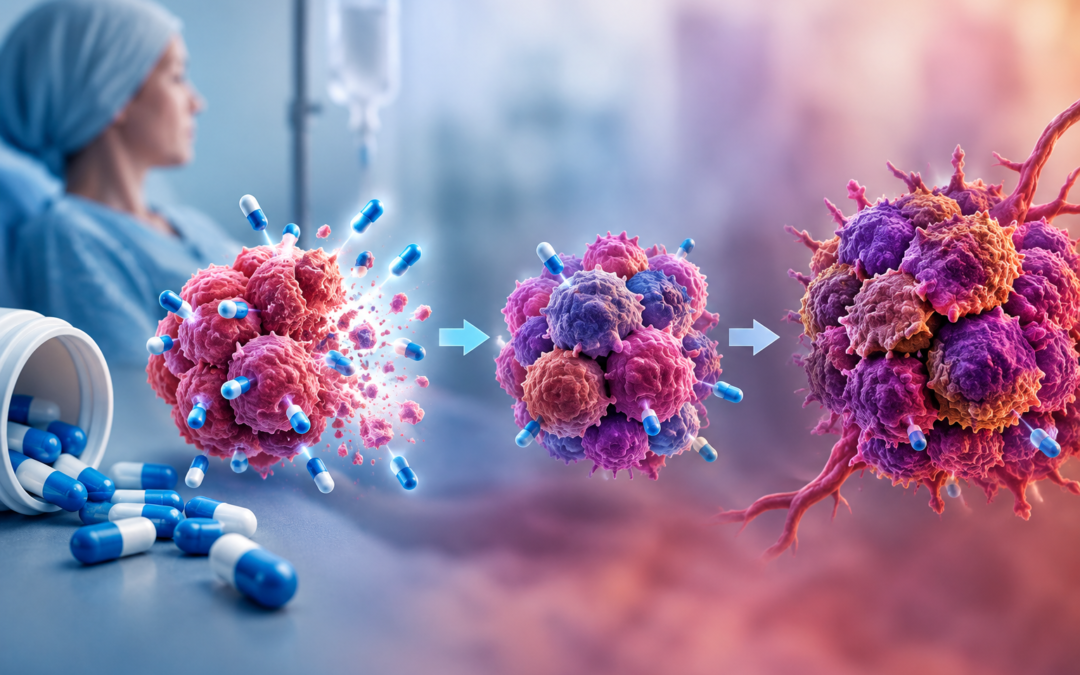
Cancer drugs stop working over time because cancer cells adapt, mutate, and find new ways to survive treatment, a process doctors call acquired resistance. This happens with standard chemotherapy too, but it plays out somewhat differently with targeted therapy and immunotherapy specifically, drugs built to hit one precise mutation or pathway, which is exactly what makes them vulnerable to a tumor finding just one new workaround. So if a targeted drug was working brilliantly, shrinking the tumor for months, why does it suddenly stop? Because somewhere inside that tumor, a small number of cells were never fully wiped out, and one of them picked up a new mutation that lets it dodge the exact mechanism the drug relies on, then multiplied while the rest of the tumor stayed suppressed.
Dr. Sandeep Nayak, known for the Best Cancer Treatment in Bangalore, sees this pattern often enough with targeted therapies specifically that he prepares patients for it upfront. “A targeted drug is precise, which is its strength and its weakness at the same time. It hits one specific target extremely well. But cancer is heterogeneous, not every cell in a tumor is identical, and it only takes one resistant subpopulation surviving quietly to eventually take over. This is genuinely different from a chemo drug simply losing effectiveness broadly, it’s usually one specific new mutation driving the whole relapse.”
Dealing with a treatment that seems to be losing effectiveness?
How Resistance Actually Develops With Targeted Drugs?
The mechanism behind acquired resistance in targeted therapy tends to follow a few recognizable patterns:
- A new mutation in the original drug target itself is one of the most common causes, the cancer essentially changes the lock the drug was built to fit
- Cancer cells sometimes activate an entirely different growth pathway to bypass the one being blocked, working around the drug rather than resisting it directly
- Tumor heterogeneity plays a central role, since even a tumor that responds well initially usually contains small resistant subpopulations from the start that simply weren’t dominant yet
- With immunotherapy specifically, tumors can develop ways to hide from the immune system again, sometimes by reducing the markers checkpoint inhibitors rely on to work
This is a genuinely different mechanism from how standard chemotherapy resistance develops, which more often involves drug pumps expelling the chemo agent or broad DNA repair mechanisms neutralizing the damage, rather than one specific new mutation driving the whole shift
What Actually Happens Once Resistance Develops
Why Choose MACS Clinic for Managing Treatment Resistance?
Dr. Sandeep Nayak’s team retests tumor biology as soon as a treatment shows signs of losing effectiveness, rather than waiting for clear clinical progression before investigating what’s actually changed at the molecular level. That retesting, often through liquid biopsy, identifies the specific resistance mechanism at play, which directly shapes whether the next step is a newer-generation targeted drug, a different treatment class entirely, or a combination approach. For patients anxious about a treatment that seems to be losing ground, that molecular clarity replaces guesswork with an actual next plan built around what the cancer has genuinely become.
Concerned that your current treatment isn’t working as well as it once did? Reach the team at +91 9482202240.
FAQs
Does drug resistance mean my cancer is now untreatable?
No, it usually means the treatment approach needs to change based on the tumor’s new biology, not that treatment options have run out entirely.
How is resistance actually detected before symptoms get worse?
Often through imaging showing tumor growth or, increasingly, through liquid biopsy blood tests that can catch a resistance mutation developing before major clinical changes appear.
Can resistance be prevented from developing in the first place?
Not entirely, but combination therapy approaches are increasingly used specifically to delay resistance by closing off more than one pathway a tumor could otherwise exploit.
Is resistance to immunotherapy the same as resistance to targeted therapy?
No, the underlying mechanisms differ, immunotherapy resistance often involves the tumor evading immune detection again, while targeted therapy resistance usually involves a new mutation in the drug’s specific target.
Reference
- Cancer Cell Plasticity and Therapeutic Resistance, PMC
- Editorial: Non-Genetic Adaptive Drug Resistance in Cancer, PMC
Disclaimer:This content is published for educational and informational purposes only.