
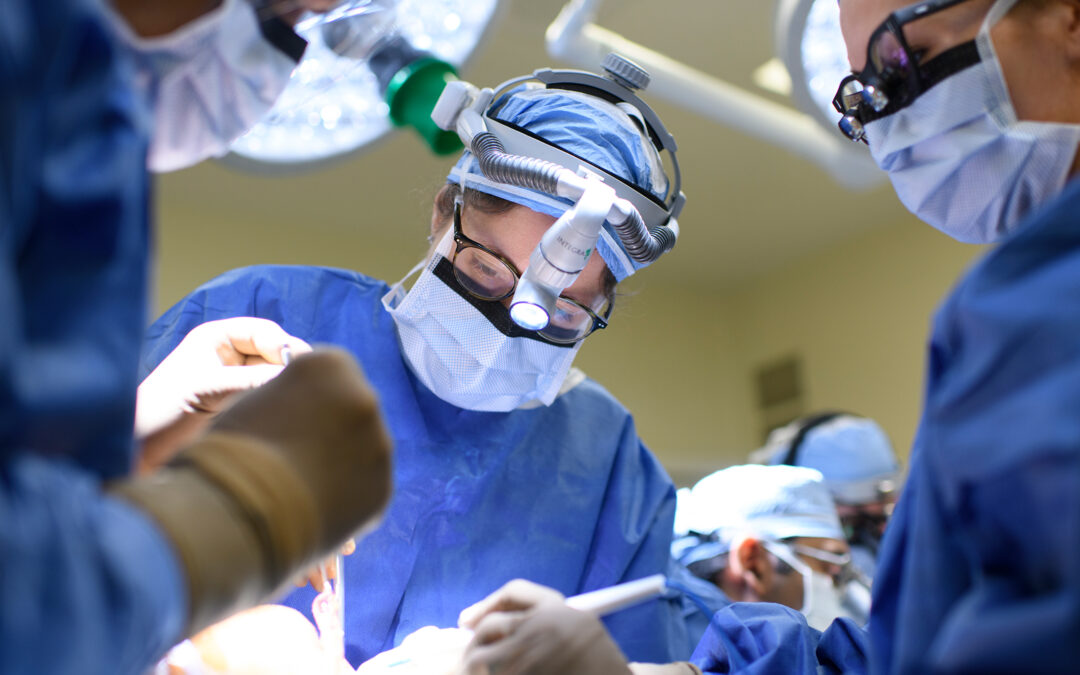
MIND stands for Minimally Invasive Neck Dissection, a technique developed by Dr. Sandeep Nayak that removes cancerous lymph nodes from the neck through small incisions hidden behind the ear and in the hairline instead of the traditional 15-20 cm cut running from ear to collarbone. Achieves the same oncological clearance as open neck dissection with dramatically less scarring, less nerve damage, and faster recovery. Originally designed for oral cancer patients who need neck node clearance but now applied across head and neck cancers where lymph node removal is part of the surgical plan.
According to Dr. Sandeep Nayak, Oral Cancer Treatment in Bangalore, “I developed MIND because I kept watching young oral cancer patients recover from the cancer only to spend the rest of their lives hiding a scar that ran halfway down their neck. The oncology was right but the cosmetic damage was unnecessary.”
How Is MIND Surgery Different From Traditional Neck Dissection
Traditional neck dissection works fine oncologically. Nobody argues with the cancer clearance. Problem is the approach. Big incision across the neck damages skin, platysma muscle, sensory nerves, and leaves a scar that every stranger stares at for the rest of your life. MIND gets the same nodes out through a route nobody sees.
- Incision location: Small cuts behind the ear and along the hairline where hair covers the scars completely. No visible neck wound. Patient wakes up with node clearance done and a neck that looks like nothing happened. Compare that to the railroad track scar conventional surgery leaves behind.
- Endoscopic approach: Surgeon uses an endoscope and specialized instruments to dissect through the plane under the skin reaching all five levels of cervical lymph nodes. Same tissue gets removed. Same margins. Same node count sent to pathology. Just a different door to get there.
- Nerve preservation: Open neck dissection frequently damages the greater auricular nerve, marginal mandibular nerve, and spinal accessory nerve causing numbness, facial asymmetry, or shoulder weakness. MIND’s magnified endoscopic view lets the surgeon identify and preserve these structures with precision that naked-eye open surgery struggles to match.
- Combined with RIA: For oral cancer patients MIND pairs with RIA-MIND procedure where the primary tumor inside the mouth is removed through a robotic intraoral approach while neck nodes come out through the MIND technique. Entire cancer operation done without any visible external scar on the face or neck.
Team explains whether your specific cancer qualifies for MIND during MACS advantages consultation with full imaging review.
Who Qualifies for MIND Surgery?
Not every oral cancer patient gets MIND. Tumor stage, node size, and whether nodes are stuck to surrounding structures all matter. Offering MIND when open dissection is safer just to avoid a scar is bad surgery wearing a cosmetic mask.
- Node status: Clinically positive but mobile lymph nodes up to 3 cm respond best to MIND. Matted nodes or nodes stuck to the carotid artery or internal jugular vein need open access because the surgeon’s hands need to be directly on those vessels for safe separation. No endoscope replaces that tactile feedback.
- Node levels: MIND accesses levels I through V effectively. Most oral cancer dissections target levels I-IV. If your surgeon needs to clear level V near the posterior triangle the endoscopic reach still works but gets technically more demanding so experience matters here more than equipment.
- Previous neck treatment: Prior neck radiation or previous neck surgery creates scar tissue that makes endoscopic plane dissection dangerous. MIND works best in necks that haven’t been operated on or irradiated before. Virgin tissue dissects predictably. Scarred tissue doesn’t.
- Patient preference: Some patients genuinely don’t care about the scar and want the fastest simplest operation possible. Fair enough. MIND takes slightly longer than open dissection because the approach is more technical. If cosmetic outcome ranks low on your priority list open surgery does the same oncological job in less time.
Right candidate selection keeps MIND results excellent. Read about head and neck cancer treatment to understand how neck dissection fits into the complete oral cancer surgical plan.
Why Choose MACS Clinic?
Dr. Sandeep Nayak invented MIND surgery. Not adopted it from somewhere else. Created it here and published the technique internationally. MACS Clinic has the highest volume of MIND procedures in the country because this is where the procedure was born and where the most experience with it lives.
Patients fly in from across India and overseas specifically for this operation. Because once you’ve seen what MIND results look like versus traditional neck dissection scars the choice becomes obvious for anyone who qualifies. And the team here is honest enough to tell you when you don’t.
Call +91 8035740000 to book your consultation.
Book your consultation for cancer treatment at MACS Clinic, Bangalore.
FAQs
Does MIND surgery remove the same number of lymph nodes?
Yes, same node count and clearance as traditional open neck dissection.
How long does MIND surgery take?
Typically 2-4 hours depending on levels dissected and node burden.
Will I have a visible scar after MIND surgery?
No, incisions are hidden behind the ear and in the hairline.
Is MIND surgery available outside MACS Clinic?
Very few centers offer it as Dr. Sandeep Nayak developed the technique.
References
- Neck dissection in oral cancer — National Cancer Institute.
- Minimally invasive head and neck surgery — World Health Organization.