
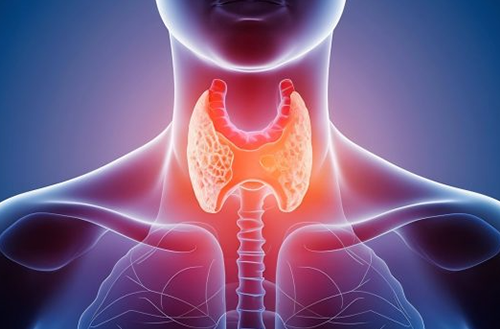
RABIT stands for Robotic-Assisted Breast-Axillo Insufflation Thyroidectomy, a scarless robotic technique that removes thyroid tumors through small incisions in the armpit and infraclavicular region instead of cutting across the neck. Developed by Dr. Sandeep Nayak using the Da Vinci Xi robotic system, RABIT treats papillary carcinoma, follicular neoplasm, medullary thyroid cancer, and multinodular goitre with oncological outcomes equivalent to open thyroidectomy.
According to Dr. Sandeep Nayak, Thyroid Tumor Treatment in Bangalore, “I developed RABIT because young patients kept saying the neck scar bothered them more than the cancer diagnosis. Thyroid surgery shouldn’t leave you explaining a scar to every person who looks at your neck for the rest of your life.”
Thyroid cancer treatment without the scar that follows you everywhere.
How Is RABIT Surgery Performed?
Traditional thyroidectomy needs a 6-8 cm cut across the front of the neck. RABIT eliminates that by reaching the thyroid from below through a route nobody sees.
- Incision placement: Two to three cuts of 0.5-1 cm in armpit and chest area hidden under clothing. No incision touches the neck. Patient wakes up with thyroid removed and a neck that looks untouched.
- Robotic dissection: Da Vinci Xi arms travel under the skin from remote ports to reach the thyroid. Surgeon operates from console with 10x magnified 3D view identifying recurrent laryngeal nerve and parathyroids with precision open surgery achieves through a much bigger wound.
- No-suture technique: Energy-based sealing devices replace clips and stitches on blood vessels. No foreign material left inside unlike open thyroidectomy where metal clips sit permanently near vocal cord nerves.
- Complete removal: Total thyroidectomy, hemithyroidectomy, or thyroidectomy with central neck dissection all achievable through RABIT. Cancer clearance and node harvest match open surgery numbers completely.
Your oncologist assesses RABIT suitability for your specific thyroid tumor based on gland size, cancer extent, and node involvement.
Who Qualifies for RABIT?
RABIT works for most thyroid cancers but not every case. Gland size, cancer extent, and body habitus determine whether remote access is feasible.
- Ideal candidates: Papillary carcinoma, follicular neoplasm, suspicious nodules needing lobectomy, and multinodular goitre in patients wanting no visible scar. Works best when thyroid volume stays below 80-100 mL without extraglandular invasion.
- Neck dissection: Central compartment node dissection possible through RABIT for
- papillary cancers with suspected nodal spread. Extensive lateral neck disease may need MIND technique added depending on node bulk and location.
- Not suitable: Very large goitres above 100 mL where extraction through remote ports becomes impractical. Cancers invading trachea, esophagus, or recurrent laryngeal nerve need direct neck access for safe en bloc resection.
- Body habitus: Very short neck or high BMI makes the working tunnel from chest to thyroid technically difficult. Surgeon measures working distance during consultation because honest assessment here prevents a mid-surgery conversion nobody planned for.
Understanding how insurance coverage works for robotic procedures like RABIT helps patients plan finances before the surgery date gets confirmed.
Why Choose MACS Clinic?
Dr. Sandeep Nayak invented RABIT and has performed over 500 thyroid surgeries using this technique with outcomes published internationally. MACS Clinic is where the procedure was created, refined, and where the highest case volume in India exists for scarless robotic thyroidectomy.
Patients fly in from across India and overseas specifically for RABIT because once you’ve seen what a neck looks like after this versus traditional surgery the choice becomes obvious for anyone who qualifies.
Call +91 8035740000 to book your consultation.
FAQs
Does RABIT surgery leave any visible scar?
No, incisions are hidden in the armpit and chest with zero neck scarring.
How long does RABIT surgery take?
Typically 2-3 hours depending on whether neck dissection is included.
Is RABIT as safe as traditional thyroidectomy?
Yes, cancer clearance, nerve preservation, and complication rates match open surgery.
Who invented RABIT surgery?
Dr. Sandeep Nayak developed RABIT at MACS Clinic in Bangalore, India.
References
- Robotic thyroidectomy techniques — National Cancer Institute
- Thyroid cancer surgical management — World Health Organizatio
Disclaimer: Reference links are for informational purposes only and not a substitute for professional medical advice or treatment.