

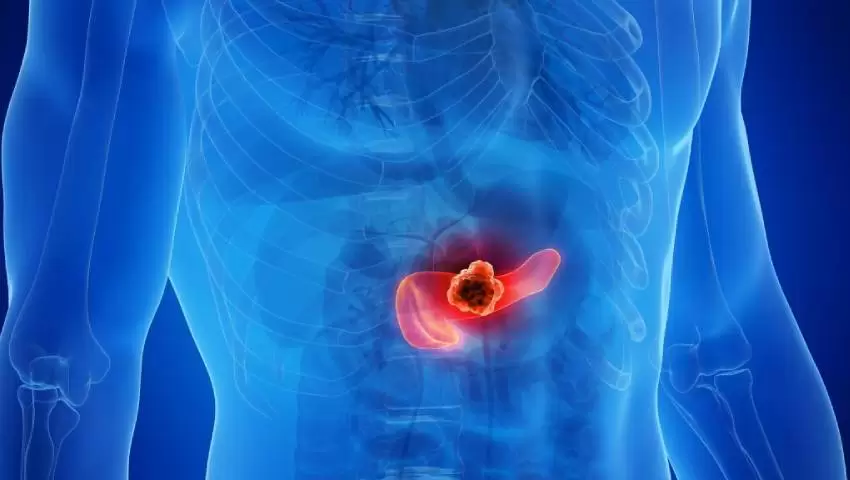
Painless jaundice with dark urine and pale stools, upper abdominal pain radiating to the back, sudden unexplained weight loss, and new-onset diabetes after age 50 without family history are the primary warning signs of pancreatic cancer. Pancreas sits deep in the abdomen against the spine which is why tumors grow silently and only 12% of cases are caught at localized stage. Five-year survival at Stage I-II is 44% but drops below 3% at Stage IV because symptoms mimic common digestive complaints patients live with for months.
According to Dr. Sandeep Nayak, Best cancer treatment in Bangalore, “Patient treated himself for acidity and gas for four months before anyone ordered a scan. By then the tumor wrapped around the superior mesenteric artery and surgery was off the table. Four months of antacids while a cancer grew unchecked because the symptoms felt ordinary.“
Digestive complaints that won’t resolve deserve a scan not another prescription.
What Symptoms Should Raise Suspicion?
Pancreatic cancer symptoms overlap with everyday digestive issues. What separates cancer from acidity is persistence, combination, and progression over weeks.
- Painless jaundice: Yellow eyes and skin appearing without gallstone-type pain. Dark urine like chai colour, pale chalky stools that float. Painless jaundice in an adult is pancreatic cancer until a scan proves otherwise. Most people assume hepatitis or bad food and delay investigation.
- Abdominal pain: Upper belly pain radiating straight through to the mid-back like a belt tightening around your middle. Worse lying flat, slightly better leaning forward. Gets mistaken for gastritis for months because antacids provide partial relief that keeps the patient away from imaging.
- Weight loss: Dropping 5-8 kg without trying over two to three months. Appetite disappears gradually. Pancreas stops producing enough digestive enzymes so food passes through without being absorbed properly. Family comments on weight loss before the patient connects it to anything serious.
- New diabetes after 50: Sudden diabetes diagnosis in someone over 50 with no family history and no obesity. Pancreatic tumor destroys insulin-producing cells causing blood sugar to rise. Any doctor diagnosing new-onset diabetes at that age should be ordering an abdominal scan alongside the metformin prescription.
Your oncologist evaluates these through pancreatic cancer staging including CT, CA 19-9, and endoscopic ultrasound.
When Should You Get Tested?
No population-level screening exists for pancreatic cancer. Detection depends entirely on clinical suspicion when the right combination of symptoms shows up.
- Jaundice without stones: Ultrasound showing dilated bile duct without gallstones needs CT pancreas immediately. This finding alone in someone over 45 with weight loss is pancreatic head cancer until imaging says it isn’t. Don’t settle for “probably just hepatitis” without a scan confirming it.
- Persistent digestive changes: Oily floating stools, bloating that doesn’t respond to dietary changes, loss of appetite lasting more than three weeks. Pancreas failing to produce enzymes creates malabsorption symptoms that get treated as IBS for months in Indian gastroenterology clinics.
- CA 19-9 marker: Elevated in roughly 80% of pancreatic cancers but also rises in bile duct obstruction and pancreatitis. Not a screening tool but useful alongside imaging when suspicion already exists. Normal CA 19-9 doesn’t rule out pancreatic cancer completely.
- Family history: Two or more first-degree relatives with pancreatic cancer or known BRCA2, PALB2, or Lynch syndrome mutations. These families may benefit from surveillance with annual MRI or endoscopic ultrasound starting at 50 or ten years before the youngest family diagnosis.
Knowing how kidney cancer signs also get dismissed as routine complaints helps explain why pancreatic cancer follows the same pattern of delayed diagnosis from symptoms that felt too ordinary to investigate.
Why Choose MACS Clinic?
Dr. Sandeep Nayak performs pancreatic cancer surgeries including Whipple procedure and distal pancreatectomy using laparoscopic and robotic approaches that reduce recovery time compared to the massive open incision traditional pancreatic surgery requires. MACS Clinic coordinates CT staging, endoscopic ultrasound, CA 19-9 tracking, and surgical planning under one multidisciplinary team.
Patient with jaundice here gets a CT that same week not a trial of antibiotics first. Because pancreatic cancer doesn’t give you the luxury of months to investigate and the team here doesn’t pretend it does. Call +91 8035740000 to book your consultation.
FAQs
Is pancreatic cancer curable if caught early?
Stage I-II carries 44% five-year survival. Early detection dramatically improves surgical options.
Why is pancreatic cancer so hard to detect?
Deep abdominal location and vague symptoms mimicking common digestive issues delay diagnosis.
Does jaundice always mean pancreatic cancer?
No, gallstones and hepatitis are more common causes. But painless jaundice always needs imaging.
Can a blood test detect pancreatic cancer?
CA 19-9 is elevated in 80% of cases but isn’t reliable enough for standalone screening.
References
- Pancreatic cancer signs and symptoms — National Cancer Institute
- Pancreatic cancer diagnosis — World Health Organization