

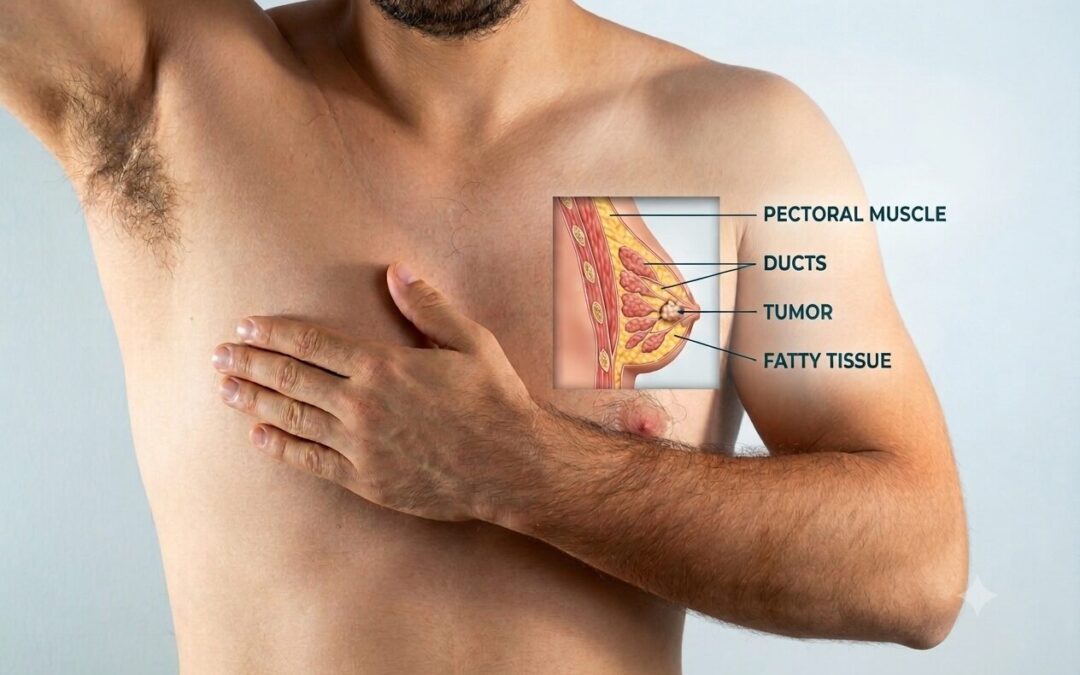
Yes, breast cancer can occur in men. All men are born with a small amount of breast tissue and it can develop into cancer just as it does in women. It accounts for less than 1% of all breast cancer diagnoses globally, which is part of why it’s often caught late. The most common presentation is a painless lump or thickening in the chest tissue, usually behind or near the nipple, that gets ignored or misattributed for months before anyone investigates it.
According to Dr. Sandeep Nayak,who provides Best cancer treatment in Bangalore, “Male breast cancer is rare but it’s not a different disease. The biology is the same, the surgical principles are the same, and the systemic treatment follows the same evidence base as female breast cancer. The problem is that men don’t think it can happen to them, so they wait too long before presenting.”
Found a lump in your chest and assuming it can’t be cancer because you’re male? That assumption is exactly what delays diagnosis.
What Are the Signs and Risk Factors of Breast Cancer in Men?
Most men who develop breast cancer don’t have obvious risk factors. But certain things do raise the probability enough to matter clinically.
- Painless Chest Lump:
The most common presentation is a firm, painless lump under or near the nipple. Men tend to have less breast tissue, so tumours are often closer to the skin and nipple complex than in women. That also means local invasion can happen faster. - Nipple Changes:
Nipple retraction, discharge, or ulceration in a man needs a biopsy. These aren’t symptoms men associate with cancer, which is exactly why they get dismissed for too long before a proper investigation happens. - BRCA2 Mutation:
BRCA2 mutations raise male breast cancer risk to 6% to 8% lifetime, compared to under 0.1% in the general male population. Men with a family history of breast or ovarian cancer in female relatives should be considered for BRCA testing, not just the women in that family. - Klinefelter Syndrome and Hormonal Factors:
Men with Klinefelter syndrome have higher oestrogen levels relative to testosterone and carry a significantly elevated breast cancer risk. Obesity, liver disease, and exogenous oestrogen exposure also raise risk through the same hormonal mechanism.
Surgery for male breast cancer follows the same oncological principles as female breast cancer. Breast Cancer Surgery involves modified radical mastectomy in most cases because men have less tissue, making breast conservation technically less applicable than in women.
How Is Breast Cancer in Men Treated?
Treatment follows the same evidence base as female breast cancer, adapted for the anatomical and hormonal differences that apply to male cases.
- Surgery First in Most Cases:
Modified radical mastectomy is the standard surgical approach for male breast cancer. Because men have minimal breast tissue, the tumour typically sits close to the nipple and chest wall, making breast-conserving surgery less feasible than in women with larger breast volume. - Hormone Therapy Works Well:
Over 90% of male breast cancers are hormone receptor-positive. Tamoxifen for 5 to 10 years is the standard adjuvant hormonal treatment and works through the same mechanism as it does in pre-menopausal women, since men’s hormonal environment is similar to that group. - Chemotherapy and Radiotherapy:
Node-positive or high-grade male breast cancers receive adjuvant chemotherapy on the same anthracycline and taxane-based protocols used in women. Radiotherapy is added after mastectomy when margins are close or when four or more nodes are involved. - BRCA Testing Changes Management:
Men diagnosed with breast cancer should undergo BRCA2 testing at diagnosis. A positive result affects their own surveillance for other BRCA-linked cancers and changes the clinical management and screening plan for their male and female relatives.
Our previous blog on Triple Negative Breast Cancer is worth a read for understanding how receptor status drives treatment decisions in breast cancer, a framework that applies equally to male and female cases.
Why Choose MACS Clinic for Male Breast Cancer Treatment?
Dr. Sandeep Nayak’s team at MACS Clinic manages male breast cancer cases through the same multidisciplinary tumour board process used for all breast cancer presentations. BRCA testing, receptor status assessment, and surgical planning are all addressed before treatment begins. Male breast cancer is rare enough that many centres lack specific experience with it, which is exactly why tumour board review matters more here, not less.
Men who present with a chest lump, nipple change, or a family history that puts them at risk can discuss their case directly with the team. Those who want to do that can reach the team at +91 8035740000.
FAQs
Can men actually get breast cancer?
Yes, they can. Men are born with a small amount of breast tissue and that tissue can turn malignant. Less than 1% of all breast cancers are diagnosed in men, which is exactly why most men never think to check.
What are the symptoms of breast cancer in men?
Usually a firm lump sitting behind or near the nipple that doesn’t hurt. Some men also notice the nipple pulling inward, discharge, or skin that starts thickening over the chest. None of these feel alarming, which is why they get ignored.
What is the treatment for male breast cancer?
Surgery first, almost always modified radical mastectomy. More than 90% of male breast cancers are hormone receptor-positive, so tamoxifen follows for 5 to 10 years. Chemo and radiotherapy are added when nodes are involved or the tumour grade is high.
Does BRCA mutation increase breast cancer risk in men?
It does, significantly. A BRCA2 mutation takes lifetime risk from under 0.1% up to 6% to 8%. Any man with female relatives who had breast or ovarian cancer should be tested. Gender doesn’t exempt you from carrying the mutation.
Disclaimer: This content is published for educational and informational purposes only.