
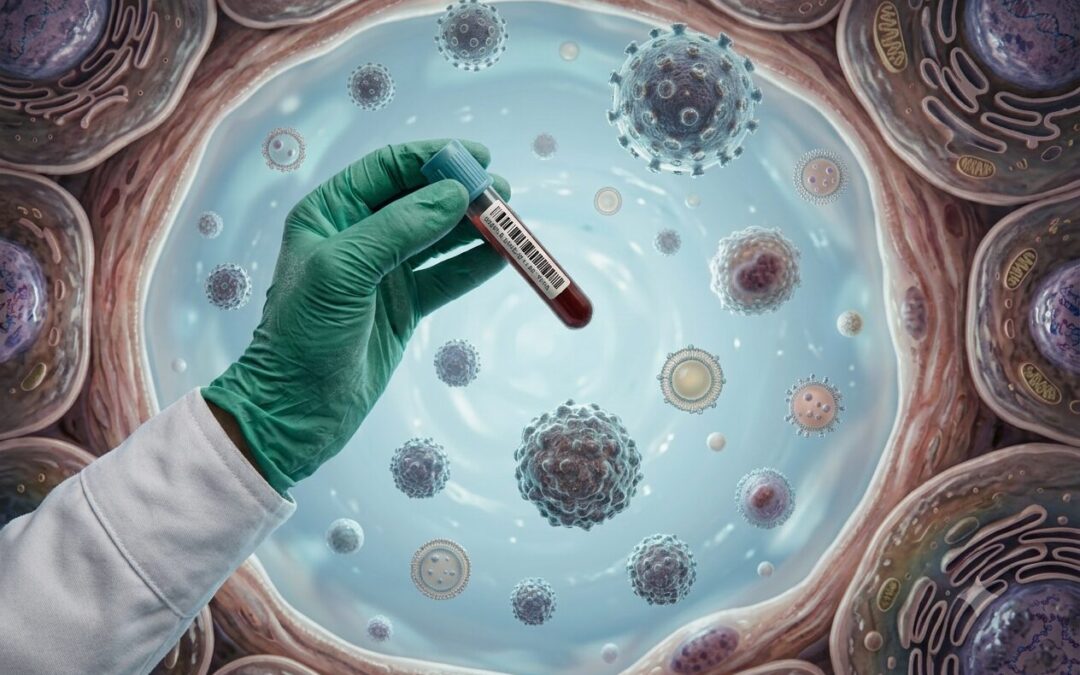
Most cancer screening today works one cancer at a time. A mammogram for breast cancer. A colonoscopy for colon cancer. A PSA test for prostate cancer. But there are dozens of cancers that have no standard screening test at all, and by the time those get found, they’re often not early. Multi-cancer early detection tests are trying to close that gap. Tumours shed fragments of their DNA into the bloodstream, and a single blood draw can be analysed for those fragments across many cancer types at once, picking up signals that something might be growing somewhere in the body before symptoms ever appear.
Dr. Sandeep Nayak, Best Cancer Treatment in Bangalore, explains what makes this significant: “The cancers that kill the most people are often the ones we have no good early detection method for. Pancreatic cancer, ovarian cancer, cancers of the bile duct. By the time a patient feels something, the disease is usually advanced. A test that could flag these earlier, even in people with no symptoms and no obvious risk factors, would change outcomes in a way that individual cancer screenings simply can’t.”
Want to understand your cancer screening options?
How Does It Actually Work?
It builds on the same idea as liquid biopsy, just cast wider and used much earlier.
Tumours Shed DNA: Cancer cells leak tiny fragments of their DNA into the blood, even before any symptoms show up. These fragments are what the test is hunting for.
Reading the Signatures: Each cancer type leaves a distinct chemical pattern on those DNA fragments, called methylation. The test reads those patterns across dozens of cancer types from one blood sample.
Is Anything There?: First the test asks a simple yes or no. Is there a cancer signal in this blood? No signal, nothing further to chase. Signal present, move to the next question.
Where Is It Coming From?: This is the part that makes it clinically useful. Finding a signal matters much less if nobody knows where to look next. The test tries to predict the tissue of origin, narrowing it down to a likely organ so the follow-up investigation has somewhere to start.
What Can It Detect and What Are Its Limits?
Before anyone pins too much hope on a single test, both sides of this need to be understood clearly.
What It Can Do: These tests can potentially screen for more than 50 cancer types in a single blood draw. Many of these are cancers with no current standard screening method. For pancreatic, ovarian, oesophageal, and gallbladder cancers, which are almost always caught late, a blood-based signal could be the difference between Stage 1 and Stage 4.
Approval Status: These tests are still not FDA approved for routine screening use as of mid-2026. Clinical trials are ongoing. They are not yet part of standard clinical guidelines anywhere in the world.
Detection Rates Vary: Sensitivity differs by cancer type and stage. For Stage 1 cancers, detection rates are lower than for later stages, which is exactly the opposite of what makes a screening test most useful.
Results Are Not Conclusive: A negative result doesn’t rule out cancer. A positive result doesn’t confirm it. What a positive result does is trigger further investigation, the kind of targeted workup that precision oncology and molecular diagnostics can then take further.
False Positives Are Real: A signal that turns out to be nothing still sends a patient through anxiety, follow-up scans, and sometimes unnecessary procedures. Getting the balance right between sensitivity and specificity at a population level is what the ongoing research is working through.
Why Choose MACS Clinic for Cancer Screening and Early Detection?
Dr. Sandeep Nayak’s team at MACS Clinic doesn’t hand patients a standard screening checklist and call it done. Family history, genetic risk, concern about cancers that nobody routinely screens for these are conversations that need more than a protocol. Genetic counselling, molecular tools, and precision oncology assessments are all part of working through what actually makes sense for each person’s risk profile.On newer tests like MCED, the team’s position is straightforward to follow what the evidence supports, not what the headlines say. Those who want to talk through their screening options can reach the team at +91 9482202240.
FAQs
Can this test replace a mammogram or colonoscopy?
Not at all. Those exist for a reason and still do their job better for the cancers they’re built around. MCED tests are meant to cover the ground that existing screenings don’t touch, not to sit in for them.
Is it available in India?
Some private labs offer versions of it, but it’s not part of any standard guidelines yet and hasn’t cleared FDA approval for routine use. Before getting one, talk to an oncologist about what you’d actually do with the result.
A signal showed up. Now what?
It means something needs a closer look, not that cancer is confirmed. Depending on where the signal points, the next step is usually imaging, an endoscopy, or a biopsy. The test opens a door. It doesn’t walk through it.
Who should actually consider this?
Anyone carrying BRCA mutations or with a strong family cancer history. Also useful for cancers like pancreatic or ovarian that have no routine screening option. General population, not yet.
Disclaimer: This content is published for educational and informational purposes only.