

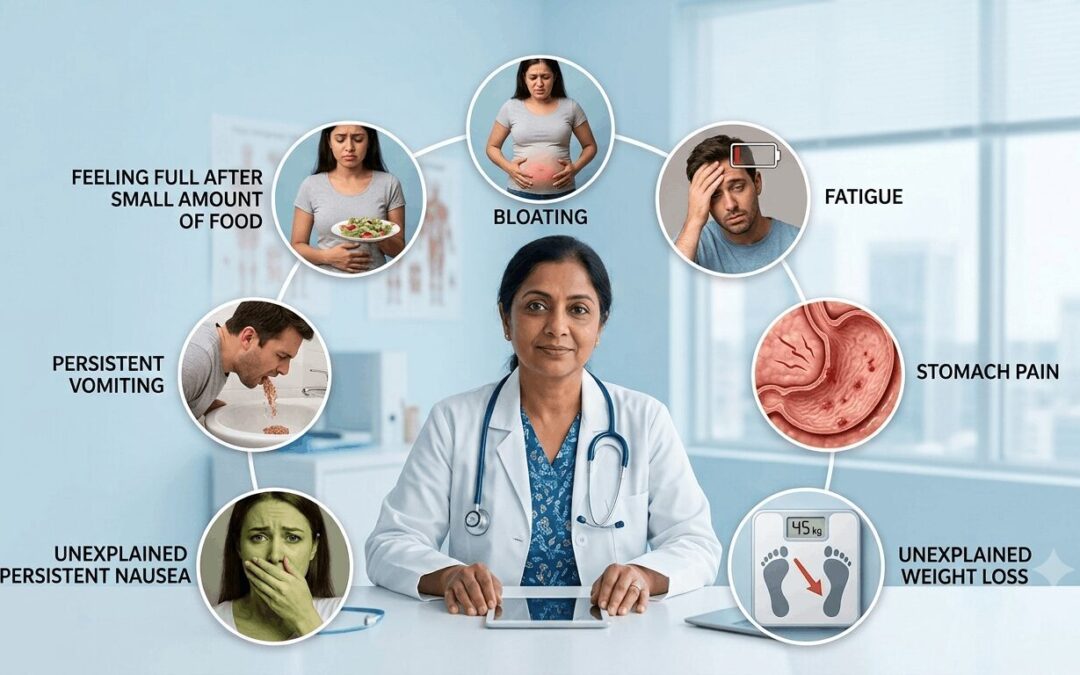
Most of the time, honestly, there are none. Early stomach cancer tends to sit quietly, not causing enough disruption to send anyone to a doctor. When something finally does show up, it’s usually vague enough to get mistaken for indigestion, gastritis, or an ordinary ulcer, things nearly everyone has dealt with at some point and rarely worries about. That overlap is exactly what makes stomach cancer tricky to catch early. The symptoms exist, technically, they’re just wearing a disguise most people don’t think twice about.
Dr. Sandeep Nayak, who provides Best Cancer Treatment in Bangalore, hears the same story on repeat. “Someone comes in and says they’ve had stomach trouble for two months, three months. Bloating, feeling full fast, a bit of discomfort after eating. Sounds like nothing, right? And most of the time it genuinely is nothing. But when it drags on that long, and antacids stop doing much, that’s the point where I want to actually look, not guess.”
Stomach symptoms that just won’t go away?
Signs Worth Paying Attention To?
None of these mean cancer on their own. Together, or lasting weeks, that’s when they matter.
Indigestion that sticks around
Everyone gets it after a heavy meal now and then. It’s the version that just doesn’t quit, week after week, that deserves a second thought. Persistent indigestion is one of the early warning signs of stomach cancer that most people explain away for months.
Filling up too fast. Eating half of what you normally would and already feeling stuffed. Easy to blame on eating quickly or just getting older. Worth noticing if it keeps happening.
Weight dropping without trying. Especially paired with a shrinking appetite. This combination tends to get taken more seriously, and for good reason.
Nausea that won’t settle. Not the occasional off day. Weeks of it, with no stomach bug or bad meal to explain it.
Blood, either direction. Dark stools, vomit that looks like coffee grounds. Don’t wait this one out. Get it checked right away.
A dull ache that keeps returning. Especially if it keeps coming back despite being treated for gastritis or an ulcer already.
Why This Gets Missed So Often?
Understanding why delays happen helps explain why persistence matters more than any single symptom.
Overlap With Common Conditions: Gastritis, acid reflux, and peptic ulcers are far more common than stomach cancer and cause nearly identical symptoms. Most people, and often their doctors initially, reasonably assume the more common explanation first.
Response to Basic Treatment: Antacids or acid-reducing medication can genuinely improve symptoms temporarily even when an underlying tumour is present, which delays further investigation since the treatment appears to be working.
Slow Progression: Early-stage stomach cancer often grows slowly enough that symptoms develop gradually, making it easy to adapt to discomfort rather than recognize it as something that’s been worsening over time. Our blog on partial vs total gastrectomy covers how the extent of disease at diagnosis shapes what surgical treatment becomes necessary, which is part of why catching things earlier matters so much.
Why Choose MACS Clinic for Stomach Cancer Diagnosis?
Dr. Sandeep Nayak’s team at MACS Clinic doesn’t wave off ongoing digestive complaints, especially the ones that aren’t responding the way ordinary gastritis normally would. Endoscopy, imaging, a proper workup rather than another round of the same medication and hoping it sticks this time.
For patients diagnosed with stomach cancer, the surgical plan depends on exactly where the disease sits and how far it’s spread. Symptoms that haven’t gone away? Reach the team at +91 9482202240.
FAQs
How long is too long for indigestion?
Two, three weeks without improvement, especially if antacids aren’t helping anymore. That’s the point to get it looked at properly.
Can stomach cancer really cause zero symptoms early on?
Yes, often. That’s exactly why it tends to get caught later than cancers that announce themselves earlier.
Is blood in stool always something serious?
Get it checked regardless. Could be minor, could be something that needs attention fast. Not worth guessing on.
If antacids help, does that rule out cancer?
No. Feeling better temporarily doesn’t mean the underlying cause is gone. If symptoms come back, get it investigated properly.
Disclaimer: This content is published for educational and informational purposes only.