

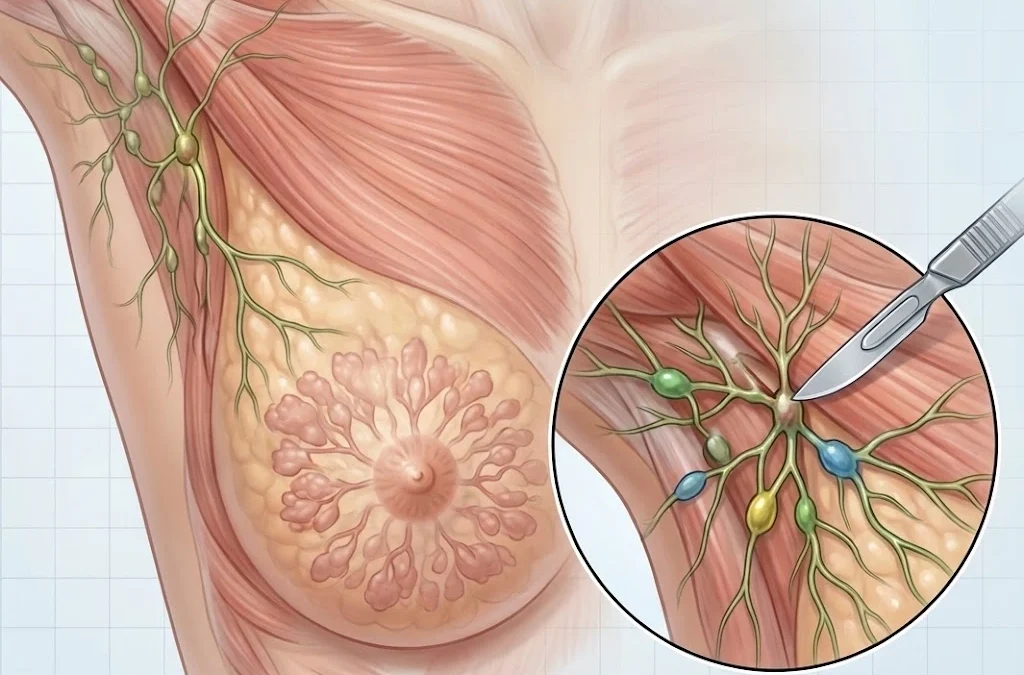
Usually one to three. Sometimes it stretches to four or five, occasionally more, but that’s less common. The exact number really comes down to how many nodes light up during the procedure itself, since surgeons are tracking which lymph nodes absorb a tracer dye or show radioactivity, marking them as the first stop cancer would likely reach on its way out of the original tumour site. Every node that lights up gets removed and checked. Not a fixed number decided beforehand, more a number that reveals itself during the surgery.
Dr. Sandeep Nayak, who provides Best Cancer Treatment in Bangalore, explains why the count varies from patient to patient. “People ask me for an exact number before surgery, and honestly I can’t always give one until we’re in there. The tracer shows us which nodes are the actual drainage points for that specific tumour. Most patients end up with two or three removed. Occasionally the pattern is more complex and a few more come out. What matters isn’t hitting a specific number, it’s making sure we’ve caught the nodes cancer would actually travel to first.”
Facing a sentinel node biopsy and want to understand what to expect?
Why Does the Number Vary From Patient to Patient?
A few specific factors shape how many nodes actually end up getting removed.
Individual lymphatic drainage patterns. Everyone’s lymphatic system is laid out slightly differently. Some tumours drain to a single dominant node, others to a small cluster, which is exactly why the count isn’t standardized ahead of time.
How the tracer behaves during the procedure. A blue dye, a radioactive tracer, or often both together get injected near the tumour before surgery. Whichever nodes pick up that tracer are the ones that come out, and that absorption pattern simply isn’t identical for everyone.
Tumour location. Where the original cancer sits affects which lymphatic pathways it drains through, which in turn affects how many sentinel nodes end up being identified.
Cancer type. Breast cancer, melanoma, and other cancers where this procedure is common each tend to have somewhat different typical node counts, based on how lymphatic drainage generally works for that particular cancer type. Our blog on sentinel node biopsy vs full axillary dissection covers how this procedure compares to removing a much larger number of nodes entirely.
What Happens if More Nodes Are Found to Be Involved?
Sometimes the sentinel nodes themselves reveal something that changes the plan.
Positive nodes may mean further surgery
If one or more sentinel nodes come back positive for cancer, a more extensive lymph node dissection sometimes becomes necessary removing additional nodes beyond just the sentinel ones to ensure complete clearance.
Not every positive result leads to more removal
Depending on the cancer type, extent of involvement, and other factors, some patients with a small amount of cancer in a sentinel node don’t necessarily need further node removal. Additional treatment like radiation or systemic therapy can address residual nodal risk instead, particularly in early-stage breast cancer where this approach is now well established.
Pathology results guide the next step
The tissue removed during sentinel node biopsy gets examined closely and that examination, not a predetermined plan, decides what happens next. The decision is made based on what the pathologist actually finds, not on assumptions made before the results are back.
Why Choose MACS Clinic for Sentinel Node Biopsy?
Dr. Sandeep Nayak’s team at MACS Clinic performs sentinel node biopsy with careful attention to identifying every true drainage node, rather than removing more tissue than necessary or missing nodes that matter. This precision directly affects both the accuracy of staging and how much lymph node related side effects a patient experiences afterward.
For patients where results indicate further treatment is needed, the full surgical and treatment plan gets built around exactly what the pathology shows. Facing a sentinel node biopsy and want to discuss what to expect for your specific case? Reach the team at +91 9482202240.
FAQs
Is it normal for only one lymph node to be removed?
Yes, completely normal. Some patients have a single dominant sentinel node identified by the tracer, and if that’s the case, that’s all that gets removed.
Does removing more nodes mean the cancer is worse?
Not necessarily. The number of sentinel nodes removed reflects individual lymphatic drainage patterns, not the severity of the cancer itself. A higher count doesn’t automatically indicate more advanced disease.
How long does the sentinel node procedure itself take?
Typically adds around 30 to 45 minutes to the main cancer surgery, since it’s usually performed alongside the primary tumour removal rather than as a completely separate operation.
What are the risks of removing sentinel lymph nodes?
Generally lower risk compared to removing many more nodes. Some patients experience temporary swelling or discomfort at the site, and there’s a small chance of lymphedema, though this risk is considerably reduced compared to a full lymph node dissection.
Disclaimer: This content is published for educational and informational purposes only.