

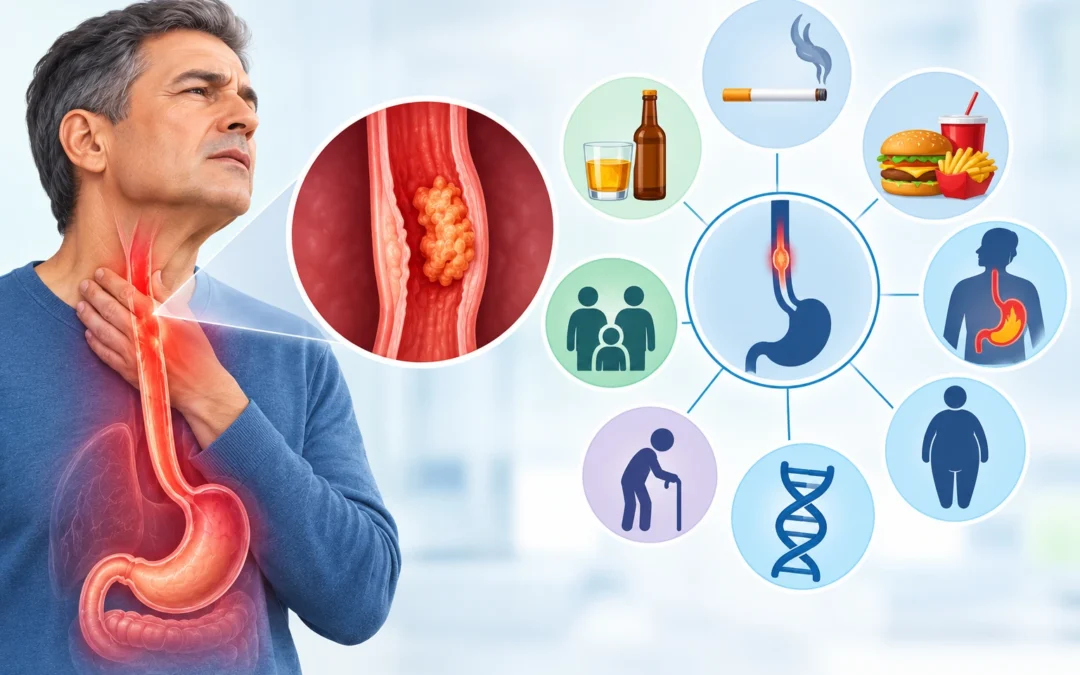
Esophageal cancer develops when DNA changes in the cells lining the esophagus cause them to grow uncontrollably, usually set off by years of chronic irritation and damage to that lining rather than a single sudden event. So why does the specific cause of that irritation actually matter so much? Because esophageal cancer comes in two genuinely different forms, squamous cell carcinoma and adenocarcinoma, and they’re driven by almost entirely different risk factors, which changes who’s actually at risk and why.
Dr. Sandeep Nayak, known for the Best Cancer Treatment in Bangalore, sees this distinction get missed constantly. “People hear esophageal cancer and assume one cause fits all. It doesn’t. Squamous cell cancer is driven heavily by smoking and alcohol, damaging the lining directly. Adenocarcinoma usually follows years of acid reflux, through Barrett’s esophagus, a completely different pathway. Knowing which type someone’s actually dealing with, or at risk for, changes the whole conversation about prevention and screening.”
Concerned about your own risk factors?
What Actually Drives the Two Main Types?
The two forms of esophageal cancer develop through genuinely different mechanisms, and the risk factors reflect that:
- Squamous cell carcinoma develops in the flat cells lining most of the esophagus, and tobacco use combined with heavy alcohol consumption multiplies risk well beyond what either factor causes alone
- Adenocarcinoma typically develops after years of chronic acid reflux damages the lower esophagus, progressing through Barrett’s esophagus, a precancerous change where normal cells get replaced by abnormal ones better suited to tolerating acid exposure
- Obesity raises adenocarcinoma risk specifically, both by increasing reflux frequency and through separate metabolic effects that appear to independently affect risk
- Age and sex also play a role, adenocarcinoma is considerably more common in men and typically develops later in life, following decades of reflux exposure
Neither type develops overnight. Both typically represent years, sometimes decades, of ongoing irritation before cancer actually forms.
Who Actually Needs to Pay Closer Attention?
Why Choose MACS Clinic for Esophageal Cancer Risk Assessment and Care?
Dr. Sandeep Nayak’s team evaluates esophageal cancer risk with attention to which specific pathway actually applies, reflux-driven or tobacco and alcohol driven, since that distinction genuinely shapes screening recommendations and monitoring intervals. Patients with confirmed Barrett’s esophagus get surveillance scheduled appropriately rather than left to a generic one-size-fits-all timeline, since progression risk varies by individual findings on endoscopy. For patients with overlapping risk factors, like long-standing reflux alongside a smoking history, that combined risk gets addressed directly rather than treated as two separate, unrelated conversations.
Have risk factors or symptoms worth discussing? Reach the team at +91 9482202240.
FAQs
Does having GERD basically mean esophageal cancer is coming eventually?
No, not even close. Most people with GERD go their whole lives without it. The risk climbs the longer and worse the reflux gets, especially once Barrett’s shows up, but it’s nowhere near a guarantee.
Which type is more common, squamous cell or adenocarcinoma?
Depends where you’re standing, honestly. The US and parts of Europe see more adenocarcinoma these days, while squamous cell still dominates in a lot of Asia and elsewhere globally.
If someone quits smoking or drinking after years, does the risk actually go down?
Yeah, it drops over time. Don’t expect it to snap back to baseline right away though, especially after decades of heavy use, that takes a while to unwind.
How often does someone with Barrett's actually need to get scoped?
Comes down to what the first exam showed. Every two to three years is the usual rule of thumb, but it gets bumped up more often if there’s any dysplasia in the picture.
References
- Progression of GERD and Barrett’s Esophagus and the Creation of a Barrett’s Registry, ClinicalTrials.gov
- Barrett’s Esophagus and Esophageal Cancer, Links to Microbes and the Microbiome, PMC
- Early Symptoms of Esophageal Cancer, MACS Clinic
Disclaimer:This content is published for educational and informational purposes only.