

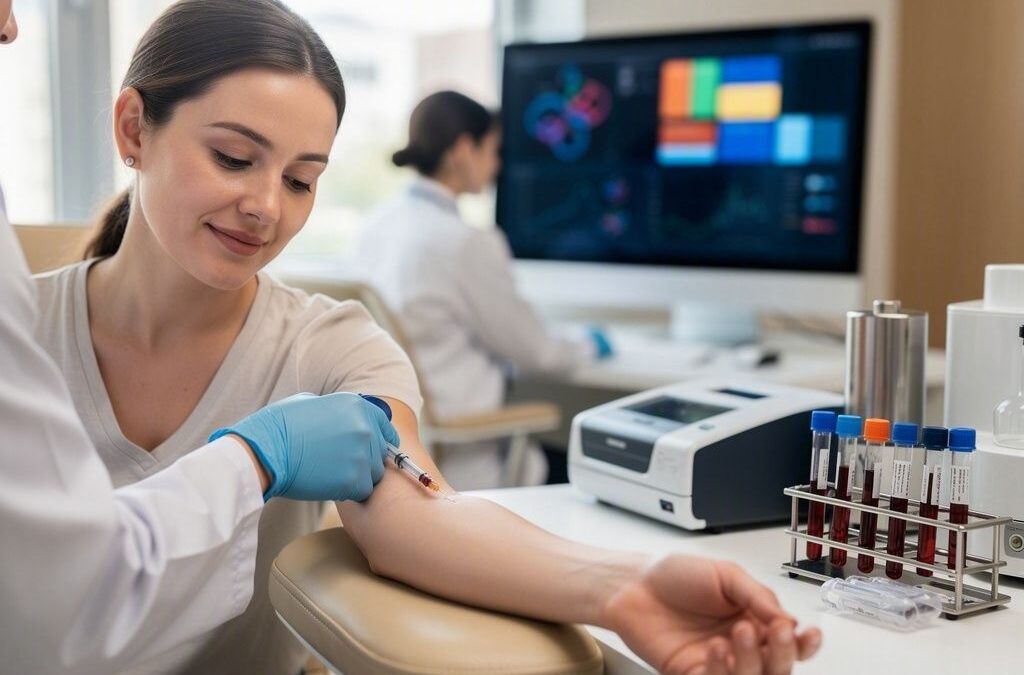
Yes, sometimes, advanced blood tests really can pick up on biological signals of cancer before anything else shows up. But the routine blood work drawn at a normal checkup? That’s not a universal cancer screening tool, and honestly it was never built to be one. So why can’t this get a simple yes or no? Because “a blood test for cancer” isn’t really one thing, it’s several genuinely different technologies doing different jobs, and mashing them all together into one question is exactly where the confusion starts.
Dr. Sandeep Nayak, known for the Best Cancer Treatment in Bangalore, fields some version of this question constantly, usually after a patient’s read something online that oversimplified it. “There isn’t one blood test that finds all cancer. There are several different approaches, each with its own strengths, its own limitations, and its own specific use case. Understanding which category you’re actually asking about changes the entire answer.
Curious which approach might actually be relevant to your own situation?
The Different Technologies Actually Behind This Question?
What gets lumped together as “a blood test for cancer” is really a handful of distinct approaches, each worth understanding on its own terms:
- Tumor marker blood tests, like CA 19-9 for pancreatic cancer, look for specific proteins a tumor may release, though these markers alone aren’t reliable enough for early screening since other conditions can raise them too
- Multi-cancer early detection tests, MCED tests, screen for dozens of cancers at once through a single blood draw, and the evidence behind these is genuinely promising but still not fully settled enough for routine, population-wide use
- Liquid biopsy, a related but distinct technology, looks for circulating tumor DNA and is more established for monitoring known cancers than for replacing traditional screening in people with no cancer diagnosis yet
- Standard blood work, a complete blood count or metabolic panel, can occasionally flag something unusual that leads to a cancer diagnosis, but it was built to check general health markers, not to actually screen for cancer
None of these technologies are interchangeable, and confusing one for another is exactly where a lot of the online noise around this topic comes from.
What This Actually Means for How You Should Think About It?
Why Choose MACS Clinic for Guidance on Blood-Based Cancer Detection?
Dr. Sandeep Nayak’s team sorts through which specific blood-based approach, if any, actually makes sense for a given patient’s risk factors and symptoms, rather than offering a vague reassurance that “a blood test would catch it” regardless of which test is actually being discussed. That conversation includes being honest about where the evidence is solid and where it’s still developing, since overselling emerging technology does patients a real disservice. For patients with a specific cancer already diagnosed, blood-based monitoring gets built into the ongoing treatment plan using the tools that are actually proven for that purpose.
Want to understand which blood-based approach, if any, applies to your own situation? Reach the team at +91 9482202240.
FAQs
Is there just one test out there that catches every kind of cancer?
Not in regular use, no. Multi-cancer tests are in development and being studied hard, but nothing’s actually replaced the standard, cancer-specific screening people already rely on.
Should I just ask my doctor for a general cancer blood test at my checkup?
A more useful move is talking through your actual risk factors and symptoms directly, since a vague general test rarely beats a conversation tailored to your own situation.
Could a routine blood test accidentally catch cancer I had no idea about?
Sometimes, yeah. An odd result on a normal panel can send you down a path that ends in a diagnosis, but that’s more of a happy accident than something the test was actually designed to find.
Does insurance actually cover these blood-based cancer tests?
Depends a lot on which one. Established tumor markers ordered for a real clinical reason usually get covered, but the newer multi-cancer tests often don’t yet, mostly because they haven’t become standard care.
Reference
- Can a Blood Test Detect Pancreatic Cancer Early, MACS Clinic
- Is a Multi-Cancer Early Detection Blood Test Worth Taking, MACS Clinic
- Can Liquid Biopsy Replace Cancer Screening, MACS Clinic
Disclaimer:This content is published for educational and informational purposes only.